
Home Blog Page 59

Stain Wood Furniture

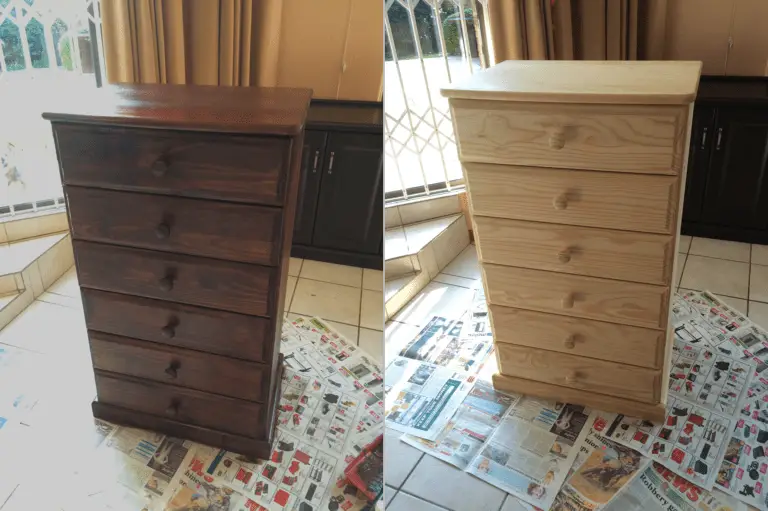
Give your furniture a modern updated look by staining it a different colour or buy raw unfinished furniture and stain it yourself. Unfortunately you won’t save a large amount of money by staining furniture yourself but you can match existing furniture styles and colours and choose accent colours for a custom look.

What you will need for this project:

  • Stain (Enough For Your Item, Check The Product Coverage)
  • Sandpaper – 180, 220 and 260 grit
  • Sanding Block
  • Paint Brush
  • Optional – Screwdriver – For Dissambly
  • Optional – Water Based Polyurethane Top Coat

Most unfinished furniture stores sell pine furniture although meranti, oak and maple are also popular. If you are trying to match an existing piece of furniture then it is best to take the item (a chair or drawer) with to the shop so that they can give you advice on the wood type. Although pine can generally be stained to match different wood colours, the wood grain and absorption properties play a role in the appearance of the finished product.

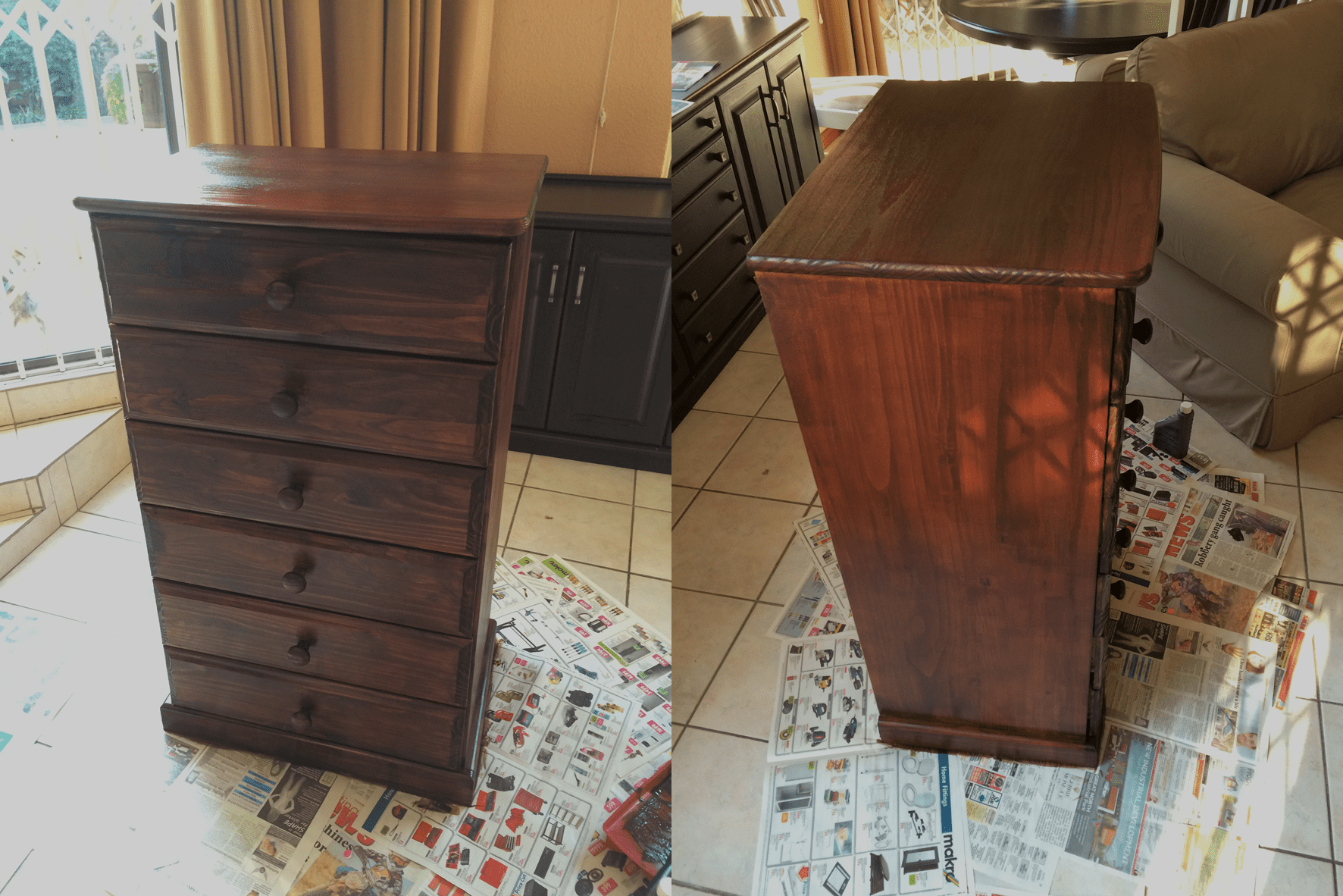
completed stain

Once your have bought or found your items of furniture which you wish to stain, consider whether or not you need to take it apart. It is easiest to stain drawers separately when they are removed from the sliders. You will also need to remove pieces which you wish to stain a different colour to adjacent boards, for example the top surface of a drawer cabinet you may wish to stain darker than the rest of the cabinet. Masking tape prevents direct contact between the brush and the surface you do not wish to stain however stain may seep under the tape and the porous wood will absorb it causing streaks.

Now you will  need to sand the surfaces which are to be stained. This is best done by hand with a sanding block and a fine (180 to 240 grit) sandpaper. Sand out any rough areas and particularly those with dirt marks and scratches. If you are removing the existing paint or varnish from an item of furniture, consider using an orbital sander with a rough (120 grit) sandpaper to remove it. After using the orbital sander, use the sanding block and fine grit sand paper to get a smooth surface finish.

If you are planning on mixing stains to your preferred colour then mix more than you think you will need to complete the job. If you run out of stain midway through a section you will not be able to match the colour exactly and the colour difference will be noticeable.  Remember that stains usually darken when dried and absorb differently into different types of wood. To ensure that you will be happy with the finished product, consider testing the colour on a similarly finished sample of the same wood type. This way you can make adjustments to the colour without ruining your finished product.

Apply the stain to the wood. You can use a variety of brush stroke directions when applying the stain but be sure that the final brush strokes are always in the direction of the grain of the wood to get the smoothest finish. Apply the stain consistently on all faces of the wood to get an even colour. For darker colours, a second coat of stain may need to be applied however this should only be done once the first coat is well absorbed and dry.

For a gloss finish, consider applying a clear top coat. If the item of furniture is hard wearing or constantly going to be wiped down and cleaned then it may be necessary to protect the stained finish. A polyurethane top coat is probably the best solution and a water based coating is also environmentally friendly, fast drying and has a low odor. Brush the polyurethane onto the stained surface using a high quality soft bristle brush. Start at the edges and work your way to the center applying a thin and even coat. Avoid buildup on the edges by using short and light brush strokes towards the edges. The trick in getting a perfect glossy finish is to keep the work area clean, make sure that there are no airborne particles or dust which may settle on the surface and create imperfections.

Allow the surface finish to dry overnight before sanding with a fine (240 – 260 grit) sandpaper. Wipe the sanded surfaces down and then apply a second coat. For an even smoother finish, allow the second coat to dry overnight again before applying a final third coat.

What are your experiences with this project? Please share your comments, tips and advice with us in the comments section below, we would love to hear from you.
Unblock A Drain

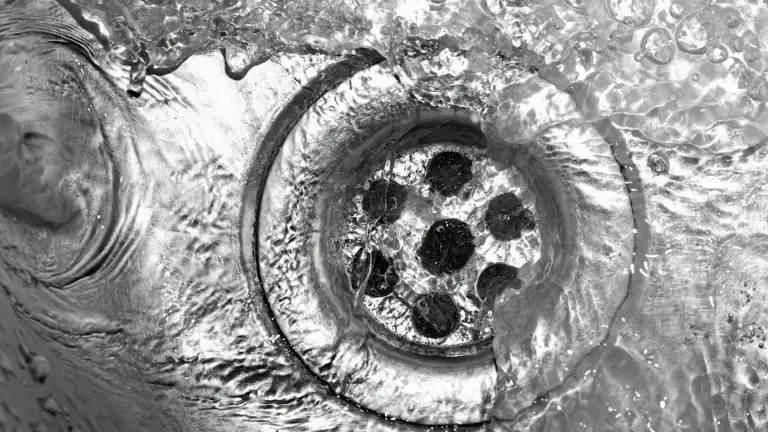
The most common drain to get blocked is the one in the kitchen sink, although the procedure is the same for any household drain. To unblock a toilet, see this guide. Food is often rinsed off of plates and cutlery and makes its way down the plug, causing a blockage.

The most common place for the blockage is in the u bend. The u bend is designed to trap a small amount of water to form an air tight barrier between the drain and the sink so that no nasty smells make their way into your home. Large or heavy solids don’t make their way around the u bend and instead get trapped. The first sign that your drain is blocking is that water in the sink starts taking longer to drain. It is best to act as soon as this occurs.

The first step is to try and plunge the plug hole. A rubber plunger (available at most hardware stores) is forced up and down rapidly over the sink hole which in turn causes the water in the u bend to move upwards and downwards, thereby dislodging any blockages.

If you don’t succeed with a plunger then you will have to remove the u bend. Make sure to have a bucket handy to catch the water which may run out of the sink or the pipework. A rubber u bend usually has two attachment points, on directly underneath the sink and one after the u which connect to a PVC drain pipe. Firstly undo the pipe clamp underneath the sink and pull the u bend off. Use the bucket to catch any water which may drain from the sink. Next remove the second pipe clamp and gently pull the u bend from the drain. The blockage is most likely in this section. Use a piece of wire to hook any debris and pull it from the u bend. Once the blockage has been removed, reinstall the u bend and tighten the pipe clamps.

If the blockage is not in the u bend then you will have to call a plumber to check the drain line to your homes main drain.

Unblock A Clogged Toilet

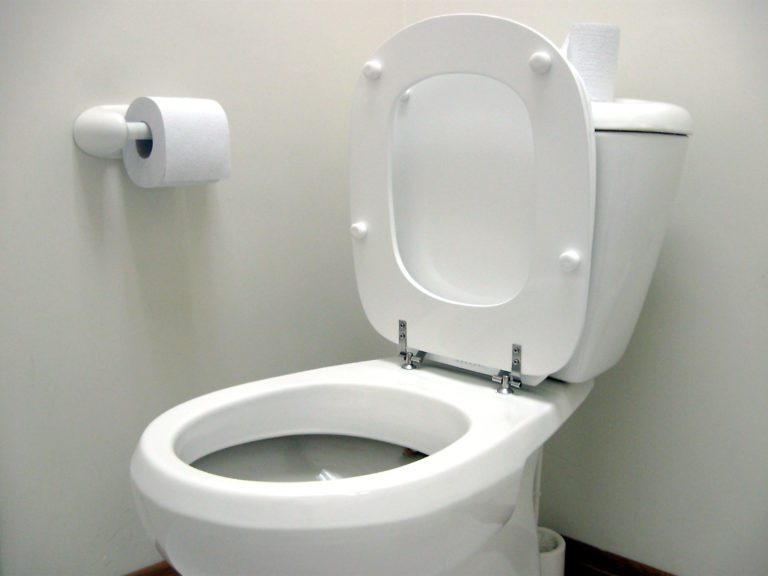
From time to time a toilet may become blocked due to too much toilet paper or foreign objects being flushed. In most cases, the blockage occurs in the bend in the toilet pan. The bend is designed to trap water to form an air tight barrier between the toilet and the drain so that no nasty smells make their way from the drain into your bathroom. Fortunately, it is quite easy to unblock a clogged toilet and you can save yourself some money by not having to call in a plumber.

What You’ll Need To Unblock Your Toilet

  • Toilet Plunger
  • WC Auger (Only If Above Doesn’t Work)
  • Corrosive Drain Cleaner (Only If Both Above Don’t Work)

How To Unblock Your Toilet

First try to dislodge the blockage using a plunger. The most common plunger is a cup shaped plunger however, flange and ball shaped plungers are better suited for toilets. Place the plunger in the toilet pan and quickly move it up and down to attempt to dislodge the blockage. If you do not have a plunger, attached a plastic bag firmly around a floor mop with cable ties. Place the bagged end into the toilet bowl as a make shift plunger and force the bag up and down with the mop handle. The bag assists in creating a plunger like seal around the bottom of the toilet pan.

If the plunger is unsuccessful then a toilet or WC auger should be used. The device consists of a flexible rod and a crank handle. Push the rod down into the pan and around the u bend, if a blockage is felt; turn the crank handle in order to dislodge the blockage. If possible, try and hook the blockage and pull it back into the toilet pan. From there it can be disposed of in the trash to prevent a blockage further down the drain line which will be more difficult to clear.

As a last resort, consider pouring corrosive drain cleaner into the pan which is designed to dissolve the blockage. Be careful when working with drain cleaner and follow the direction on the packaging.

If the blockage is not in the pan then you will have to call a plumber to check the toilet drain line to your homes main drain.

NOTE: IN SOME COUNTRIES OR REGIONS, IT IS ILLEGAL TO CARRY OUT UNLICENSED PLUMBING AND IF THERE IS A FAULT, YOUR INSURANCE MIGHT NOT PAY OUT. CHECK WITH YOUR LOCAL AUTHORITIES BEFORE CARRYING OUT ANY PLUMBING REPAIRS ON YOUR HOME.

Smoked Trout, Avo & Poached Egg On Rye

Trout, avo and a poached egg combine perfectly on a slice of toast for a delicious breakfast.

Makes 2 servings. Preparation time 15mins.

You Will Need:

  • 2 Slices Of Rye Bread
  • ½ Butter Avo
  • 60g (2oz) Smoked Trout Fillet
  • 2 Large Eggs

Toast the rye bread in a toaster or under the grill until the bread begins to darken on the edges. Thinly slice the avo and place half on the top of each bread slice. Next layout our half of the trout ribbons on the bed of avo. Poach the two eggs in boiling water for five minutes or to your liking. Top the trout with a poached egg, allowing the egg to cool off slightly before placing it onto the trout or it will cook the trout underneath the egg.

Garnish with basil leaves, dried basil and some cracked black pepper. For a slightly tangy taste, squeeze a little lemon over the trout before adding the egg.

Poached Egg

A poached egg makes the perfect breakfast topper for a fresh slice of toast. There is a bit of technique involved but it is not overly difficult, follow these instructions for a perfect poached egg.

Makes 1 Poached Egg. Cooking Time 10mins.

You Will Need:

  • 1 Large Egg
  • 1 Tbsp Salt
  • 2 Tbsp White Vinegar
  • 6 Cups of Water

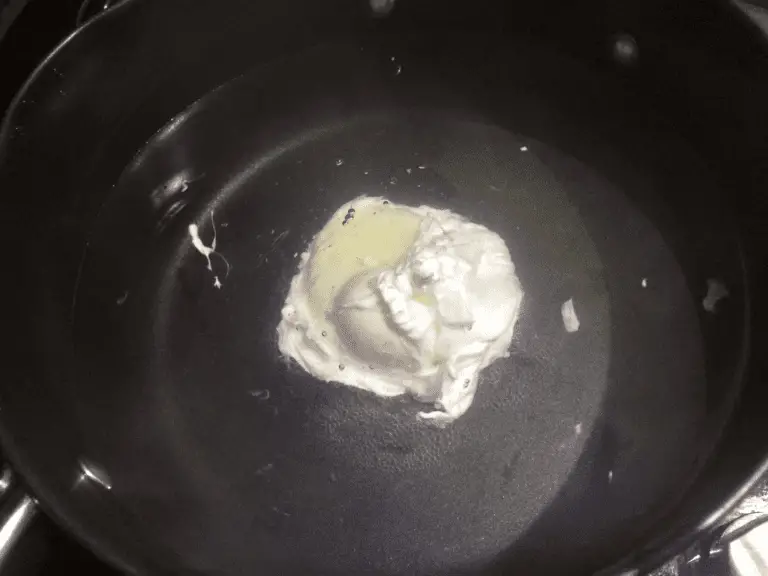
Boil the water in a medium sized pot over the stove. Add the salt and vinegar and turn the heat down until the water is simmering. Use a slotted spoon to gently stir the water in one direction so that it is smoothly spinning around the pot. Carefully crack one egg into the center of the whirlpool, the swirling water helps to keep the egg white from spreading out in the pot. After five minutes (or until cooked to your liking), gently lift the egg out of the water with the slotted spoon. Always cook eggs one at a time, they will not be able to be separated if two are dropped into the water together.

Poached eggs can be kept in cold water in the fridge for a day and can be heated up in warm water just before serving.

Install Laminate Wood Flooring Yourself

Laying laminate flooring is an affordable way to update a room in your home. This easy guide shows you how to lay laminate flooring to achieve a professional look without the expense of a flooring expert.

Laminate flooring can be laid over cement, brick or tiled surfaces however the floor needs to be clean, level and free from dirt. Laminate flooring is not recommended in bathrooms or laundry rooms where there is high humidity and moisture content as the boards will buckle and warp over time.

installing laminate flooring

What You Will Need To Lay Your Own Laminate Flooring

  • Laminate Flooring (10% More Than The Floor Area)
  • Underlay (10% More Than The Floor Area)
  • Quarter Round (Quadrant) Pine or Skirting (10% More Than The Perimeter Of The Room)
  • Hammer
  • Tapping Block
  • Jigsaw with Course Wood Blade
  • Laminate Guillotine or Circular Saw (Optional)

How To Lay Your Laminate Wood Flooring

Because laminate flooring is a wood product, it needs to acclimate before it can be installed. Leave the packaged laminate boards in the room where they are going to be installed for about 2-3 days to fully acclimate.

Next choose the lay of the floor. Decide in which direction the length of the planks will lie. Generally speaking, installing planks parallel to the longest wall in a room will make the room appear larger.

Prepare any doors which open over the laminate flooring. This is particularly important if you are laying the flooring over existing flooring such as tiles. The completed flooring will be between 10mm (1/3″) and 20mm (2/3″) higher than the previous flooring depending on what type of flooring you have bought. Check to see that the bottom of the doors in the room are high enough to clear the flooring. If they are not then use a vibratory saw to cut off the bottom section of the door to create the clearance. Alternately the door can be taken off its hinges and a circular saw can be used to cut the bottom of the door neatly.

laminate underlay

First begin by laying a section of underlay. The underlay is a foam type material which provides cushioning and sound absorption. Some manufacturers recommend taping adjacent sections of underlay with their provided tape or box tape. The underlay should cover the entire area on which the laminate flooring will be laid and should not overlap at any point.

wall spacer

Once the underlay is done, begin laying the boards. Lay the boards length ways in rows, one row the length of the room at a time. Laminate flooring is still a natural wood product and therefore expands and contracts with the humidity in the air. You need to allow a 10mm (1/3″) gap between the flooring and the walls around the perimeter of the room. This gap will then be covered by skirting or a quarter round (quad) of pine attached to the skirting.

cutting laminte

Adjacent rows should be staggered such that the joins along the boards lengths do not align in adjacent rows. To do this, cut the first plank of every second row in half using a circular saw or laminate flooring guillotine. Click each board into place as you work along completing the row.

tapping block

As you place boards, gaps may open up between boards and between rows. This must be checked continuously and a hammer and tapping block can be used to tap the boards back into place. The tapping block distributes the impact from the hammer along a portions of the board’s edge so that the face of the hammer doesn’t damage the edge.

At the corners, press the board up against the edge of the laid flooring and mark the width of the cut then press it up against the edge of the previous row and measure the length of the cut. Mark the cut area with a set square and ensure that a 10mm gap is left around the wall’s edge. To cut complex corners a jigsaw is the easiest tool to use as it has a narrow blade and provides visibility to the cutting area so that you can see your marked cutting lines.

quadrant over laminate

Once the flooring has been laid, install the skirting or quarter rounds of pine over the edge gaps. The skirting should just touch the top of the flooring and not be used to press down on the flooring. Cut the 45° corners with a mitre box. A nail gun can be used to attach the skirting or quarter rounds.  Finish off by painting the quarter rounds the same colour as the skirting or varnishing them in the same colour as the flooring.

If you’re installing laminate flooring to give your home and update, have a look at these 8 DIY projects to increase your home’s value.

What are your experiences with this project? Please share your comments, tips and advice with us in the comments section below, we would love to hear from you.

laminate flooring end

Share This Guide

How To Install Laminate Wood Flooring Yourself

White Chocolate Mousse & Jelly Dessert Cups

These colourful dessert cups make the perfect dessert for an outside summer lunch. They look fancy but are extremely easy to make and only require three ingredients.

Makes about 6 servings. Preparation time 15mins, setting time 180mins.

You Will Need:

  • 1 Box Store Bought Jelly Powder
  • 200g (7oz) White Chocolate
  • 1 1/2 Cups of Heavy Cream

Mix up the jelly according to the directions on the box. This usually involves dissolving the powder in boiling water and then adding cold water to assist with setting. When the mixture is cool, pour a third of a cup into a drinking glass, these will be used as your serving cups.

Place the glasses in the refrigerator, leaning them against the side or on a baking tray so that the jelly liquid is angled from the bottom edge to the top edge of the glass. Allow the jelly to set for about 4 hours before adding the mousse to the cups.

Use our two ingredient white chocolate mousse recipe to make the white chocolate mousse using the chocolate and heavy cream. Spoon the mixture into the cups on top of the jelly, you may need to tap the glass on a counter to get the mousse to settle on the jelly with no large air bubbles.

Place the mousse and jelly cups into the refrigerator for 2 hours to allow the mousse to fully set. Garnish the cups with fresh berries or grated dark chocolate.

Two Ingredient White Chocolate Mousse

This easy white chocolate mousse recipe is made using only two ingredients and takes about 5 minutes to make. Although the preparation time is only 5 minutes, allow for about two and a half hours to give the chocolate time to cool down and to set. These mousse cups keep in the refrigerator for up to three days.

What You Will Need To Make The White Chocolate Mousse

Makes about 6 servings. Preparation time 5mins, setting time 150mins.

You Will Need:

  • 200g (7oz) White Chocolate
  • 1 1/2 Cups of Heavy Cream

How To Make The Mousse

Place the chocolate in a microwaveable bowl. Melt the chocolate by microwaving on high for 15 second intervals, stirring in between until all of the chocolate is smooth and there are no lumps. Allow the melted chocolate to cool to room temperature for about 15 to 20 minutes.

With a electric beater, whisk the cream until thick and soft peaks form. Fold half of the cream into the melted chocolate and gently combine. Add the second half and again fold in gently until the mixture is combined.

Divide the mixture into cups and set in the refrigerator for 2 hours. Garnish with mint and berries or grated chocolate. Use grated dark chocolate for a contrasting topping.

Finish this mousse off by serving it in a decorative dessert cup with jelly.

DIY Hacks, Complete Your Projects Quicker & Easier

0

These simple hacks make doing your DIY projects around the house quicker and easier. Some of these ideas will help you with a single project and others can be used to make all of your projects easier.

DIY Soda Can Tab Picture Hanger

Make a simple picture or mirror hanger  with a soda can tab, its strong, functional and doesn’t get any cheaper.

Magnet On Hammer

Attach a magnet to the base of your hammer to make a clever storage place for the nails you are working with.

Cover Up Holes

Use a wax crayon to cover up small nail holes in wood or on the wall, you’ll hardly notice them with this 5 second trick.

pegboard bottle holders

Recycle old soda bottles to keep screws, nuts, bolts etc stored neatly on your peg board.

gluegun detail work

Modify your glue gun with a ball inflation needle to get a thin bead of glue for detail work.

wrench caddy

Use a carabiner clip as a useful wrench caddy to keep your wrenches in order and in one place.

battery caddy

Make a battery dispenser to keep your new batteries organised. Mount it on your wall in your workshop for easy access and to keep your batteries organised.

remove tool rust

Remove rust on your tools by soaking them overnight in vinegar and salt. The vinegar and salt help to remove the rust and prevent the tool from rusting further.

extension cord holder

Install a rope hook near your power outlets to ensure that your power tools don’t become unhooked while you are using them. Perfect for the lawn mower or edge trimmer.

plastic bottle cutter

Make a plastic bottle cutter and recycle your old plastic bottles into strong plastic rope.

credit card glue spreader

Recycle an old credit card and turn it into a handy glue spreader for your woodwork projects.

Once you’ve mastered these DIY hacks, you’ll want to put them to good use, have a look at our 10 weekend projects to seriously add value to your home, or if your have a bit more time, here are 8 more involved projects to increase your home’s value.

Repair A Car Tyre Puncture

A flat tyre on your car is one of the inconveniences of driving, fortunately it is a quick and relatively easy problem to fix. A puncture smaller than 7mm (1/4”) can be repaired with a plug, gashes or wide punctures should be repaired by a tyre dealer or the tyre may have to be replaced.

puncture repair kit

Tools Required For This Repair:

  • Car Jack
  • Wheel Spanner
  • Tyre Puncture Repair Kit
  • Soapy Water – Optional if the leak can’t be found

Firstly loosen the wheel nuts before you jack up the vehicle. You do this before jacking up the vehicle so that the vehicle’s weight prevents the wheel from turning when you turn the spanner. Do not remove any of the nuts at this stage, just loosen them about a quarter of a turn.

Once the nuts have been loosened, you will need to jack up the vehicle. This should be done on a hard and level surface with the hand or parking brake applied and the vehicle in gear or in park (in the case of an automatic). As an additional safety measure, stop blocks can be used on the non lifted wheels to ensure that the car remains stationary during jacking. Most vehicles have jacking pads underneath the vehicle on the door side of each wheel arch right near where the wheel arch begins. Check the vehicle’s service manual for details on the jacking points if you are not sure.

Loosen and remove the nuts. Once the nuts are removed, pull the wheel off of the wheel hub. You now need to find the puncture. Re-inflate the tyre using an air compressor or pump, a bicycle pump will also work as a last resort. If there is a fast leak, you will be able to hear the escaping air making a hissing sound. If the leak is a slow leak and is not immediately obvious, mix up a solution of dish soap and warm water. Carefully go around the perimeter of the tyre and apply the soapy water, the hole will cause bubbles to form in the soapy water on top of the puncture.

bubbles on tyre leak

If there is a nail, screw or other protruding object in the tyre, remove it using a pliers.

nail in tyre

Clean and open up the hole with the rasp tool included in the tyre kit. This is done by repeatedly inserting and removing the tool in a filing manner.

Thread a plug into the insertion tool. This can be tricky as the plug is usually very sticky. Squeeze one end flat and then force it through the eye on the insertion tool. If your puncture repair kit came with glue or rubber cement then apply this to the plug now, it will assist with lubricating the plug as it is inserted and will extend the life of the repair. Use the insertion tool to force the plug into the tyre, there should be about 10cm (1/2”) of the plug protruding from the tyre.

puncture repair

Inflate the tyre to the recommended pressure and retest the repaired area with soapy water. There should be no formation of soap bubbles around the repair. If the repair is leaking then either try adding some more rubber cement or remove the plug and start again.

Position the wheel back on the wheel hub with the studs or holes aligned with the holes on the rim. Thread the nuts back onto the hub and tighten them with your fingers. Lower the vehicle back onto the ground and then tighten the nuts to the torque specified in the service manual.

The tyre repair should last around 30 000km (18 000 miles) before the tyre will need to be replaced.