
Home Blog Page 40

Upcycling Wood Pallets Into Furniture

Have you got a couple of old pallets lying around or have you seen some stashed at your local grocery store? With some effort, you can easily turn an old pallet or two into stylish furniture and decor for your home. The guys at fix.com have some great ideas for your next upcycling pallet furniture project, have a look at some of their ideas below.

How To Prepare A Pallet For Your DIY Project

Pallets are great, but you have to make sure the wood isn’t chemically treated – especially if you’re building something like a raised vegetable garden bed. Also, ask someone if the pallet was used to haul hazardous materials. If so, stay away. But if it was hauling orange juice, furniture, or otherwise nontoxic items, you’re good to go.
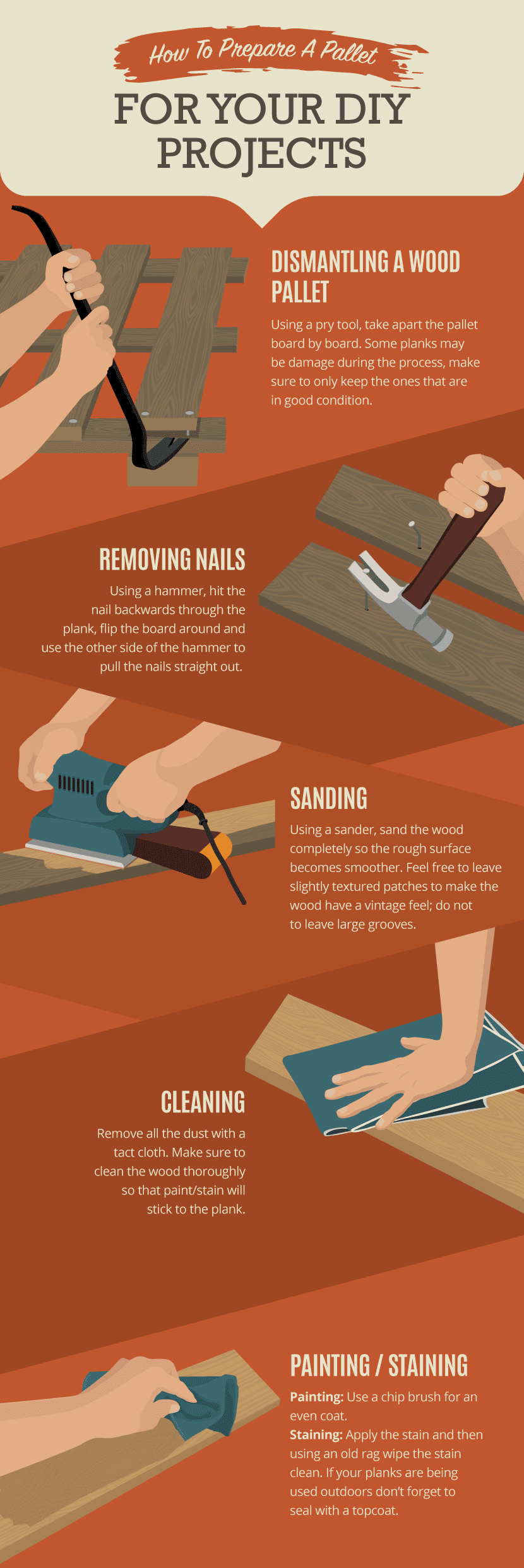
Almost every project you do with pallets will require you to disassemble the pallet, remove nails, and sand down any rough edges. You’ll need a crowbar or pry bar, a hammer, and a power palm sander for these parts. This would also be a good time to give your boards a thorough cleaning with some basic soap-and-water solution.

how to prepare a pallet for your diy project

Projects You Can Build Using Wood Pallets

Build an Awesome Table

You can use pallets to create a whole bunch of different style tables from scratch, or you can use pallet wood to update some sad outdoor furniture.

If you’re building one from the ground up, you’ll probably want to pick up a few extra supplies for the legs and supports and stick to using your pallet wood for the table top. To create your table top, determine the dimensions of your table and cut your boards (if you need to) down to size.

Lay them down on a flat surface and secure them on the underside using two parallel 1” x 3” boards and strong, long wood screws.

For the table legs, you can go industrial chic and use piping from the hardware store, order some retro hairpin legs, or use 4” x 4” wood pieces to create a more traditional X-leg trestle table. Stain or paint the top if desired – just make sure you seal it well if it’s going to be used outdoors.

Create a Cool Rustic-Industrial-Style Desk

This might be one of my favorite ways to re-purpose a pallet, especially if you’re in an urban setting. The good news is if you want to make a cool pallet desk, you don’t have to disassemble the pallet!

First step is to decide on the depth of your desk. The typical depth for a small-space desk is anywhere from 17” to 22” deep. Using a level, draw a line down your pallet at your chosen measurement and then cut straight through both pallet layers with a circular saw.

Using the wood left from the smaller piece, create a wall brace about 4” below your ideal desk height. Secure it to the wall using screws driven into the wall studs.

Next, you’ll want to add legs to the front of your pallet desk. I definitely recommend those cool hairpin legs for this project.

Place the back of your desk over your secured wall support and attach it using wood screws.

Boost Your Wall Storage

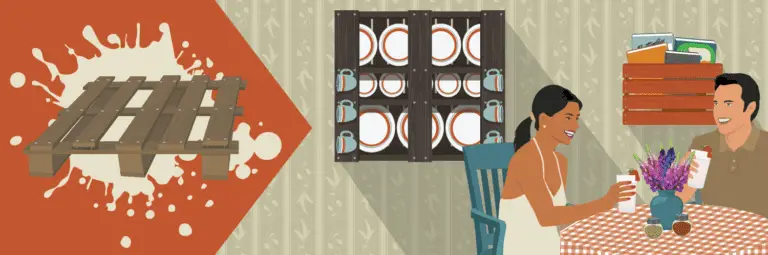
Often, if you tweak a pallet just a tiny bit, it can be used for awesome wall storage in all areas of the home.

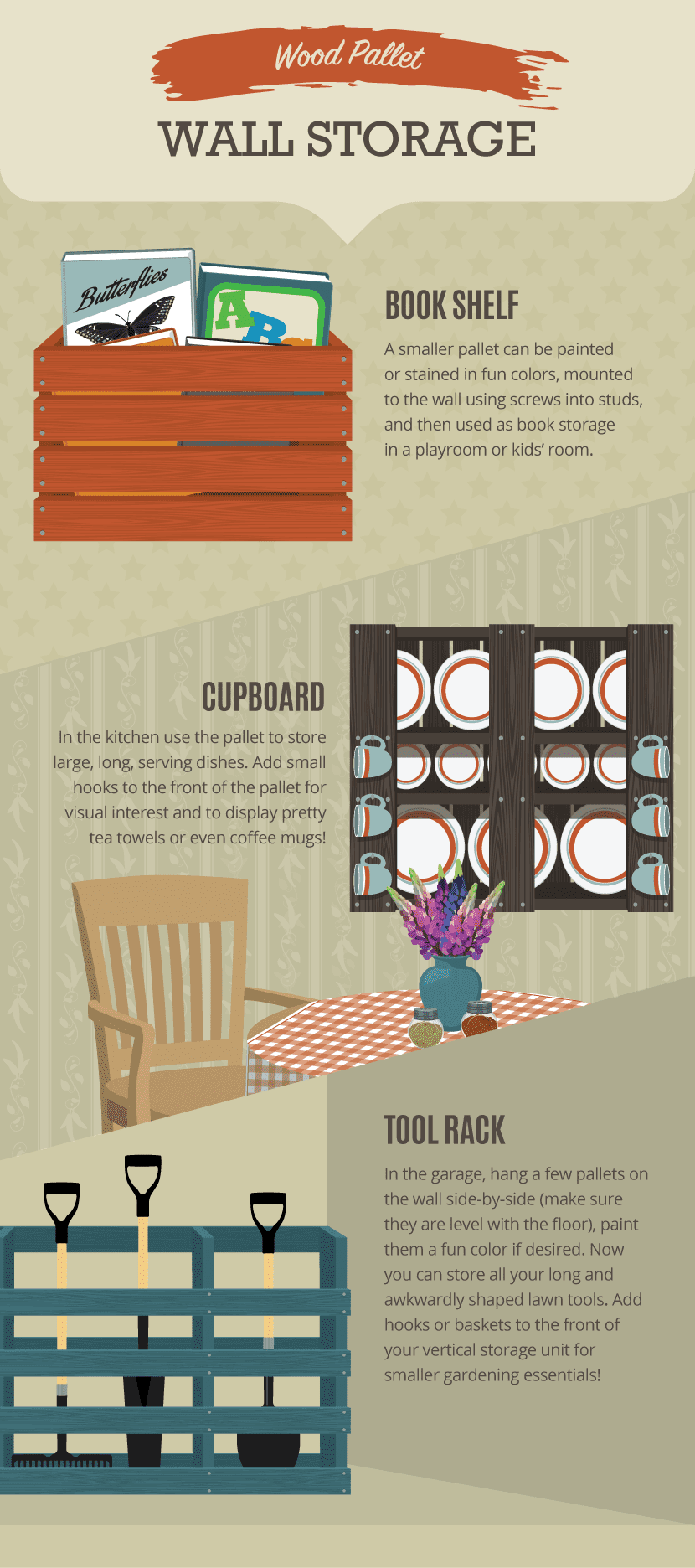
boost your wall storage with wood pallets

A smaller pallet can be painted or stained in fun colors, mounted to the wall using screws into studs, and then used as book storage in a playroom or kids’ room.

Use the same basic principle in the kitchen or dining room but, instead of books, use the pallet to store large or long serving dishes. Add small hooks to the front of the pallet for visual interest and to display pretty tea towels or even coffee mugs.

Now head to the shed or garage! Hang a few pallets on the wall side-by-side and make sure they are level with the floor. Paint them a fun color if desired. Now add all your long and awkward lawn care tools! Rakes, brooms, garden hoes, and more will all stand propped up in your new vertical storage unit. Add hooks or baskets to the front of the pallets for your smaller garden essentials such as spades and gardening gloves.

Amp up Your Foyer With Pallet Bench and Shoe Storage

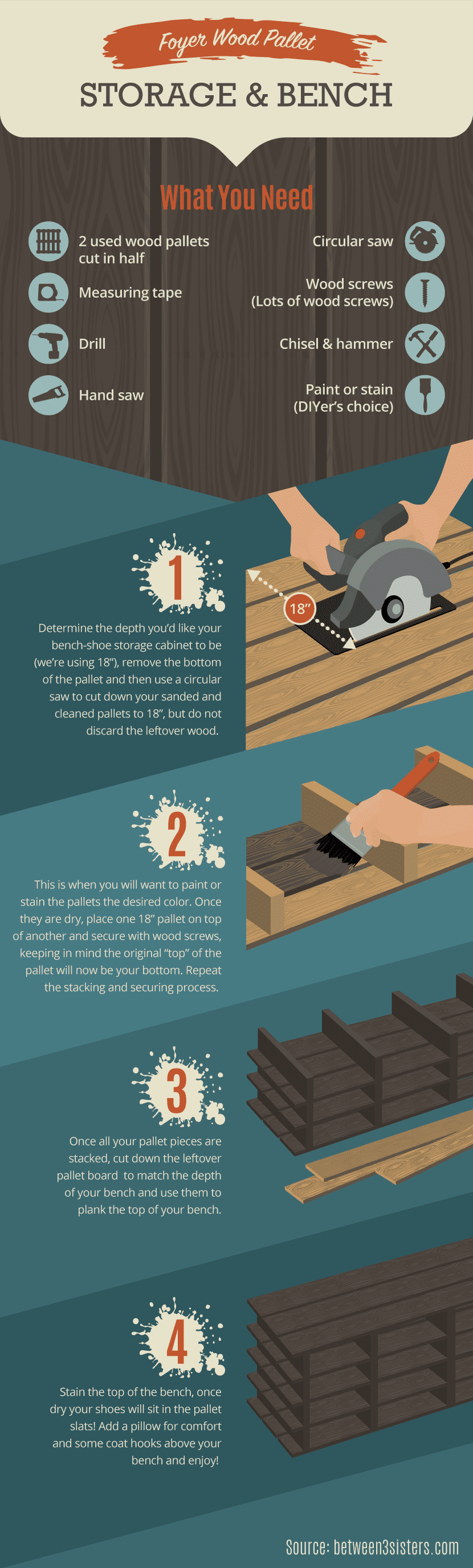
If you hit the motherlode and find a bevy of free pallets, this might be the right project for you. Just like with the wall desk, you’ll want to first determine the depth you’d like your combination bench-shoe storage cabinet to be. Make sure it doesn’t overtake your whole front-door area, but also ensure that it will be deep enough to sit on comfortably – 18” is probably a nice place to start for depth.

Foyer Wood Pallet Storage And Bench

Use a circular saw to cut down your sanded and cleaned pallets to 18”, but do not discard the leftover wood!

This is the stage where you’ll want to paint or stain the pallets your desired color. Once they are dry, place one 18” pallet on top of another and secure with wood screws. Keep stacking and securing your pieces together. Once all your pallet pieces are stacked, cut down the leftover pallet boards to match the depth of your bench and use them to plank the top of your bench.

Stain the top the same color or a different color for added interest! Your shoes will sit in the pallet slats! Add a pillow for comfort and some coat hooks above your bench and you’ll have a stylish, rustic, DIY entryway solution.

Looking for some more creative pallet ideas? Here are another 8 creative pallet projects for you to try out. You could also try making these mini pallets as coasters or gift packaging.

As you can see, there are a ton of ways to use pallets in your home, both indoors and outdoors. Next time you’re out and about, keep your eyes peeled and your creativity dial turned up and you might just find yourself the proud owner of something DIY and fabulous.

Let us know in the comments below if you’re tried any of these or other projects involving upcycling wooden pallets in your home! If you’re looking for more project ideas, have a look at fix.com, they have a great range of projects and home improvement ideas for you to try.

3D Print Surface Finishing Techniques, Get A Smooth Surface Finish

3D Printing is great for producing cheap customised plastic parts, however, the surface finish is usually quite rough due to the rounded plastic extrusion building up each layer. Here are some techniques which can be used to produce a smooth surface which can then be painted to produce a professional looking part.

What You’ll Need To Get A Smooth Surface Finish

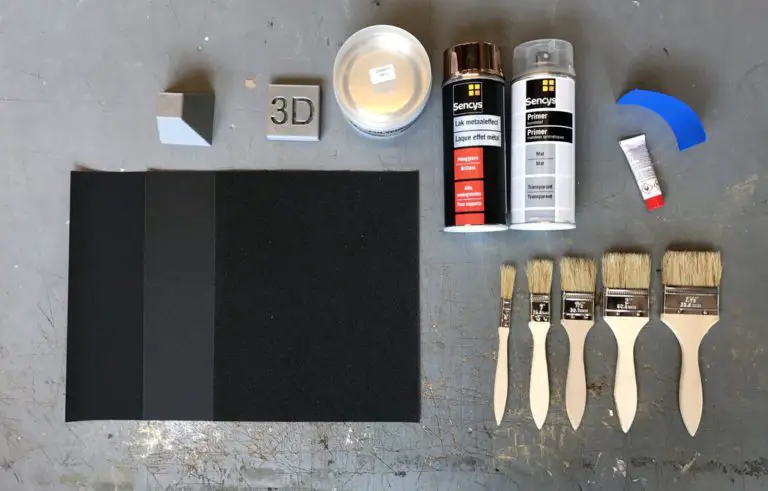
  • Sandpaper – 100, 180 and 320 grit
  • Polyester body filler or putty
  • Plastic Primer
  • Spray Paint

3D Print Surface Finishing Techniques

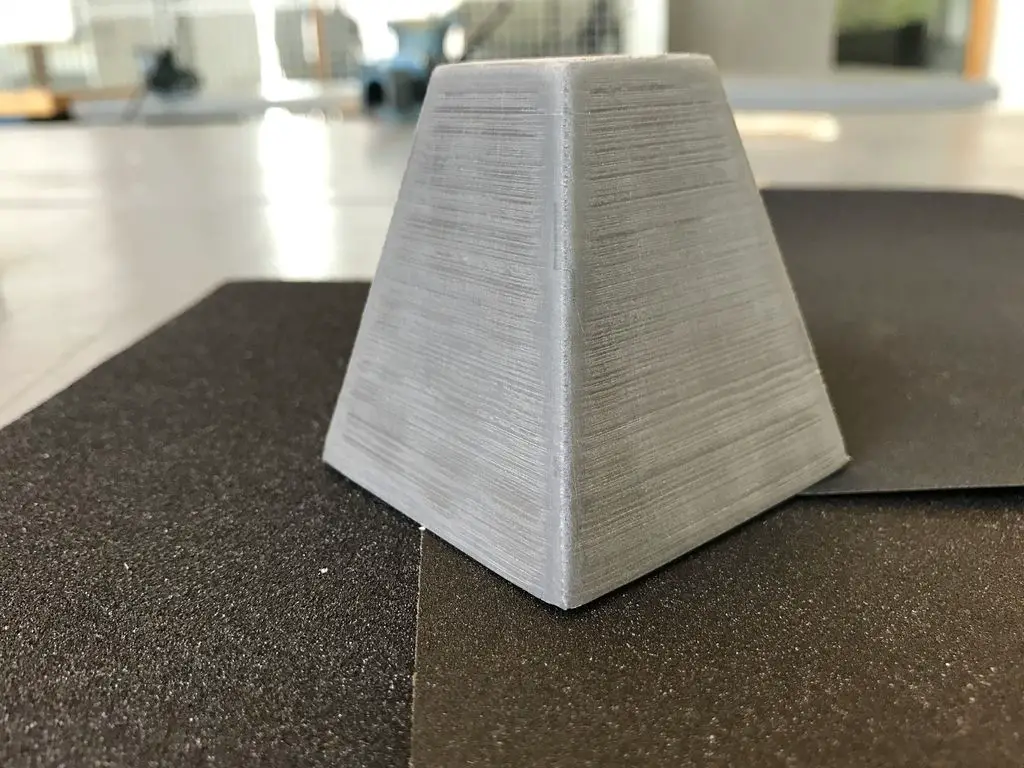
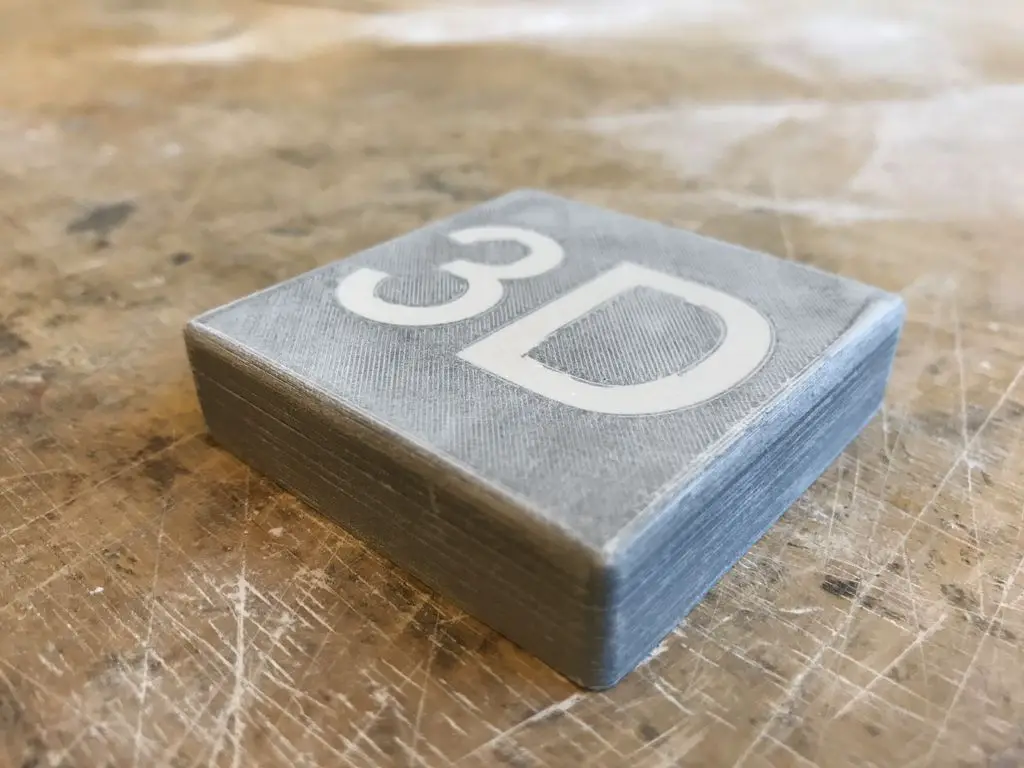
Start out by sanding the piece with the 100 grit sandpaper for 5-10 minutes.

start off by sanding the 3d print

Then do the same thing but with the 180 grit sandpaper and after that, repeat the same step but with the 320 grit sandpaper. By sanding you will give your piece smooth surfaces without any imperfections or excess plastic.

If you happen to damage an edge or corner then don’t worry, you’re piece isn’t ruined yet. You can fix any imperfections easily with polyester potty.

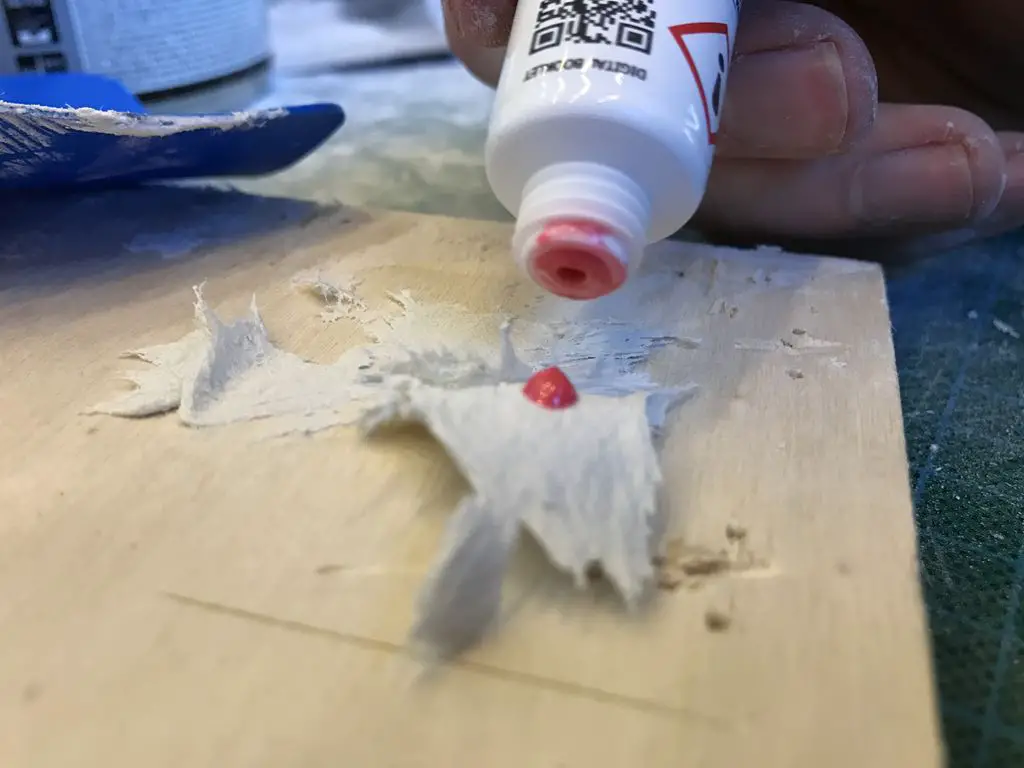
First, take the piece of wood and mix the polyester putty.

prepare your putty

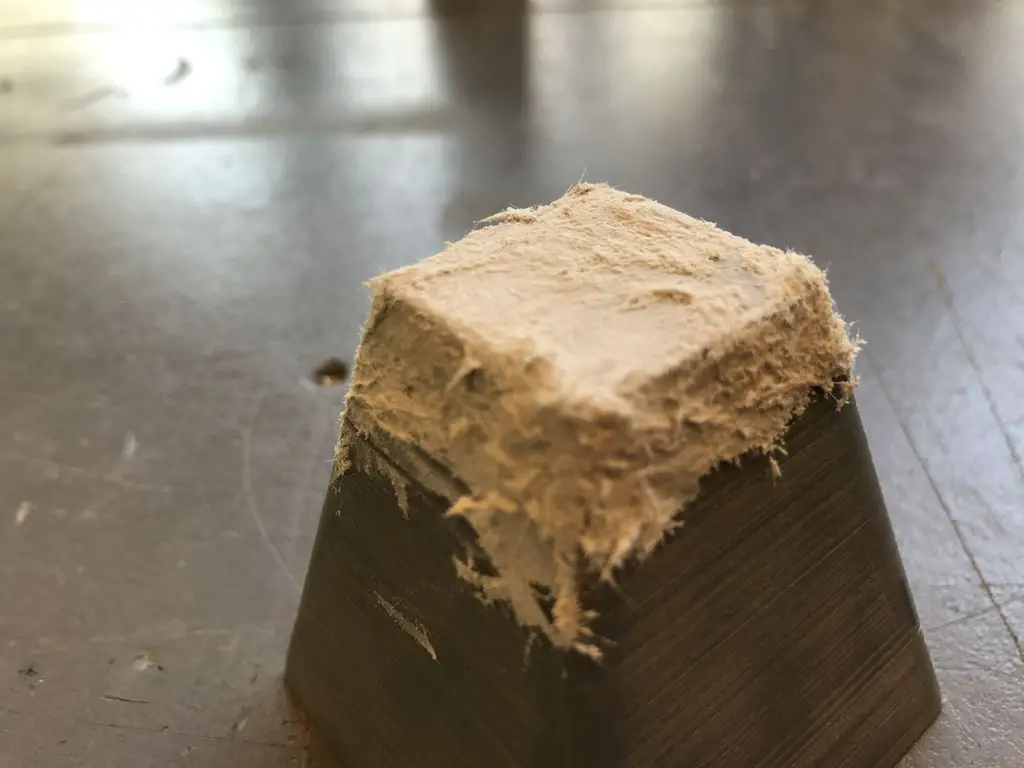
Take the plastic piece that came with your polyester putty and scoop a little bit and spread it on the damaged edge or corner. Don’t be afraid to put a lot of putty on the damaged part, the more putty the better.

apply the putty

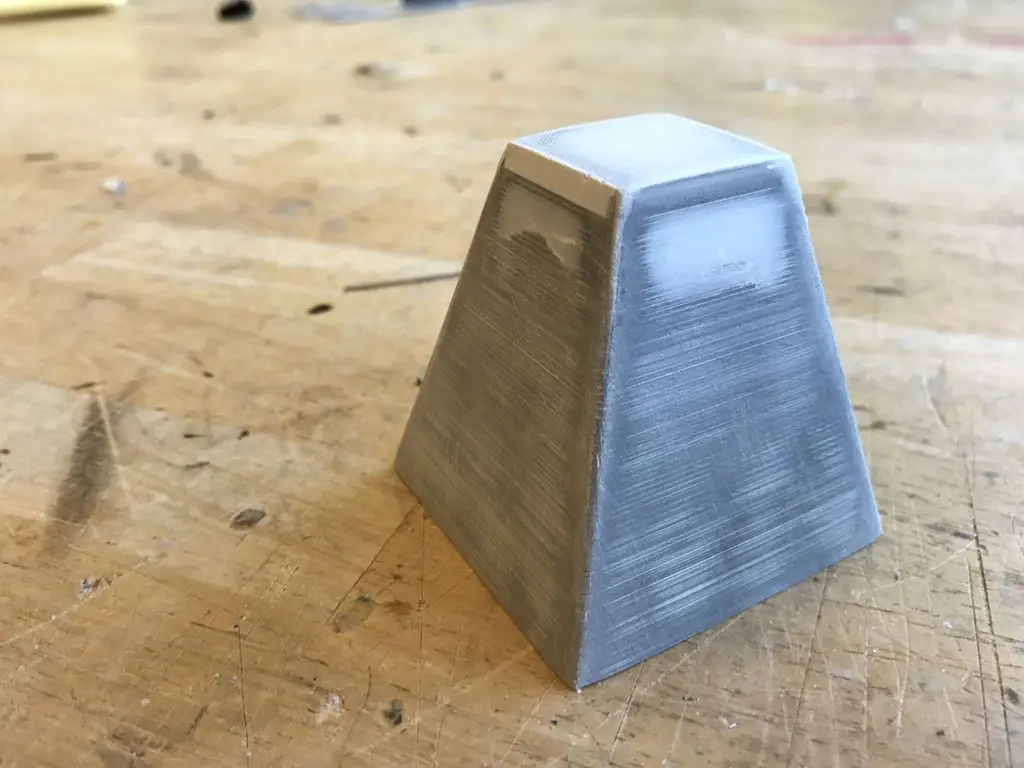
Repeat the sanding steps starting from the course grit and working to the fine grit after the putty has dried.

sand the putty down

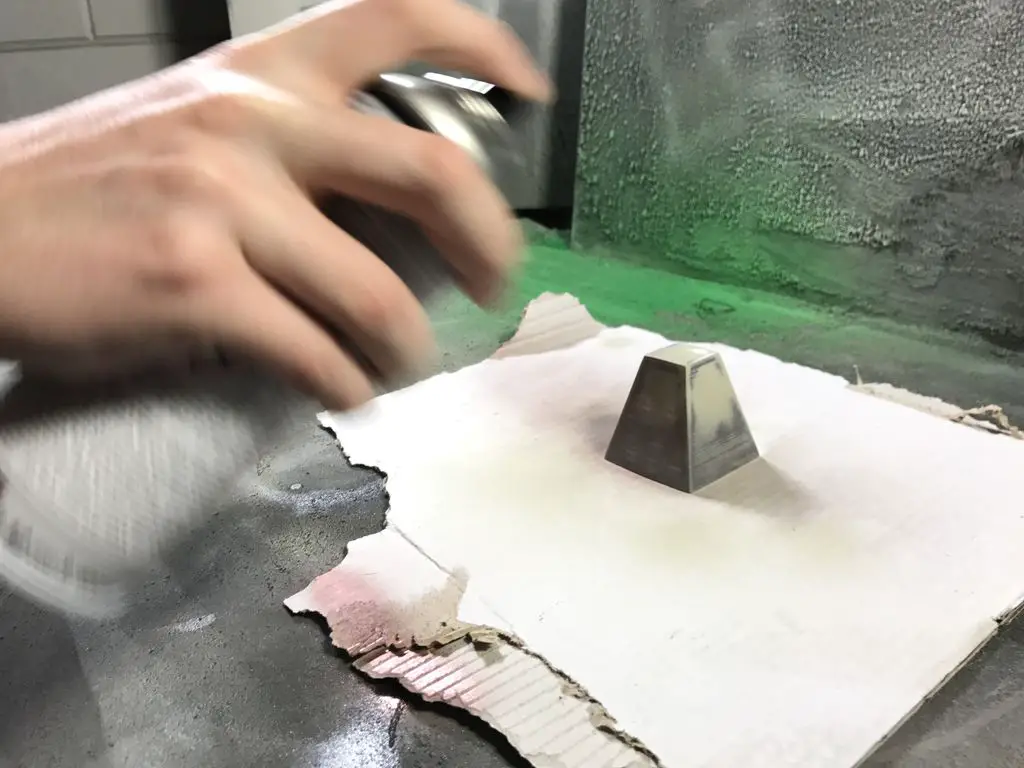
You are now ready to paint the object. In order to get good paint adhesion we will have to spray primer made for plastic surfaces on the piece we’re working on.

Clean the surface with a brush to remove any dust that may be left on the piece.

Some tips to avoid dripping:

– Spray carefully in strokes from left to right

– After applying one layer, wait 30 minutes until the primer is dry

apply the primer

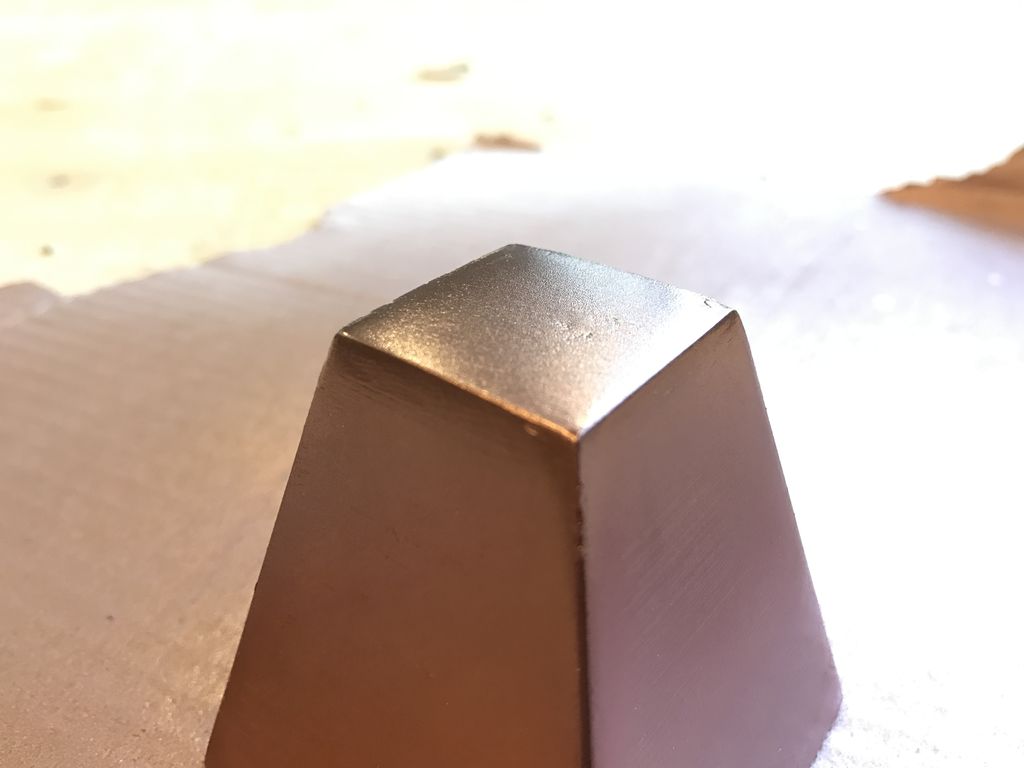
Now apply the spray paint. Give the piece a couple of layers until you reach the result you desire.

apply the spray paint

You can also use putty to fill voids in a 3D printed shape.

using putty to fill voids in 3d printed shapes

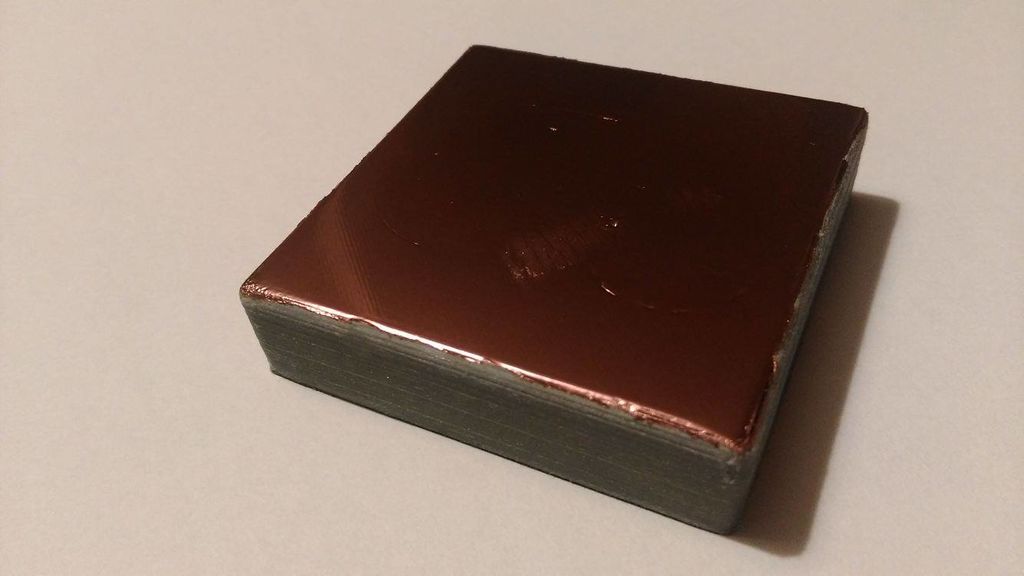
Apply a coat of paint to cover up the body filler.

apply spray paint

Now you’re able to 3D print models and get a professional surface finish. Do you have any tips and tricks for finishing off your 3D printed models? Let us know in the comments section below.

This post is based on 3D Surface Finishing Techniques  by robrechtv and has been used and modified under the Creative Commons license CC BY NC SA version 2.5.

How To Get Rid Of Mould On Your Ceiling

Mould developing on your bathroom or kitchen ceiling is generally as a result of poor ventilation. Steam and water vapour get trapped in the bathroom and eventually condense on the ceiling causing a damp spot which is perfect for the growth of mould and bacteria. You should try to treat patches as soon as they appear as the longer they have to grow, the larger the patch that needs to be cleaned and the more difficult it is to get rid of it. If you leave it too long, you may even have to replace a portion of your ceiling board.

A patch on your ceiling may also be as a result of a leak in the ceiling or walls above. It is worth checking the area in the ceiling above the mould spot for possible leaks.

What You Need To Get Rid Of Mould On Your Ceiling

  • Paint Scraper
  • Household Bleach or Hydrogen Peroxide
  • Spray Bottle
  • Scrubbing Brush
  • Gloves & Safety Glasses
  • A Ladder

How To Remove Mould From Your Ceiling

Before treating the mould, open all of the doors and windows to allow adequate ventilation. If you have wallpaper or polystyrene crown moulding near the area to be treated, cover this up with plastic sheeting before working near it so that you don’t damage it with the bleach or peroxide solution.

Scrape away any loose or flaking paint and mould.

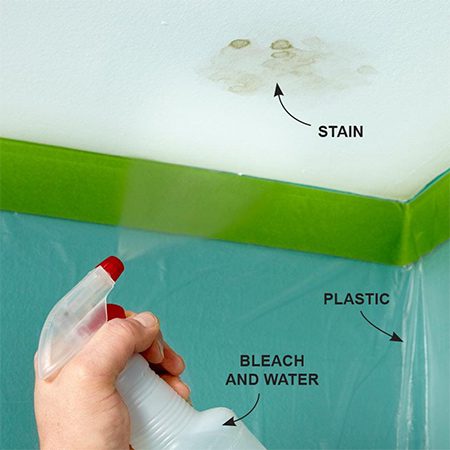
If you are using bleach, dilute it with five parts water and put it into the spray bottle. Hydrogen peroxide can be used neat. Spray the solution directly onto the mould patch on the ceiling and allow it to work for 10 minutes.

how to get rid of mould on the ceiling

Scrub the area lightly with your brush, rinsing the brush occasionally to prevent the mould from spreading and discolouring the surrounding area.

Once your have worked away all of the loose bits, repeat by spraying the area and allowing it to stand for 10 minutes again before re-scrubbing. These steps should be repeated until the mould has all been removed.

The ceiling may require a fresh coat of paint once you have finished cleaning the mould in order to cover up any discoloured areas. High cover primer is usually the best for covering up stains on white ceilings, apply one or two coats, allowing drying time between coats.

Preventing Mould In Future

Now that you have finished cleaning and restoring your ceiling, you need to look at preventing it from growing back again. The most likely cause is poor ventilation, keep the windows and doors open for a few minutes after using the bath or shower to allow the steam and moisture to escape. If you don’t have windows or they are too small to open, consider installing a small extractor fan to assist with removing the moisture.

Have you managed to restore a section of your ceiling? Let us know your tips and tricks in the comments section below.

Dust is another health hazard in your home, have a look at our 5 Cleaning Tips To Rid Your Home Of Dust.

How To Repair A Chip In Your Windshield

If you have a chip in your windshield, it is necessary that you get it repaired as soon as possible. A small chip in your windshield can turn into a big crack quite quickly. After the first layer of your windshield is penetrated, it is likely to crack out causing further damage and the need for a costly replacement. Repairing your windshield when you notice a chip will save you money in the long run. You can call a windshield repair company, or do it yourself. They usually sell inexpensive windshield repair kits at your local auto parts store.

What You’ll Need To Repair A Chip Or Crack In Your Windshield

You can purchase a windshield repair kit (such as this one) from your local auto parts store, which will include all the necessary tools and supplies.

  • A Mirror to Place on the Inside of the Glass
  • A Bridge & Injector
  • Repair Resin
  • Pit Filler
  • Plastic Curing Tab
  • Razor Blade

How To Repair The Windshield Chip Or Crack

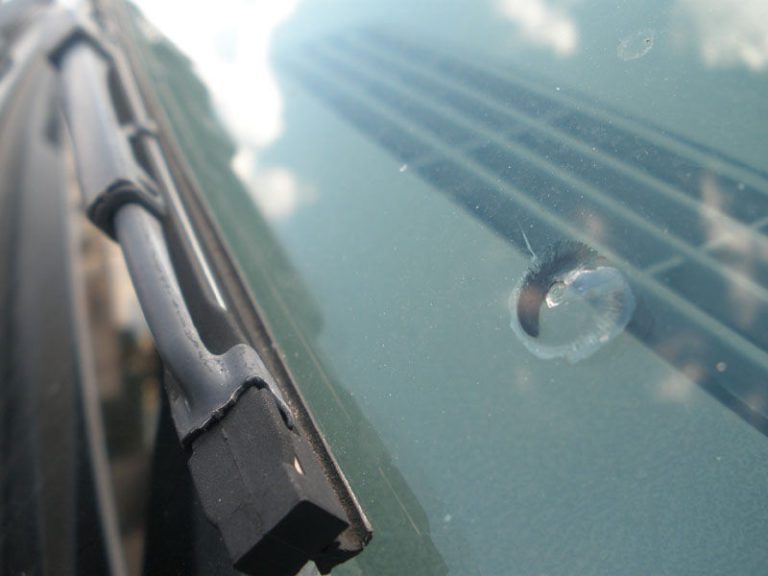
The first step is to prep the chip and windshield for repair, use an alcohol pad to clean the area, and gently scribe out any loose glass from the “impact point”.

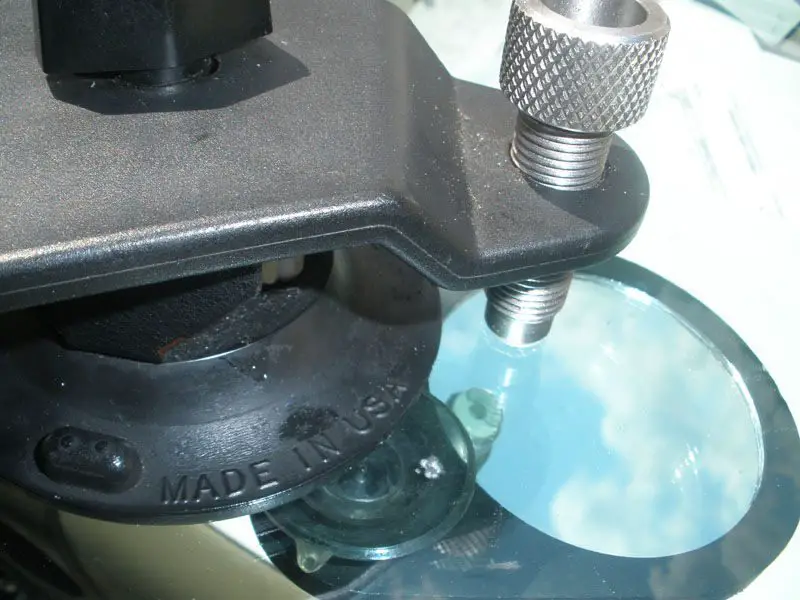
Next, hook your mirror up on the inside of the windshield, centered on the chip you are going to be repairing. This will allow you to keep an eye on the chip from all angles, which is very helpful with all glass repairs.

windshield chip or crack repair mirror

You want to center your bridge or whatever tool you are using directly on the chip. You basically want to create a seal over the area of the chip that is missing glass.

position your injector over the chip or crack

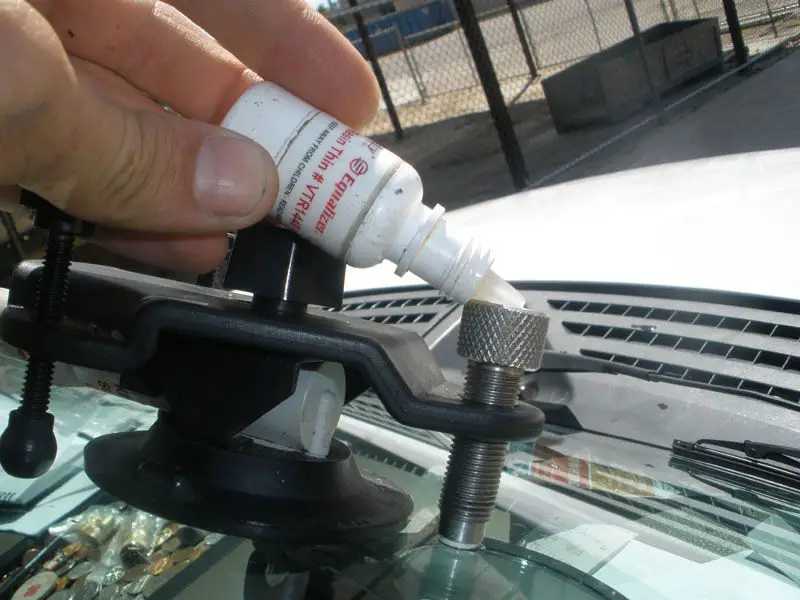
After you effectively have created a seal around the chip, put 3-8 drops of resin into the injector area.

put drops of resin into the injector

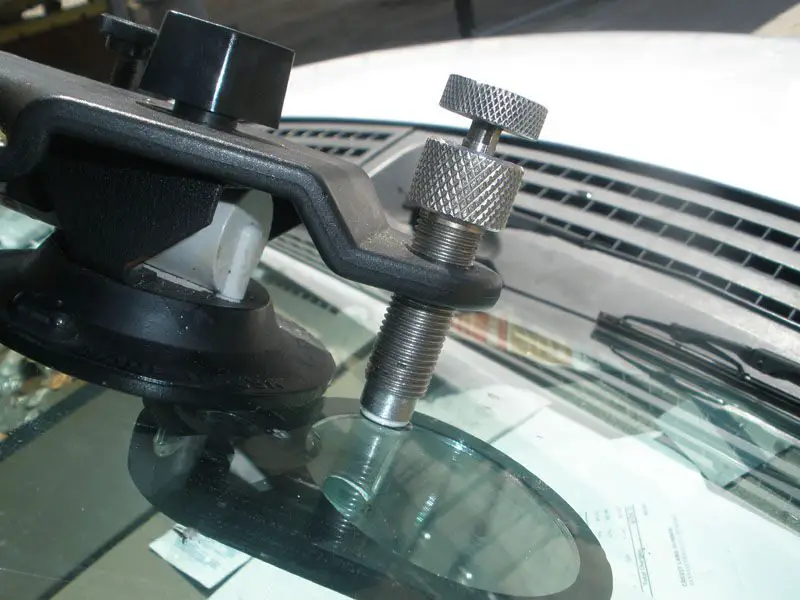
Next, Use the injector to push the resin into the chip. You should be able to see it start to clear up through your mirror. Keep an eye on it, releasing air and re-injecting the resin when needed. Leave it alone for about 5-10 minutes.

inject the resin into the crack

Be sure to keep the area covered if you are in direct sunlight, as you do not want the resin to cure prematurely.

After you have let it sit, and it appears as if the chip has cleared up, you can remove the bridge.

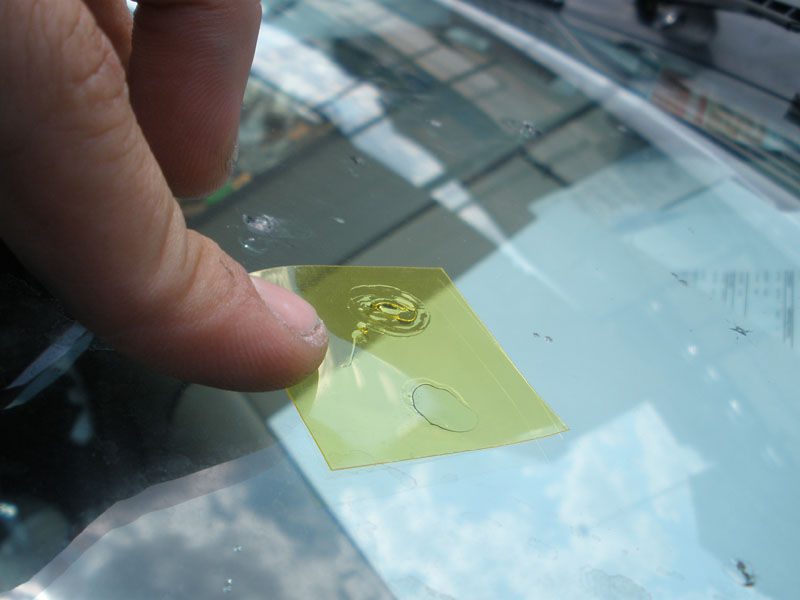
The repair is just about complete, but we still need to fill in the “pit” of the chip. The pit is the area where little bits of glass are missing. This step will give the glass a smooth finish once again. Get your pit filler, and drop a tiny bit directly on the impact point. Grab a plastic curing tab, and place over the area. Leave alone in direct sunlight for a minute or so to let it cure.

filling the chip pit

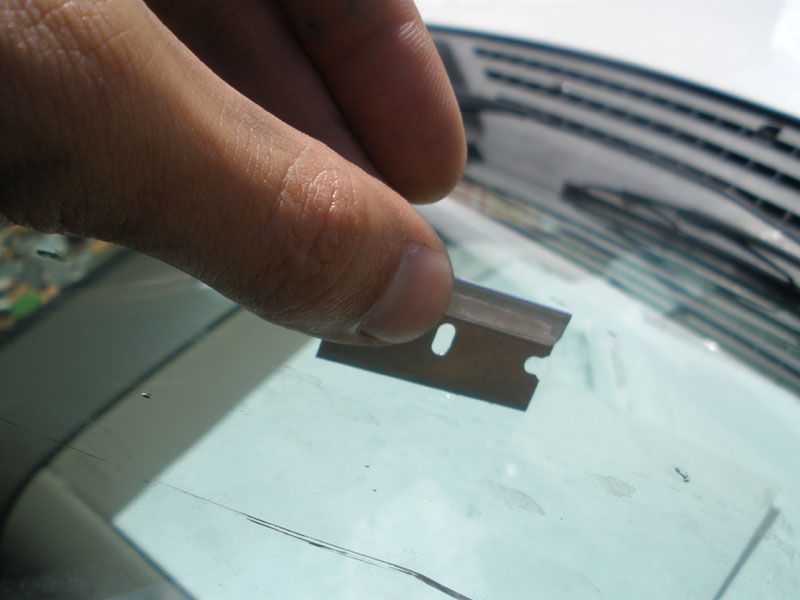
Grab a razor blade, and hold it securely upright. Scrape off all excess pit filler, leaving only the area where glass was missing filled.

clean up the surface of the chip

You can even go an extra step and use a light polish on the area to be sure that the area is flush.

Cosmetically windshield repairs clear up anywhere from 30%-80% depending on many variables. Age, Moisture, dirt, location, and temperature all play a roll in the appearance of a repaired chip. Structurally, the glass should be back up to 100%.

Have you tried repairing a chip or crack in your own windshield? Let us know your tips and tricks in the comments section below.

This post is based on How to Repair Your Windshield by Austin Windshield Repair (view original here) and has been modified and used under the Creative Commons license CC BY NC SA.

Make Your Own 3D Printed Dremel-Style Rotary Tool

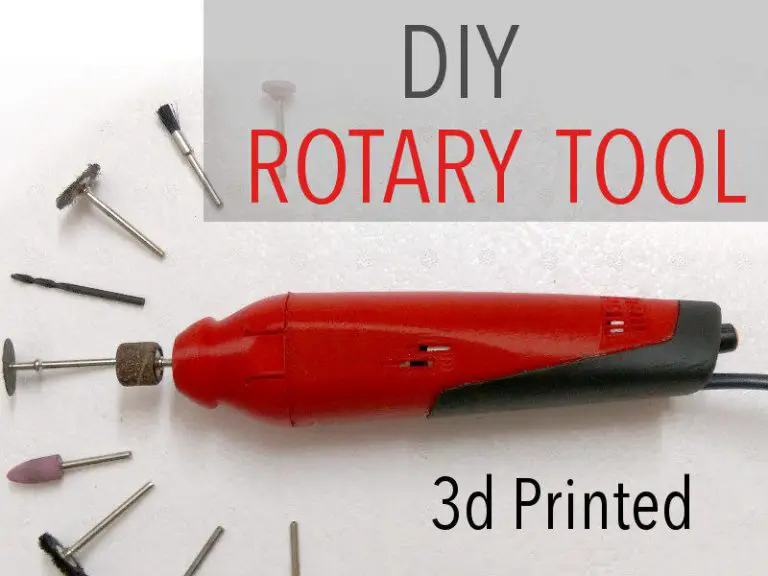
There are plenty of DIY Dremel-style rotary tool ideas available on the internet but there isn’t really anything that is powerful enough or usable in the long term, while still looking good! So here are plans to make your own 3D Printed Dremel-style rotary tool which is compact and light, yet powerful enough for 90% of the things you’ll need to do and makes much less noise than commercial ones.

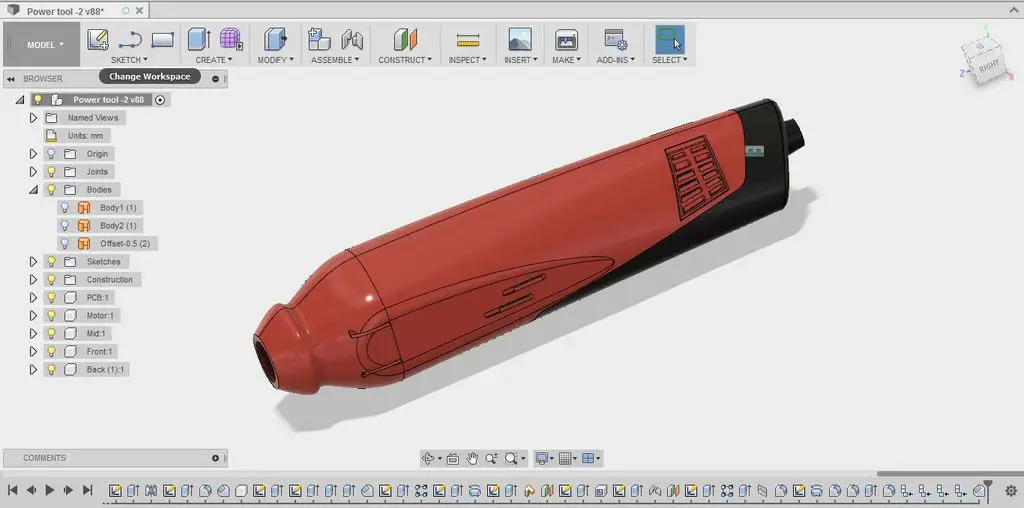
dremel style rotary tool 3d cad design

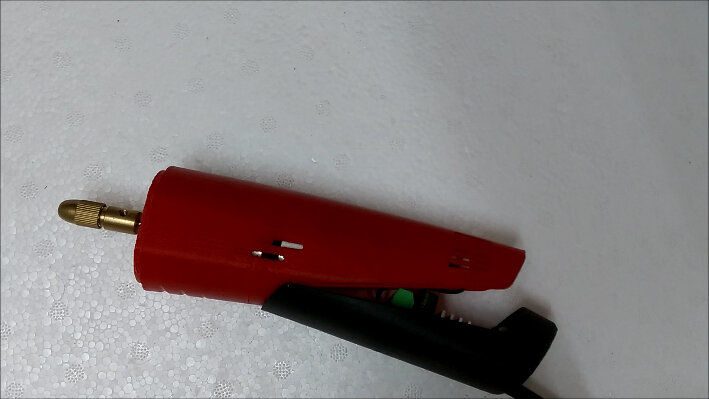
The design was done by Makernaut who used Fusion 360 for the 3D CAD model. The front part has a groove for more control while doing detailed work. It has a snap fit which makes it detachable for changing tool bits. The rest of the casing is made up of 2 parts stuck together using adhesive and holds the motor and pcb with ventilation holes for cooling.

What You’ll Need To Build Your Own Dremel-Style Rotary Tool

  • 3D Printer or 3D Printed Parts
  • 12V DC Motor: Listed as 6000 rpm, RS-550S Motor. Diameter~37mm – Buy Here
  • PWM DC Motor Controller 3A – Buy Here
  • Mini Chuck/Collet Set for 3.17mm Shaft – Buy Here
  • Adhesive – Buy Here
  • Wires
  • Black Rubberized Automotive Paint(Optional) – Buy Here
  • 12V Power Supply , At Least 5A Current – Buy Here
  • Rotary Tool Bits – Buy Here

How To Make Your Dremel-Style Rotary Tool

3D Print The Casing

To start off with, you’ll need to print the 3 parts which make up the casing. You can either print these using your own 3D printer or use a printing service such as 3D Hubs.

Here are the 3D print models:

Front

Lower Casing

Upper Casing

The parts should be printed with PLA with a 0.2mm layer height.

Assemble The Components

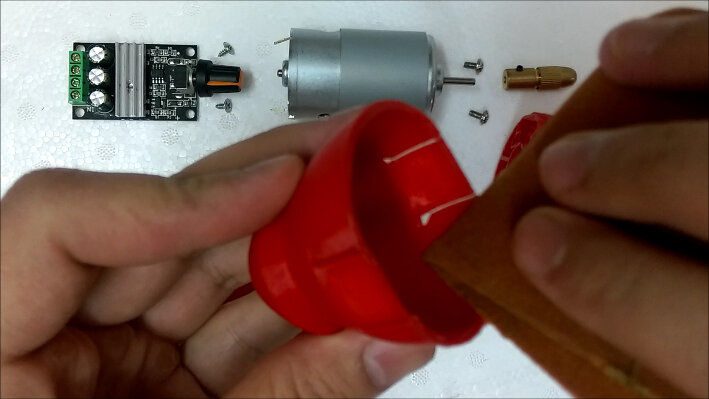
Sand and Finish the parts to get the right fit and remove irregularities. Especially the snap fit at the front cover. You could also temporarily connect the motor to a 12V battery and chuck, and use the tool bit for sanding.

sand the components to get the right fit

Don’t forget to wear appropriate safety equipment.

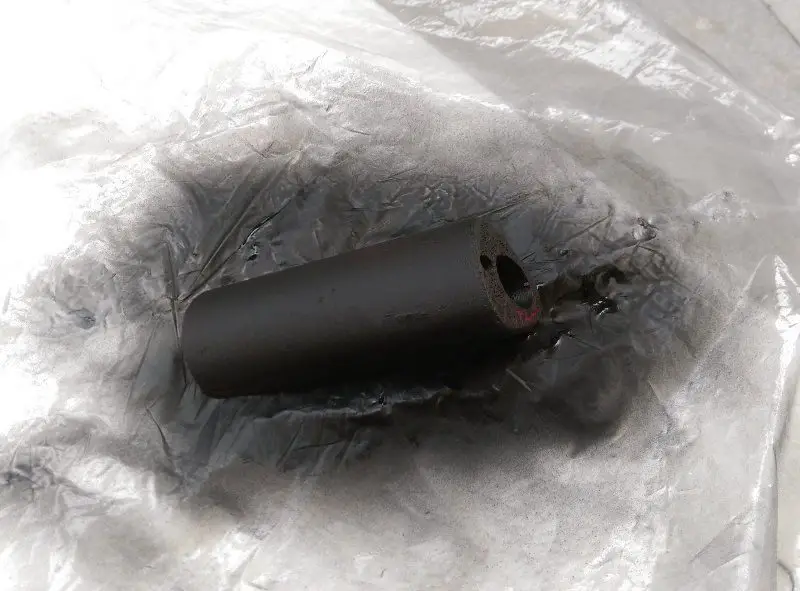
After sanding and finishing, Paint the lower-part with Black Rubber Automotive Paint for a nice grip and aesthetics. Apply 4 coats for a nice soft-touch feel. Paint outside in open area and use safety gear.

paint the bottom cover

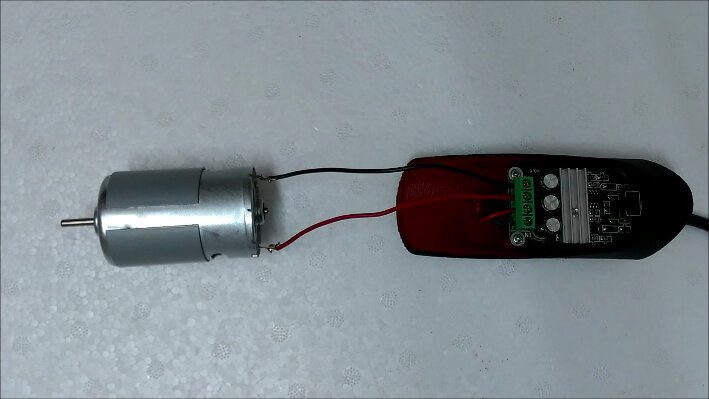
Solder the wires to motor terminals, the other ends go to the ‘Motor +/-’ terminals on the PWM controller circuit board.

Pass 2 wires through the smaller hole at the end of the ‘lower-part’ and through the small triangular hook as shown in image. Then connect one end to the ‘Power +/-’ terminals on the circuit board and other end to a 12V power supply.

connect the wires to the motor

Turn on the 12V supply to ensure that the motor turns counter-clockwise. If not, switch the wires going into ‘Motor +/-’ terminals.

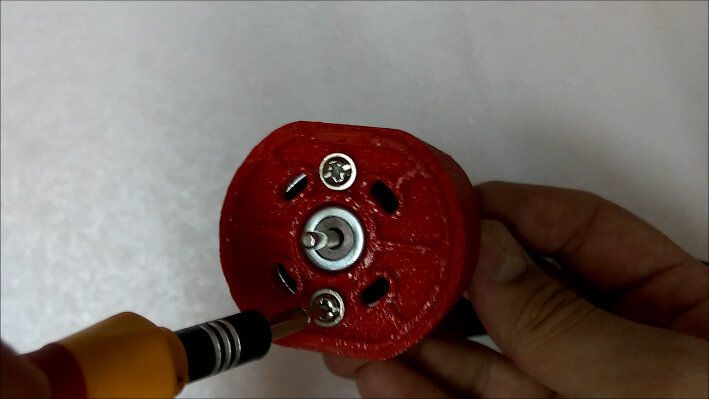
Using 2 machine screws provided with the motor (usually M3 screws), secure the motor to the front side of the casing.

screw the motor to the casing

Remove the potentiometer cap from the PWM controller and insert it through the hole at the end of the lower casing. Using a minimum of two M3 self tapping screws, secure the PWM controller board to the lower casing.

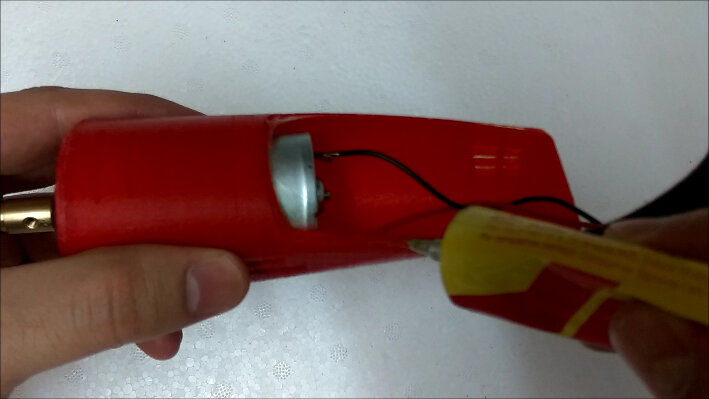
Tuck the motor wires in, and stick the lower casing to the other half casing by applying adhesive at the edges.

glue the two hlaves together

Insert the chuck on the motor shaft and secure it. Snap on the front plastic cover. Put the potentiometer cap back on.

add the chuck to the front

Your Rotary Tool Is Now Ready To Use

Cut, Engrave, Sand, Polish, Drill many materials including most Plastics, Woods, relatively Soft Metals like Aluminium.

Smaller tool bits fit in directly, but for larger bits either you may sand the opening hole of the front cover or not use the front cover. The front cover is mostly for holding the rotary tool closer to the tool bits to give more control.

Have you tried making your own rotary tool? Let us know in the comments section below!

This post is based on 3d Printed DIY Dremel-style Rotary Tool by Makernaut and is modified and used under the Creative Commons license CC BY NC SA.

How To Make A Bat House & Get Rid Of Those Bugs & Insects

Why would anybody want bats in their yard? Here are three great reasons! Bats are attracted to flower nectar just like bees and (like bees) pollinate as they visit from flower to flower. Since they “work the night shift,” bats pollinate all night like bees do all day. Secondly, bat poop is incredibly rich in nutrients, bat droppings have an ideal ratio of NPK (nitrogen, phosphorus, and potassium, the elements required for plant growth, ) and have a high percentage of living organisms, making it a natural fungicide which destroys nematode worms. Finally, but most importantly, is pest control – bats feast on as many as 1,200 insects each hour and mosquitoes are a major part of their diet. If you’ve ever grown your own garden, you know how difficult it can be to combat bugs, particularly if you are committed to avoiding harmful pesticides. Bats eat the bugs responsible for wreaking havoc on your garden.

Bat houses give females a safe, warm place to raise their young. Because bats typically only have one pup each year, populations are slow to grow. Plus, because of habitat loss, bats are finding it harder to find places to roost during the day and to raise their young. By installing a bat house, you give these pups a chance to survive and for populations to be healthy. And all those healthy bats mean we can use less pesticide on our plants—a win win for everyone.

Without bats, humans would be in trouble. Bats help control insect populations, reseed deforested land, and pollinate plants, including many that we eat. Researchers and scientists also learn from bats to improve medicine and technology. As population encroaches on forested areas, loss of habitat has endangered many species of bats. Building a bat house provides a safe place for bats to live and a nursery for their young.

So, let’s get started to make a proper, weather-tight bat house with good ventilation and proper dimensions.

What You’ll Need To Build A Bat House

You can use most any wood, but cedar is recommended for its weather resistance and insect repelling properties. I am typically against painting cedar, but a good skin of outdoor water-based latex paint will add years of life to your bat house. You will want to use liberal amounts of yellow carpenter’s glue or silicone caulk – or use both to provide as dry an interior as possible.

  • 1 x 1m (3’) Long 25mm x 200mm (1″ x 8″) Cedar Plank
  • 1 x 60cm x 60cm (2’ x 2’) Sheet of T-111 Exterior Plywood.
  • 1 x 2.5m (8’) Long 25mm x 150mm (1″ x 6″) Cedar Plank
  • 1 x 100mm x 100mm (4’ x 4’) Sheet 6mm (¼”) Plastic Mesh
  • 1 x 180cm (6’) Long 25mm x 100mm (1″ X 4″) Cedar Plank
  • 46 x 40mm (1 5/8″) #8 Galvanized Wood Screws.
  • 2 x 90cm (3’) Long 25mm x 25mm (1″ x 1″) Cedar Plank
  • Silicone Sealant
  • Paint and Paint Brush
  • Electric Drill, Saw, Measuring Tools, Heavy Duty Stapler

How To Make The Bat Box

Choosing & Cutting The Lumber

The plans for this bat house come from Florida Bat Conservancy (view site here) who do great things for the conservation of bat populations.

florida bat house plans
From: Florida Bat Conservancy

From the 25mm x 150mm (1×6), cut six 355mm (14″) sections for the front and back panels of the bat house.

From the 25mm x 200mm (1×8), cut one  405mm (16″) section for the roof and one 355mm (14″) section for the back.

From the 25mm x 25mm (1×1) cut four 430mm (17″) sections. These will be used as spacers to secure the partitions.

From the 25mm x 100mm (1×4), cut one additional 355mm (14″) section for the back.

From the remaining piece of the 25mm x 100mm (1×4) cut two sections for the sides. One end of each piece will be cut at a 30-degree angle for the roof. This can be done by cutting each piece with a front length of 545mm (21½”) and a back length of 600mm (23½”).

From the T-111 or plywood sheet, cut a  430mm x 305mm (17″x12″) section for the back partition, and a 405mm x 305mm (16″x12″) section for the front partition. If a larger piece of plywood is available, these two pieces can be cut 320mm (12½”) in width to provide a flush fit at either side.

carefully cut and select your lumber

The plans were accurate, so cutting all of the pieces can be done without regrets. Having everything pre-cut helps dry fitting pieces; the dry-fitting process helps visualize how the project comes together.

Putting The Pieces Together

Before any assembly, plan your steps so you can anticipate when glue is needed or best time to apply caulk. As pieces come together, it can become difficult to spread glue or apply caulk into tight spaces.

You can score the interior pieces (cut a very shallow groove every 15mm (1/2″) or so) to give the bats something to climb on/cling to – or you can staple a plastic mesh material to interior surfaces . . . most folks go with the mesh. Just make sure you don’t cover up your grooving or the mesh with paint – it renders it unusable by the bats.

After fastening mesh material, everything goes together using construction screws. You can use any type of screw, however, it should be a wood screw, it should be weather resistant, and it should be short enough to avoid poking through to leave exposed screw tips to harm the bats. A construction screw works well – it not only stands up to outdoor conditions, it has a six-pointed star drive which will not spin out during installation (important when using heavy lumber that this project calls for.) Don’t have a star drive bit for your drill? No problem – a bit is usually packed with a box of these screws.

Pre-drill all holes to prevent splitting wood. Use a drill bit slightly smaller in diameter than your screw. Seat each screw firmly making sure you don’t leave any exposed screw tips to harm bats. Spread glue just before screwing; clamping is not necessary if screwed properly, however using clamps sometimes helps hold pieces firmly while you pre-drill holes and install screws.

All joints receive a coating of waterproof carpentry glue. When the glue dries, all corners receive a generous bead of silicone caulk; you should plan to do one or the other, but I recommend doing both to ensure a dry interior and extended life.

place the two side pieces on the table

Place the two side pieces on a table with the long sides up and 355mm (14″) apart (outside to outside). It is recommended that glue or caulking be used as the bat house is assembled to strengthen and weatherproof it.

making the back of the bat house

Place one of the 355mm x 150mm (14″ X 6″) pieces on top and align it with the bottom of the two side pieces. Fasten it with two wood screws on each side. Repeat the process with a 150mm (6″), 100mm (4″), 150mm (6″) and 200mm (8″) piece, in that order. This will place the 200mm (8″) piece at the top of the bat house.

Now turn the bat house over so it is laying on its back. Drill one hole at the top, and one hole bottom. These will be used for mounting the bat house to a post or building – skip these holes if you plan to use a French cleat mounting system. If you do drill the holes, they should be located in the center and 50mm (2″) from the edge.

If plastic mesh is being used, cut two sections of plastic mesh the same dimensions as the plywood partitions. Staple the mesh to the plywood using vertical rows of staples. The side with the mesh will face the front of the bat house. Cut a section of plastic mesh and place it on the back wall of the bat house. Fasten the mesh with vertical rows of staples.

Position the 25mm x 25mms (1X1’s) in the left and right-hand corners with the bottom ends located 115mm (4½”) from the bottom of the bat house. This will create a landing pad. Place the 430mm (17″) partition with the rough or mesh covered side up on top of the two 25x25s (1X1’s) already in position. Use three wood screws in each; one in the center and the other two a little from each end. Make sure the top wood screw securely attaches the 25×25 (1X1) to the board on the back wall. This will add strength to the bat house

Position the remaining two 25x25s (1X1’s) on each side of the partition directly above the previous two. Place the 405mm (16″) partition on top (rough or mesh side up); allowing 25mm (1″) of the previous 25x25s (1X1’s) to show at the bottom. This open space makes it easier for bats to crawl into the forward crevices. Now fasten the plywood section and 25x25s (1X1’s) using two screws on each side. Locate them about 40mm (1½”) from the top and bottom of the plywood partition to avoid the screws underneath.

Place the beveled board at the top of the front, aligning the beveled edge with the 30 degree angle of the two side pieces. Fasten it using two screws on each side. Repeat using a second board. Locate the third and final board about 12mm (½”) down from the previous one to form a gap for the vent. This vent is important as it creates different temperature zones inside the bat house – bats will gravitate to different temperatures depending on maternal status, age, etc. and the vent gives them that choice.

Center the roof section such that there is equal overhang on each side. Fasten it to the side pieces using two screws on each side. The roof should be caulked where it meets the back wall. Adding roofing material and painting the bat house will greatly extend its life.

completed bat house

Paint color and texture also regulates bat house temperature. Paint color should be black where average high temperatures in July are less than 30°C (85°F), dark colors (such as dark brown or dark gray) where they are 30°C (85°F) to 35°C (95° F), medium colors where they are 35°C (95°F) to 38°C (100°F) and white or light colors where they exceed 38°C (100°F). Much depends upon amount of sun exposure; adjust to darker colors for less sun. For the interior, use two coats dark, exterior grade, water-based stain. Apply stain after creating scratches or grooves or prior to stapling plastic mesh. Paint fills grooves, making them unusable. Use exterior-quality, water-based stain or latex paint, and choose flat paint rather than gloss or semi-gloss paint for best solar absorption.

Mounting The Bat House

mounting the bat house

The bat house can be mounted on a post or the side of a building using the holes drilled above and three lag bolts. Alternately, a “T” brace using a cleat for the cross member can be used and anchored to a second cross member using screws in both lower corners. A large galvanized or stainless steel washer (fender washer) is recommended to protect the wood. Mounting on trees is not recommended because they have proven to be the least successful location for bat houses. Bat houses should be located at least three meters or ten feet above ground. Experience indicates the higher the bat house is mounted the more likely it will get bats; optimum elevation is between 3.5m and 6m (12 and 20 feet) above ground level.

bat house open for business

You’re up and ready for bats. The research suggests it can take as long as a year for bats to adopt a new bat house. Bat houses can be installed at any time of the year, but they are more likely to be used during their first summer if installed before the bats return in spring. When using bat houses in conjunction with excluding bats from a building, install the bat houses at least two to six weeks before the actual eviction, if possible.

If you still have trouble with pugs and pests in your garden, have a look at our recipe for an all natural homemade pesticide.

This post is based on Bat House by JanM46 and is used under the Creative Commons Public Domain license. 

Arduino Based Phases Of The Moon Lamp

Whether you are learning about astronomy, or you just like to keep track of the next werewolf cycle, this moon phase lamp is for you! This guide shows you how to make an Arduino based lamp which displays the phases of the moon. It is a really unique looking lamp which can also be used as a night light.

It can be programmed as a display piece cycling through the moon phases or it can be programmed to follow the lunar cycle and depict the phases of the moon in real time.

This project assumes you know the basics of Arduino programming, otherwise read our article on getting started with Arduino.

What You Need To Build A Phases Of The Moon Lamp

  • Micro USB Cable To Power & Program The Lamp – Buy Here
  • Arduino Gemma Microcontroller – Buy Here
  • 12 Neopixel LED Ring – Buy Here
  • Hot Melt Glue & Glue Gun – Buy Here
  • 3D Printer & White ABS Filament To Print Moon Lamp – Buy Here
  • Soldering Iron & Solder – Buy Here
  • Some Scrap Thin Insulated Wire

How To Build The Phases Of The Moon Lamp

The guide is broken up into three steps, 3D printing the lamp components, assembling the electronics and finally programming the Arduino.

3D Printing The Lamp Components

The Moon Phase Lamp is made up of 3 main parts. The zip file containing the 3D print models can be downloaded here –  3D Print Files.

3d print moon lamp half

The first thing you will want to do is print the two halves of the moon as they take a while to complete. You should get good results printing it in white ABS with no supports. Print it with 4 shells (Layers) to keep it transparent, but thick enough to hold it’s shape.

3d print moon lamp divider

The divider in the middle divides the light into 12 parts. It is also designed to work perfectly with the 12 LED Neopixel light ring. For best results, print it with black filament to better separate the light between phases but if you only have white filament then that works fine as well. The white plastic, however, bleeds light to the other sections quite a bit. Make sure to keep the doors of your 3D printer closed and the fans off during this print as it is very thin and therefore susceptible to warping.

Assembling The Electronics

The electronic connections are really straight forward, you need to just solder the terminals of the LED ring onto the terminals on the Arduino using a few short pieces of wire.

arduino to led ring connections

Following the schematic you will find that it’s pretty easy to wire the moon lamp.

soldering the LED ring onto the Arduino, up close

The USB cable can be either directly connected to the battery terminals or simply plugged into the micro USB port if you wish. If it is plugged into the micro USB port, it will also allow you to upload different sketches without taking anything apart. Just plug it into your computer to change the Arduino code.

feed the USB cable through the top moon half

Whatever you decide to just just don’t forget to feed the cord through the top moon half or you will have a hard time putting it together later.

Programming The Arduino

Now it’s time to load the code onto the Arduino. Plug your USB cable into the micro USB port on the Arduino. Upload the sketch below and the lights should start to work. This code simplistically runs through the lunar cycle with a 1 second delay between phases.

To get the code to simulate a true lunar cycle, you need it to cycle through the 24 LED phases in a lunar cycle of 29.53 days by increasing the two delays to – 29.53 x 24 x 60 x 60 x 1000 / 24 = 106 308 000 milliseconds duration between LED light changes.

// The DIY Life
// Michael Klements
// 04/05/2017

#include <Adafruit_NeoPixel.h>
#ifdef __AVR__
  #include <avr/power.h>
#endif

int pin = 0;  //Which pin is the Neopixels attached to

int numPixels = 12;  //How many NeoPixels are attached to the Arduino

Adafruit_NeoPixel pixels = Adafruit_NeoPixel(numPixels, pin, NEO_GRB + NEO_KHZ800); //When we create the pixels object, we need to tell it how many pixels there are and which pin it is connected to.

void setup()
{
  pixels.begin();
}

void loop()
{
  for (int i=0 ; i<numPixels ; i++)
  {
    pixels.setPixelColor(i, pixels.Color(255,255,255));   //Send RGB colour values for white
    pixels.show(); //Change the LED ring to the selected colour
    delay(1000);
  }
  for (int i=0 ; i<NUMPIXELS ; i++)
  {
    pixels.setPixelColor(i, pixels.Color(0,0,0)); //Send RGB colour values for black/off
    pixels.show();
    delay(1000);
  }
}

You can download the basic moon lamp code here – Moon_Simple.

Assemble The Lamp

Now comes time to assemble the lamp. Place the light divider inside of the bottom half of the lamp. Now set the electronics into place. You will notice that there is a ring that holds everything in place. Make sure to align the LEDs so that one fits between each divider.

install the LED ring into the divider

Once the electronics are in place add a dab of glue to hold it in place. Then support the board as you feed the top half through the cord. Add some hot glue around the edges of the moon halves and carefully put them together.

glue on the top and bottom moon halves

If you don’t get the alignment correct the first time, simply heat the glue up with a hair dryer or heat gun and you should be able to move it slightly.

Now plug the moon lamp into your computer and watch the cycles of the moon.

plug in your moon lamp

moon phase lamp

This post is based on Moon Phase Lamp by The Modern Inventor and is modified and used under the Creative Commons license CC BY NC SA.

Make Your Own Stitched Pocket Notebook

If you’re a fan of pretty notebooks and use a lot of them, here’s a guide to learn how to make your own stitched pocket notebook for next to nothing! Now you’ll never run out and there are loads of options for cool covers. Think about using atlas pages, old sheet music and comic books as well!

What You’ll Need To Make A Stitched Pocket Notebook

  • Thick paper or thin cardboard for the cover
  • Lined or blank paper for the inside
  • Paper cutter or Exacto knife, cutting mat and ruler
  • Awl, old seam ripper, or other sharp, thin tool
  • Sewing needle
  • Sewing thread
  • Scissors

How To Make Your Own Stitched Pocket Notebook

First, cut the cover to size. Try using thick paper with a nice double-sided print on it. You can use lots of different types of thick paper or thin cardboard, just make sure that it is thick enough to hold its shape, but still thin enough to fold nicely.

cut the cover

Cut pieces of about 18 by 12 centimeters (7 by 5 inch) for each cover. This results in a finished notebook of 9 by 12 centimeters (3,5 by 5 inch), which is a good size to fit in your back pocket. But of course you can make any size that you like.

Next, cut the paper to fill the notebook. We are using an A4 (letter size) notepad with lined paper and taking 6 sheets of paper for each notebook. But you can also use blank paper or grid paper, and use more or less sheets.

next cut the paper

Fold the top sheet in half to mark the center, making sure to line up the lines. Then cut the stack of 6 sheets in half so that you end up with 12 sheets. Make sure to cut the paper right on that fold, in between two lines, so that the lines on the paper will line up when I put the two stacks together.

Leave the sheets the size they are, which is too big for the cover, so that you can cut them to the exact right size once you assemble the notebook.

Fold all the sheets in half, taking 3 or 4 sheets at a time. With the12 sheets of paper, you’ll end up with 24 pages in your notebook, meaning you have 48 sides to write on.

place the paper inside the cover

Fold the cover in half as well.

To prepare for the stitching, make holes in the back of the notebook, through all the layers of paper. This will make the stitching a lot easier.

make holes in the notebook spine

We’re using the sharp point of an old seam ripper to do this, but you can also use an awl if you have one, or another sharp and thin tool. Start in the middle and work your way out, making the holes on top of the lines to make sure they are nicely spaced. Make an uneven number of holes for the best stitching results.

Thread your needle with normal sewing thread and double it up. Start on the inside of the notebook, at what will be the bottom side, and go out through the first hole. Go into the second hole and tie a double knot with the tail. Don’t cut the tail off yet, because you’ll need it later.

While you’ve got your needle and cotton out, you may want to have a look at our 10 minute pillow covers. They’re the perfect craft to practice your sewing skills.

sewing the notebook

Continue by going out through the third hole, into the fourth, out through the fifth, etcetera. When you come to the top, work your way back down, passing the sections you have not covered yet.

When you reach the bottom again, you’ll end up at the same hole as the tail. Tie another double knot with the tail, and cut off the ends.

complete the sewing

With the notebook folded open, cut the top and bottom of the paper to size. You can use a paper cutter or an exacto knife and a ruler will work just as well.

Next, cut the sides to size. Close the notebook first, because if you do this while the notebook is still open, the edges won’t line up when you close it.

cut the edges with an exacto knife

And that’s all there’s to it! This is a pretty quick and easy project, and if you set up a little assembly line you can very quickly whip up a whole bunch of these.

How about making your own soap, try out our beer soap recipe as a perfect gift for a father or special man in your life.

This post is based on Pocket Notebooks by Crafts with Ellen and is modified and used under the Creative Commons license CC BY NC SA.

How To Cut Glass, A Complete Guide

1

Glass cutting is a fascinating skill that a lot of people try, but quickly give up on. Here is a complete guide to cutting glass along with some helpful hints. The best way to learn to cut glass is through practice.

What You Need To Cut Glass

  • Glass (4-6mm / 1/6″ To Start With)
  • Good Quality Glass Cutter – Buy Here
  • Oil/Lubricant (WD40 Works Well) – Buy Here
  • Flat Surface
  • Square/Straight Edge – Buy Here
  • Measuring Tape

things you need to cut glass

How To Cut The Glass

It is always best to practice on a few smaller scraps before trying your main cut, especially if you are cutting a large sheet which could be costly to replace if you crack it.

The first step is to measure. If you are cutting a piece for a frame, window or a mirror then you probably don’t need to be extremely accurate but it helps to be within a couple of millimeters (1/10″ or so). An important thing to keep in mind when you are using your cutter up against a straight edge is that the cutting wheel is about 1 or 2mm from the edge of the cutter. If your cuts need to be accurate then you’ll need to take this into account when lining up your edge and your measurement markings.

Once you have marked your glass and your edge is lined up for the cut you wish to make, you need to lubricate the  line. Spray some WD40 into the cap or a small cup, you can also use any thin type of workshop oil, then use a small brush to brush some along the line you are going to be cutting. You don’t need a lot but it should run the length of the line.

Wear safety glasses when scoring the glass. Although unlikely, there is a possibility that tiny shards are shot up by the cutting wheel which may damage your eyes. 

To demonstrate the importance of oil, the below image shows a few cuts made with and without oil. The line on the far left was made without oil, the middle one with oil brushed before cutting and the last (far right) by a cutter with a built in oil dispenser.

glass cuts with and without oil

If you do a dry cut on thick glass, you’ll actually hear it crackling as the cutter moves over the surface. It also throws up tiny chips and leaves a rough line.

Once you have lubricated the line, its time to score the glass with the cutter. Keep the edge of the cutter pressed up against the straight edge, slight pressure on the tip, the cutter tilted slightly towards you and run down the length of the line in a single stroke.

scoring the glass

If by some chance a portion of the line has not been made, you can try to run over that part again but ideally it should be done in one move. Any portion that is run over again is a potential place for the cut to run astray from your cutting line.

To get a good feel for the amount of pressure you should be putting on the tip of the cutter, place a small scrap sheet on a digital scale and zero it. Now press the cutter down onto the centre of the glass until the scale reads around 2800 grams (100oz). Try to keep this amount of pressure on the cutter throughout the cut.

how much pressure to apply on the glass

If you’ve done the above steps correctly, you should now have a nice clean score and breaking the glass will be easy. If you haven’t cut glass before, this step can be a bit intimidating so you may want to practice on a smaller section.

If you are not confident in your glass cutting abilities yet, you may want to wear leather gloves to avoid cutting your hands.

The easiest and safest way to “break” the sheet along the cut is to place the handle of your cutter (or another thin roundish object) directly underneath the score mark near the edge.

glass cutter under score mark

Place a palm on the glass on each side of the cutter and then push firmly downwards until the glass pops apart. With practice, this should happen with only a small amount of pressure.

breaking the glass

Be careful of the newly cut edge as it will be extremely sharp! If you are not immediately mounting the glass into a window frame or picture frame, run over the edges with an electric sander to smooth the sharp edges.

Good luck and happy cutting.

If you’d like to try out your new cutting skills on a project, have a look at this DIY designer mirror to instantly upgrade your lounge or dining room.

This post is based on How to Cut Glass by Duplo for Daddies and is modified and used under the Creative Commons license CC BY NC SA.

Homemade Vertical Axis Wind Turbine, Made From Household Scrap

Have you been wanting to try out harvesting wind energy to power your home but you’ve been put off by the excessive price of commercially available wind turbines? Here’s a guide to building your own vertical axis wind turbine out of scraps most of us have lying around the house. If you don’t have the materials lying around, they are cheaply available from your local hardware store. The benefit of a vertical axis wind turbine is that it doesn’t need to be aligned to the wind direction, it harnesses wind energy no matter which direction the wind is blowing.

Have you thought about going off grid? Here are some tips and tricks for reducing your homes energy usage and the steps you need to take to start going off grid. Also have a look at our guide for correctly sizing your inverter.

If you don’t have enough wind in your area, why not try and build your own solar panel?

What You Need To Build A Vertical Axis Wind Turbine

  • 6 x 30cm x 120cm x 4mm (12″ x 50″ x 1/6″) Plywood Sheets
  • 3 x 1m x 60mm (40″ x 2 1/3″) Diameter Flexible Pipe – Buy Here
  • 36 x 10mm (1/2″) Long Wood Screws – Buy Here
  • 6 x 50cm (24″) Long Galvanised Pipe – Buy Here
  • 5 x Galvanised Pipe T Pieces – Buy Here
  • 1 x Galvanised Pipe Elbow – Buy Here
  • 1 x 30cm (12″) Long Galvanised Pipe – Buy Here
  • 5 x Galvanised Threaded Nipples – Buy Here
  • 1 x M12 (1/2″) Threaded Rod – Buy Here
  • 18 x M12 (1/2″) Nuts – Buy Here
  • 30 x 12mm (1/2″) Washers – Buy Here
  • Contact Adhesive – Buy Here
  • Expansion Foam – Buy Here
  • Sandable Wood Filler or Putty – Buy Here
  • A Range of Sandpaper – 80 to 240 Grit – Buy Here
  • Automotive Spray On Primer – Buy Here
  • UV Resistant Spray Paint – Buy Here
  • Silicon Sealant – Buy Here
  • Old Washing Machine Bearing Chassis – Or Thrust Bearing To Rotate On
  • Dynamo or Electric Generator/Alternator – Basic Guide To Make Your Own Shown Below
  • Around 10m (30′) of Cord or Rope – Buy Here

How To Make A Vertical Axis Wind Turbine

We’ve split the guide to making the turbine up into four sections, making the turbine blades, making the structure, mounting the blades and finally adding the generator. You start working on the frame while you are waiting for the blades to soak and dry through various stages.

Shaping The Turbine Blades

To start off, you need to shape the turbine blades. To do this, you need to make the plywood workable by soaking it overnight in cold water. You could place them on a step in the pool, in a pond or in the bathtub. Make sure they are completely covered and that water is able to get in between the individual sheets.

soaking the plywood in water

The next day, once the plywood has soaked overnight, it should be ready to be shaped. To shape the plywood, tie the sheets, two together, around a large diameter tree trunk. The tree trunk should be around 60-80cm (24-30″) in diameter. Make sure that the sheets are held tightly around the trunk and allow them to dry off for about a day. Line up the corners of the planks so that they are all at the same height and pitch so that all three are shaped equally.

tie the plywood around a tree trunk

Once the wood is almost dry, use a spirit level to draw a line across the tops and bottoms of the blades and cut the corners off to shape them further. Use a wood saw to cut the corners off.

use a wood saw to cut the corners off of the blades

Now you are ready to form the aerofoil shape of the blades.

Insert the lengths of pipe between two sheets of plywood, screw the plywood onto the pipe using 6 wood screws on each length. You could also add some strong glue such as contact adhesive to improve the bond.

screw the pipe in between the plywood

Glue and tape the trailing edge of the plywood sheets together.

glue and tape the trailing edge of the plywood sheets

Cut the ends of the flexible pipe flush with the plywood and then cut out some cardboard end covers, tape these over the ends of the blades to contain the foam. Leave a gap near the trailing edge for the foam to be added.

seal off the ends of the blades

Now fill the blades with foam making sure that they foam goes all the way to the front and the back. The foam helps to keep the blades rigid and to keep their form. It is important to make sure that each blade gets the same amount of foam so that they are all the same weight otherwise your end turbine will be unbalanced and will shake or get damaged at high speed.

fill the blades with foam

The next day, remove the wood screws and the end caps and sand the foam smooth to give the blades their final shape.

sand the blade profile until smooth

Fill in any gaps and ridges with wood filler or a sand-able putty.

fill any gaps with putty

Once the body filler has cured, sand the blades to a smooth finish by starting with a course (80 grit) sandpaper and working down to a fine (240 grit) sandpaper.

sand the body filler down

Finally, finish the blades off with a coat of automotive primer and then a coat of UV resistant spray paint.

spray paint the turbine blades

Making The Blade Support Structure

The pipe structure is made using galvanised pipes and pipe fittings. The base of the structure on which the turbine rotates is an old washing machine chassis with a double bearing system.

Start by assembling the 6 blade holding arms. At the end of each length of the six 50cm (20″) galvanised pipes, you need to make up a screw on section. Cut the threaded rod into 6 pieces and then use body filler to seat the threaded rod firmly into the centre of the galvanised pipe. Place a nut and washer at the root of the threaded rod for extra support. There should be enough threaded rod sticking out of the pipe to go through the thickest portion of the blades along with space for the two washers and two nuts, around 70cm (28″) should be sufficient.

add threaded rods to the ends of the pipes

Next assemble the galvanised piping and connectors as shown below. There are three arms at the top joined by the threaded nipples and then three arms lower down separated by the short piece of galvanised piping.

assembly of the frame

Finish the frame off by adding the washing machine bearing chassis.

the complete frame

Stand the frame up vertically and space the arms out in pairs such that the three pairs are exactly equidistant from each other.

space the frame arms equally

Once you’ve finished spacing the arms correctly, lock all of the galvanised fittings with some thread locker or glue and then you can spray the frame to match the turbine blades.

Mounting The Turbine Blades

Start by ensuring that the frame is exactly level using a spirit level and adding or removing packing as required.

ensure that the frame is level

Mark out mounting holes for the threaded rods to go through the blades on each blade and then drill the holes slightly larger than the threaded rods so that there is some room for adjustment.

Place a nut and washer onto the inside and the outside of each threaded rod with the turbine blade seated in between them. Use a spirit level to ensure that the blades are level before fastening the nuts.

ensure that the blades are level

The blades should all be equally spaces and the same height once they are installed on the frame.

blades mounted on frame

Add some silicon sealant to the inside and outside of the nuts and bolts to make sure they do not get water into the hole in the turbine blade and rust.

seal off the nuts and bolts

You are now ready to mount the generator.

Mounting The Generator

The final step is to mount the generator which converts the rotation of the turbine into electrical energy. The generator is simply coupled to the base of the turbine so that when the turbine rotates, the rotor of the generator is turned. You can used a commercially bought generator or alternator for the best efficiency or make your own simply one as described below.

In this guide we make a simple generator using an old jet water pump.

Take the cover off of an old water pump and glue magnets onto its rotor, equally spaced apart. Use a couple of of washing machine coils and glue these onto the housing such that they are aligned with the magnets. The magnets should pass over the coils as the pump rotates.

adding magnets and coils to the pump

The pump generator should then be mounted below the turbine with the turbine shaft coupled to the pump blade.

water pump generator

To improve the efficiency of the output, place diodes in the configuration shown below across each coil. The diodes assist in keeping the flow of electricity in the same direction instead of reversing.

diode connection diagram

actual diode connections

Your vertical axis wind turbine is now complete and ready to be coupled onto your charge controller to power your home or camping equipment.

homemade vertical axis wind turbine alternate view

Have you made your own vertical axis wind turbine? Let us know in the comments section below or send us your pictures to include in this post, we would love to hear from you.