
Home Blog Page 26

Driving A DC Motor With Arduino Using An L293D Motor Driver

In this tutorial, we’re going to be looking at how to use an L293D motor driver to drive a DC Motor for your Arduino projects. This has some great applications for projects such as balancing robots, smart and autonomous vehicles and other moving systems.

The L293D chip is a very versatile and affordable chip, you can get a pack of them for less than a dollar each and they’re able to control up to four solenoids, two DC motors or a uni-polar stepper motor with up to 600mA per channel.

This project assumes that you know the basics of Arduino programming, otherwise follow our guide on getting started with Arduino.

What You’ll Need For This Project

Information on the L293D Motor Driver

Before we start with the circuit and programming your Arduino, let’s have a look at the L293D motor driver chip and some of its functionality and limitations.

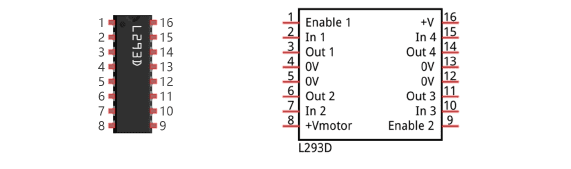
L293D Motor Driver Chip

The pin descriptions are as follows:
  • 2, 7, 10, 15 (In 1, In 2, In 3, In 4)
    • Each of the four channel’s digital signal input pin
  • 3, 6, 11, 14 (Out 1, Out 2, Out 3, Out 4)
    • Each of the four channel’s output pin
  • 1 (Enable 1)
    • Channel 1 & 2 enable pin
  • 9 (Enable 2)
    • Channel 3 & 4 enable pin
  • 4, 5, 12, 13 (0V)
    • Power GND
  • 16 (+V)
    • Power supply for the driver, positive input 4.5V to 36V
  • 8 (+Vmotor)
    • Power supply for load (motor), positive input 4.5V to 36V

In order to use the L293D motor driver to drive a DC motor, there are two available connection options. The first is a simple connection between the output of the driver and ground which enables the speed of the motor to be controlled but rotation only in a single direction. The second is to connect the motor between two driver outputs, which enables both the motor’s speed and direction to be controlled.

Connecting The Motor Driver To Your Arduino

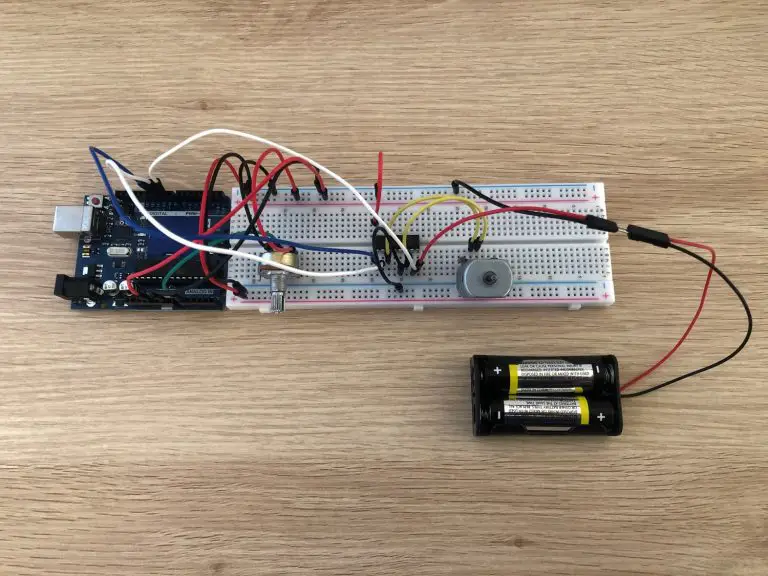
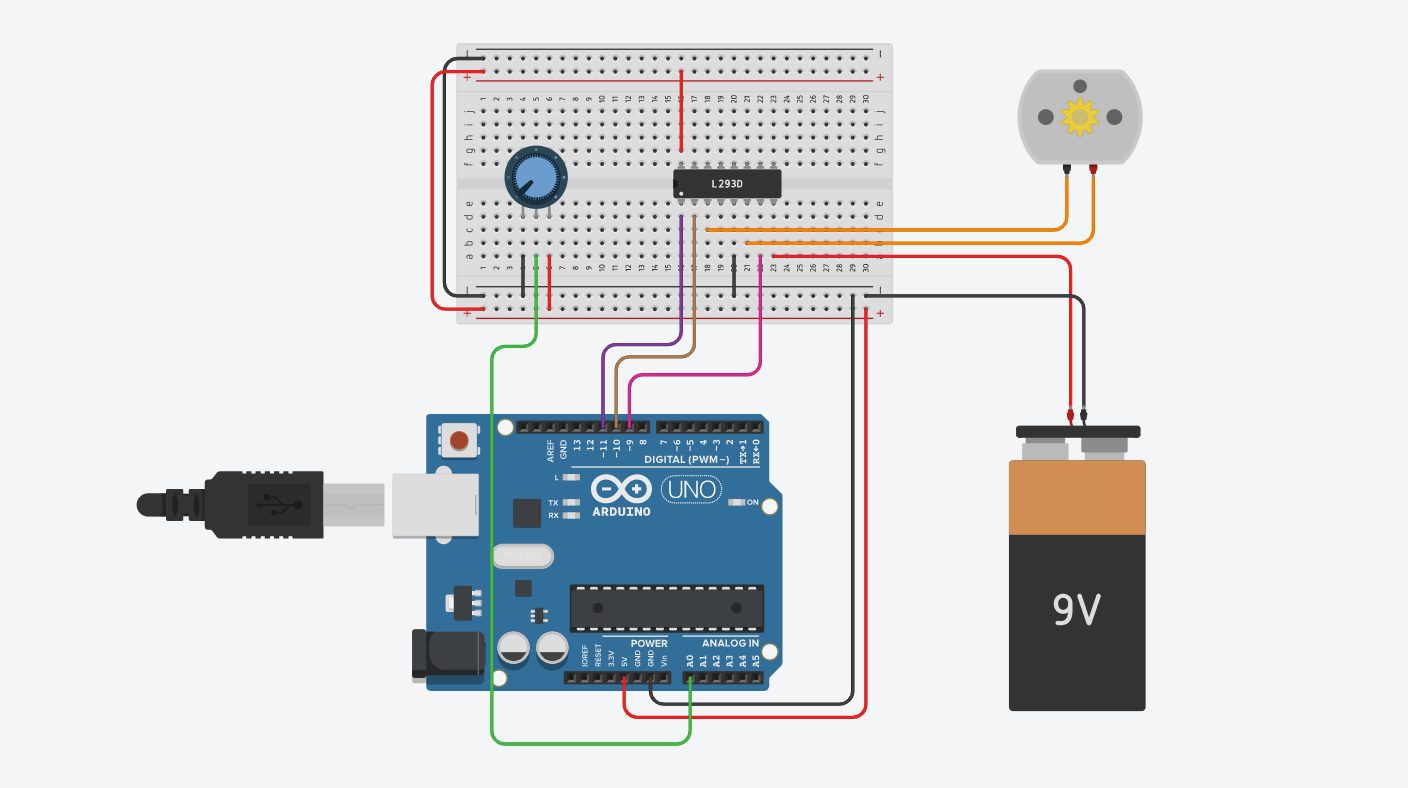
We’re going to be setting up two circuits to control the motor. One to take an input from a potentiometer so that you can adjust the potentiometer to control the motor speed and direction, and a second to interface the motor and motor driver with the Arduino.

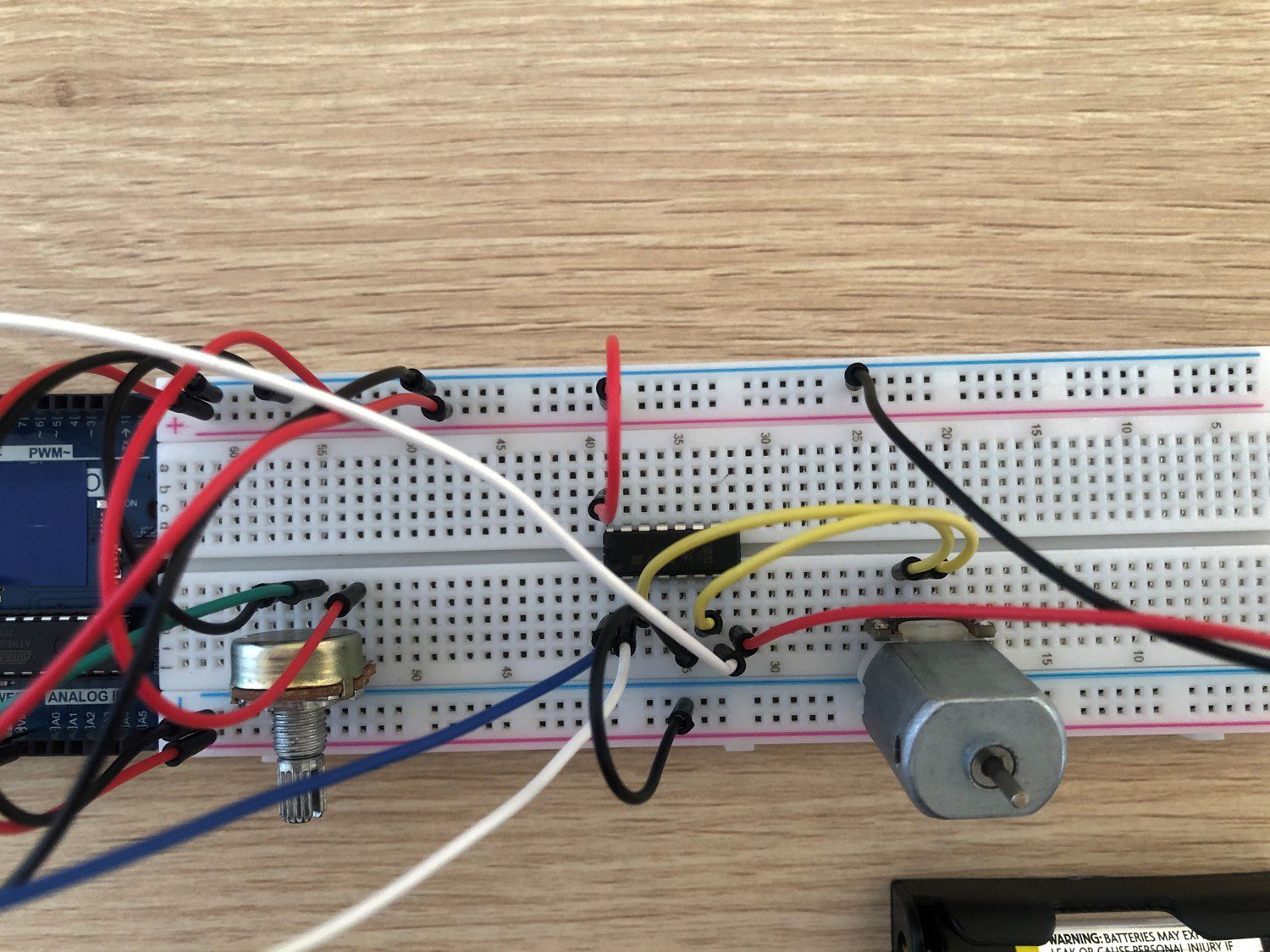
This is how the two circuits should be set up on a breadboard:

L293D Motor Driver DC Motor Circuit

L293D Motor Driver On Breadboard

The potentiometer circuit is a straight forward analogue input circuit with the potentiometer wiper connected to the Arduino analogue input 0. This is going to be used to control the motor’s direction and speed. The potentiometer’s midpoint corresponds with zero speed and turning it clockwise moves the motor forward with increasing speed and anti-clockwise moves it in reverse with increasing speed. You could also wire up a push button to control the motor direction if you’d like and this will give you the full potentiometer range to control the motor’s speed.

Unless your motor is really small, you’ll need to power it separately, not through your Arduino’s on-board supply. This is easily done using an external battery pack or power supply. This can be the same supply as you are using for your Arduino if it is able to provide adequate voltage and has enough capacity. Make sure that your nattery is the correct voltage for your motor, use a small battery pack (one with 2 x 1.5V AA batteries) for lower voltage motors and a larger 9V battery for larger motors, check your motor data sheet if you are unsure.

The remaining connections to your L293D motor driver are quite simple.

The motor is connected to pins 3 & 6 (Out 1 & Out 2) on the driver, they can be connected either way around and this will only affect the motor forward and reverse directions in relation to the potentiometer movement.

The motor driver’s control pins 7, 2 & 1 (In 2, In 1 & Enable 1) are connected to Arduino pins 9, 10 and 11 respectively.

The Code to Drive A DC Motor Using an L293D Motor Driver

Now that you’ve made the connections between your components and your driver and Arduino, lets have a look at how to program your Arduino to control the motor.

Here is the code:

//The DIY Life
//4 November 2019
//Michael Klements

int in2Pin = 9;       // Define pins used for L293D
int in1Pin = 10;
int enable1Pin = 11;

int dir = 0;  // Define variables for motor direction and speed
int spd = 0;

void setup()
{
  pinMode(in2Pin, OUTPUT);	//Define pin modes
  pinMode(in1Pin, OUTPUT);
  pinMode(enable1Pin, OUTPUT);
}

void loop() {
  int potInput = analogRead(A0);  // Read potentiometer value
  spd = map(abs(potInput - 512), 0, 512, 0, 255); // Calculate motor speed, pot travel from midpoint
  if (potInput > 512) // Compare to potentiometer midpoint to get motor direction
    dir = 0;
  else
    dir = 1;
  driveMotor(); //Call function to drive motor at calculated speed and direction
}

void driveMotor() 
{
  if (dir)
  {
    digitalWrite(in1Pin, HIGH);
    digitalWrite(in2Pin, LOW);
  }
  else
  {
    digitalWrite(in1Pin, LOW);
    digitalWrite(in2Pin, HIGH);
  }
  analogWrite(enable1Pin, spd);
}

Download the code here: L293D DC Motor Driver Code

We start by defining the three output pins which are required to drive the L293D motor driver. We then create two variables which are the parameters required to define the motors movement, its direction and its speed.

The setup loop simply defines the identified pins on your Arduino as outputs.

In the loop function we start by reading in the potentiometer set point using the Arduino’s analogue input A0.

Since we are using the potentiometer’s midpoint as zero speed and movement away from the midpoint in either direction as the speed, we need to take the absolute value of the speed after adjusting the midpoint from 512 to 0, since the analogue input will read a value between 0 and 1023. In addition to this, we need to map the speed to a range between 0 and 255, as this is the range of the Arduino’s PWM outputs. We now have the required motor speed stored in a variable spd which is between the value of 0 and 255.

Next we need to determine the direction. We know that 512 is the midpoint, so any value higher than this is the forward direction 0 and any value lower than this is the reverse direction 1.

We now call up the function which we’ve created to drive the motor. This function sets the two input pins HIGH or LOW as required for either the forward or reverse direction and then sets the speed using a PWM output according to our calculated speed value.

Upload your code and your Arduino motor driver is ready to run. You should now be able to drive your motor in either the forward or reverse directions by turning your potentiometer clockwise or anti-clockwise from its mid-point.

Have you tried using an L293D motor driver to drive a DC motor? Let us know in the comments section below, we would love to hear which projects you’ve used this driver in.

Thrift as a Family Trait and How to Practice It

Any fully independent adult, especially one with a spouse and children, is well aware of all the expenses that await each month. Even when both spouses are employed, it does get difficult from time to time to tackle all the financial challenges. Still, comfort and rescue can be found in the fact that there are multiple ways to boost your budget and save money through seemingly minor, everyday decisions and behaviours. Let’s have a look at some ways to make thrift into a family habit.

Getting rid of harmful and costly habits

Habits like regular smoking and alcohol consumption permeate not just the physical, that is, health aspect of one’s life, but they also present a noticeable blow to a family budget. Though it seems like it’s not more than just a few dollars here and there, it stops looking that way once you put on paper just how much you spend on such harmful treats. Over a longer period of time, these costs add up and reach a small fortune that could have instead been put toward wiser or more noble family causes, like vacations or college funds.

Economizing with water and electricity

Economizing with water and electricity

It is an immensely negative habit that so many of us have, yet it never stops having to be said—people are highly careless with their use of water and electricity. Teach both yourselves and your children the importance of water conservation. Turn off your faucets when you are not using water, fix any leaky faucets or sinks you may have, double dip the dishes when washing them, make your showers and baths shorter.

There are also possibilities for reducing your electrical bill: switch off all the lights and electronic devices when you leave the house, rely more on natural instead of artificial light, keep your refrigerator full and turn it up slightly, instead of tumble drying try air drying your clothes, during the heating season turn the thermostat down just a notch, use pot lids when cooking or boiling water, etc.

Smart home improvement

It has been proven time after time that wise property investment in the end reduces family costs on monthly and annual levels. It should be emphasized that this does not have to imply purchasing new real estate—specific home improvements can be significantly budget-friendly as well. The important part is that the investment you decide on pays off not just for a brief period, but for years to come.

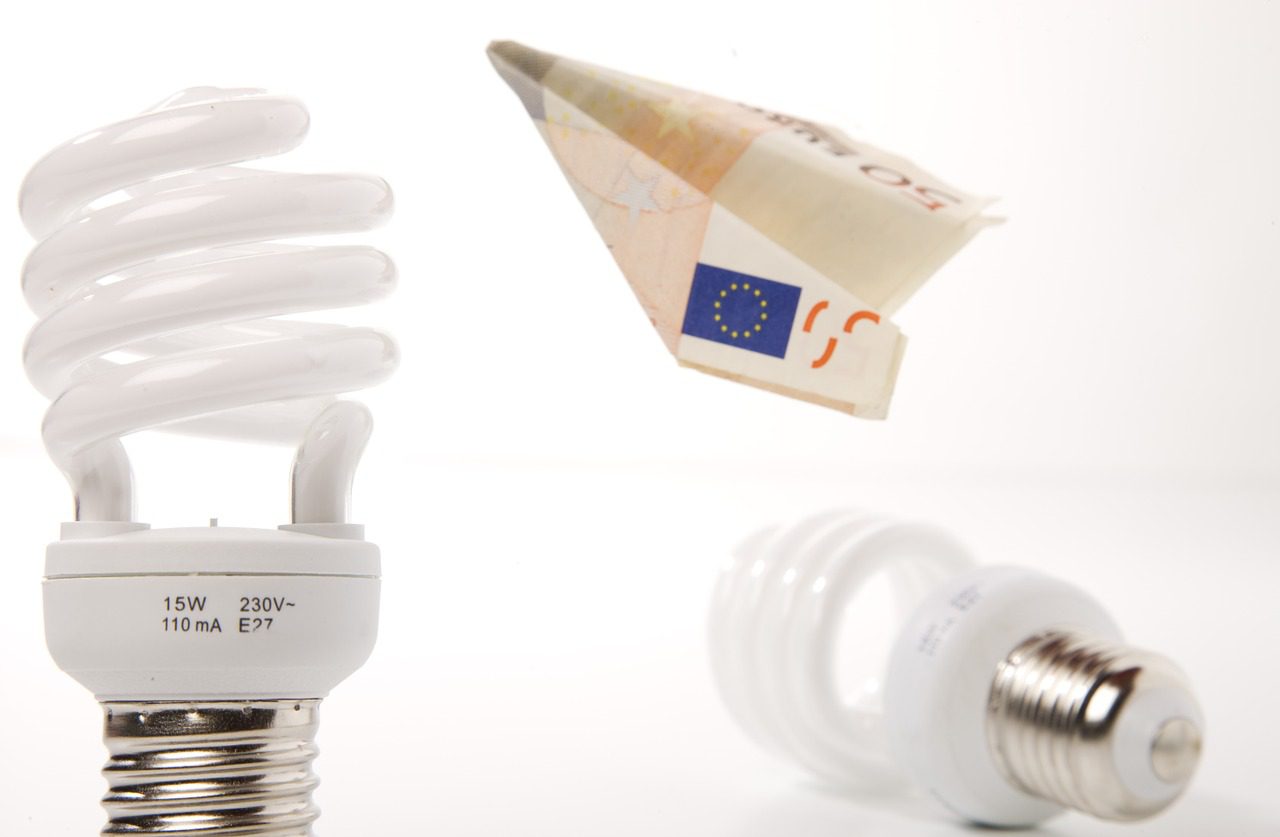
For example, you can reduce your electricity bills by changing all the light bulbs in your home from incandescent to LED ones. Also, high-quality doors and windows not only make your house or apartment safer, but they are generally more energy efficient and provide better thermal insulation. This will inevitably result in much lower electricity and heating bills.

Bicycle as a means of transportation

Bicycle as a means of transportation

Some of the most obvious advantages of switching to bicycles instead of driving is that it is the more environmentally friendly decision and it helps keep the body healthy. But, cycling is also good for the wallet. Since you would not be using your car as often, you would be able to save a big sum of money by spending much less on petrol or gas.

Keeping an expense journal or thrift journal

Keeping an expense or thrift journal is especially beneficial for families who are just starting to develop a money-saving regimen and need to pinpoint their largest financial sinkholes. By keeping track of every occuring purchase and expense, you can analyze what your family spends most money on, detect (and then avoid) any unnecessary or excessive expenses, and have a much clearer picture of the possible ways your budget can be brought back to health.

Coupons and shopping bargains

Those who have already tried collecting coupons are aware of just how much money can be saved and put aside through coupons. Depending on the number of family members, grocery shopping can be quite expensive, but if you regularly collect and use coupons available to you, that cost can be visibly reduced.

Second hand shops are nothing to be sneezed at, either, so give them a chance. Once you get into the spirit of thriftiness, you will see that the clothes or other items you can purchase for your family here are just as good (or even better) than new ones you can get at standard stores. Far from saying that bargains cannot be found at regular stores as well. Try to avoid shopping at full prices but instead look for places where they have high-quality stock on sale.

Creating instead of buying

Creating instead of buying

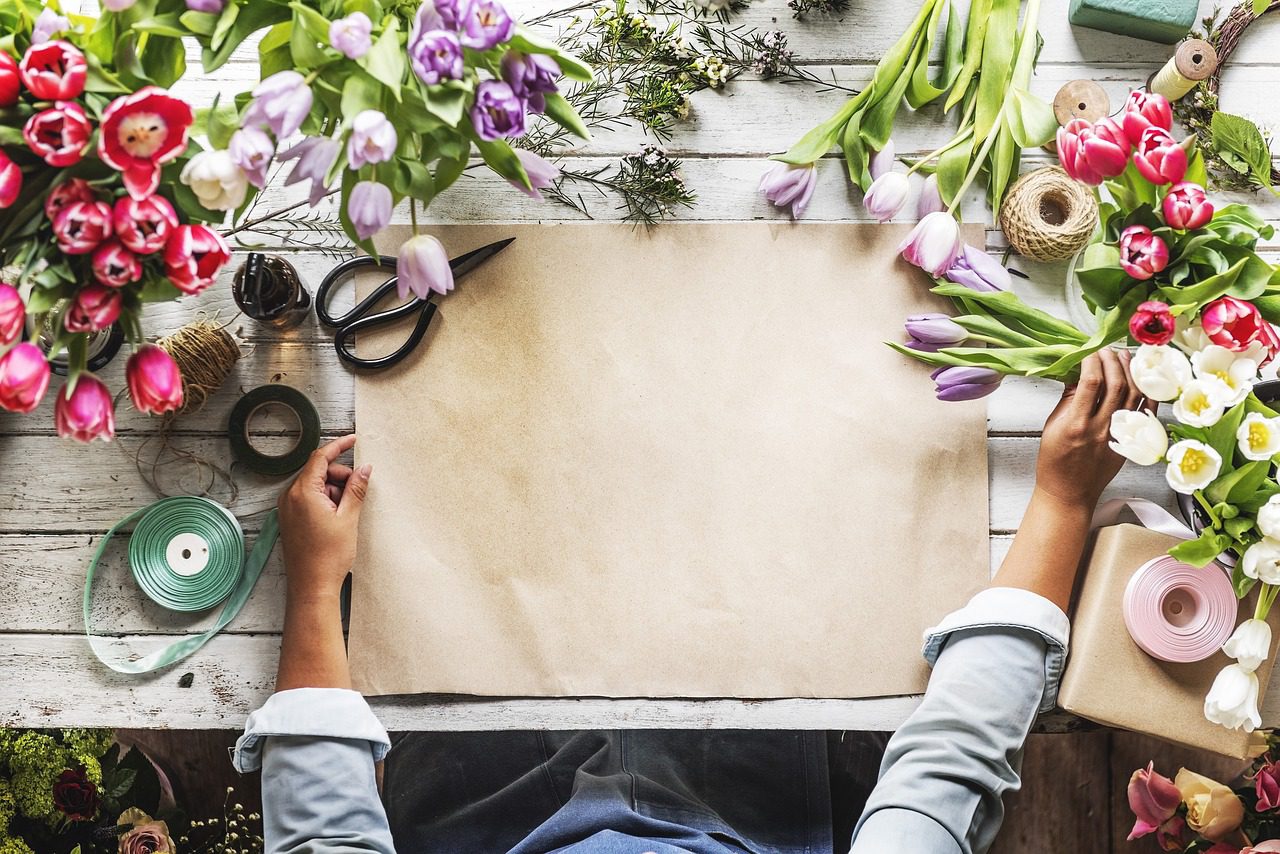
Just because your financial situation has hit a rough patch, it does not mean that you and your family have to give up certain pleasures and joys. Like gift giving, for example. Situations such as this are a perfect excuse to bring your creativity to the surface.

Instead of buying a present, invest effort into coming up with your own, original, personalized present for a loved one by using what you already have in your home. If it’s an arts-and-crafts project, you can recycle things that you no longer use and transform them into a masterpiece. If you have a knack for composing or drawing, write a song or draw a portrait. There are tons of ways to employ your innovativeness, talents, and creative spark in living a frugal life.

To conclude…

Frugal living is not just a way to overcome tough financial phases, but it’s also a manner of learning how to use one’s resources wisely. The true efficiency and usefulness of thrift are most visible when responsible spending is incorporated into one’s lifestyle as a permanent trait rather than an obligation.

Do you have any thrift tips or tricks which you use to live a more frugal lifestyle? Let us know in the comments section below. We’d love to hear from you!

Great Last Minute DIY Halloween Decorations

Halloween is only three days away, so we’ve put together a list of some of our favourite last minute DIY decorations to get your home prepared in time for your trick or treaters. All of these ideas are quick and easy to put together so you don’t have to spend too much time worrying about getting prepared.

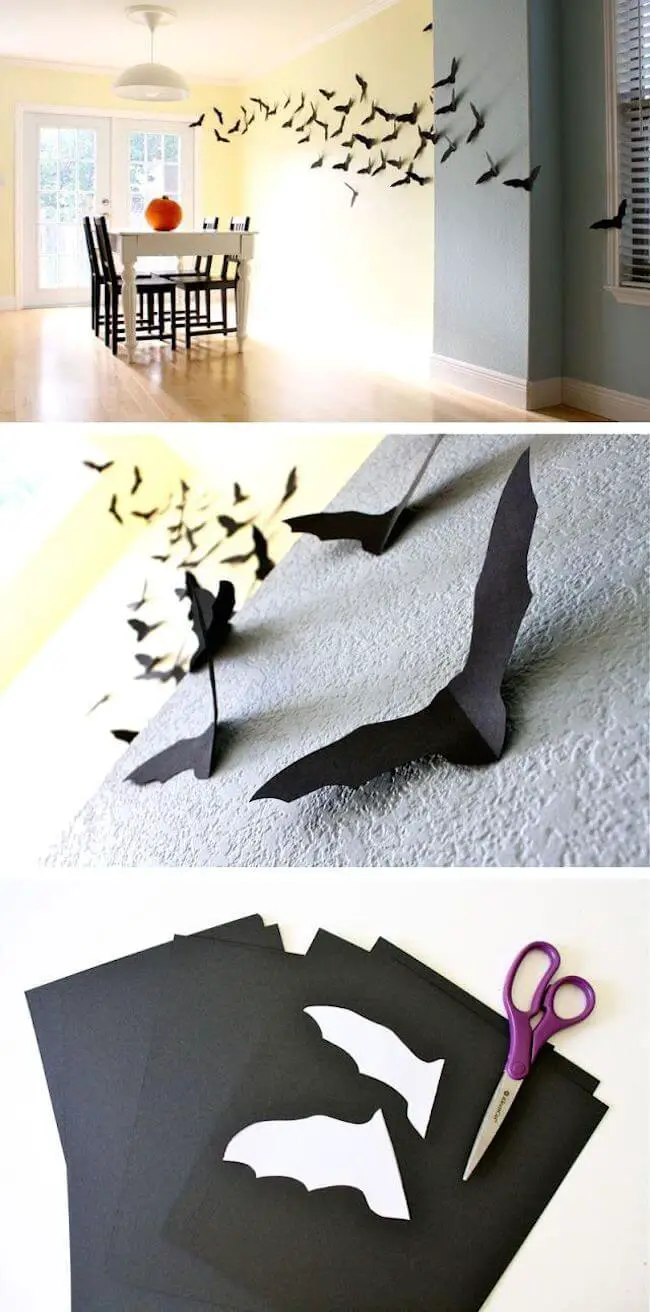
Bat Wall

All you need is a pack of black card and some blu-tack and you’re ready for a great halloween feature wall for your living room or entrance hall.

Bat Wall
Source: vilabacana.com

Homemade Witches Broomsticks

If you’ve got a few dry sticks and some long grass or thin twigs around your area, you can try making these cute witches broomsticks.

Halloween Witches Broomsticks
Source: apieceofrainbow.com

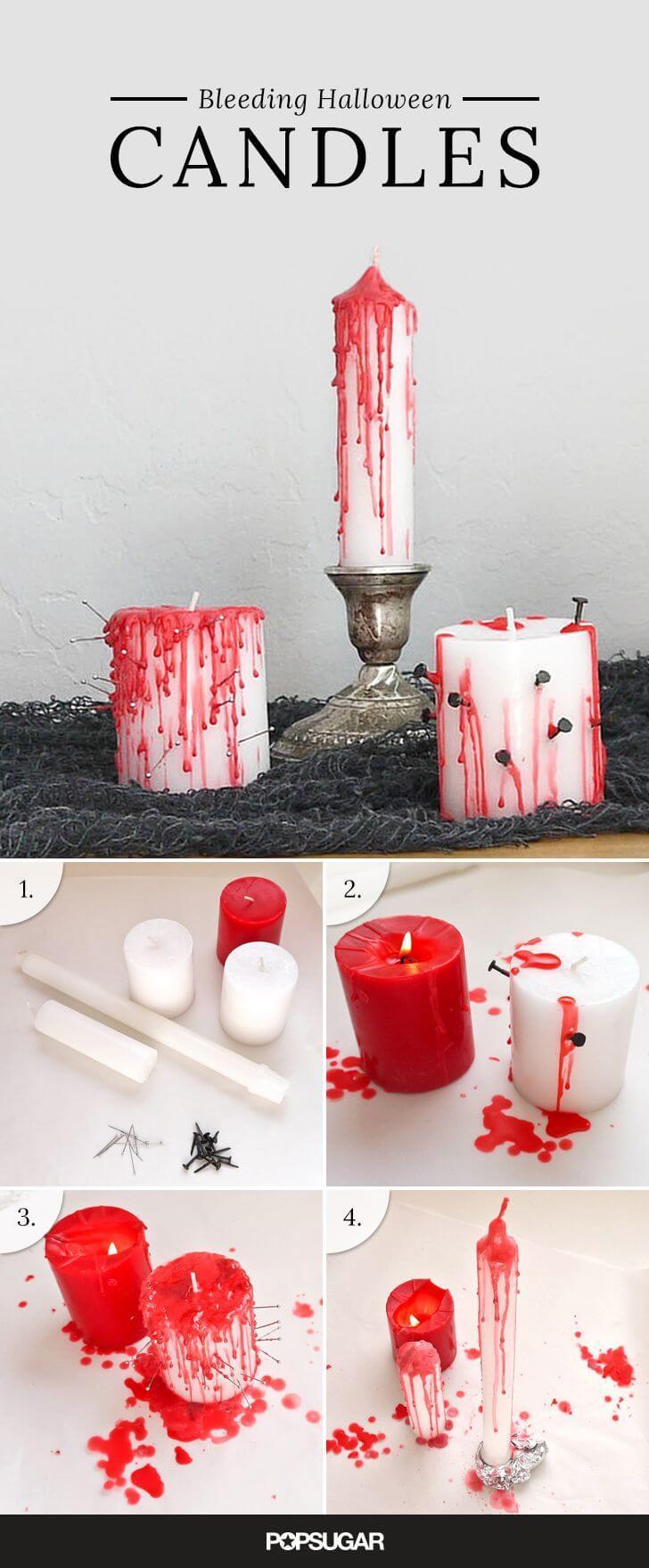
Bleeding DIY Halloween Candles

Light up the room with your own homemade bleeding halloween candles.

Bleeding DIY Halloween Candles
Source: popsugar.com

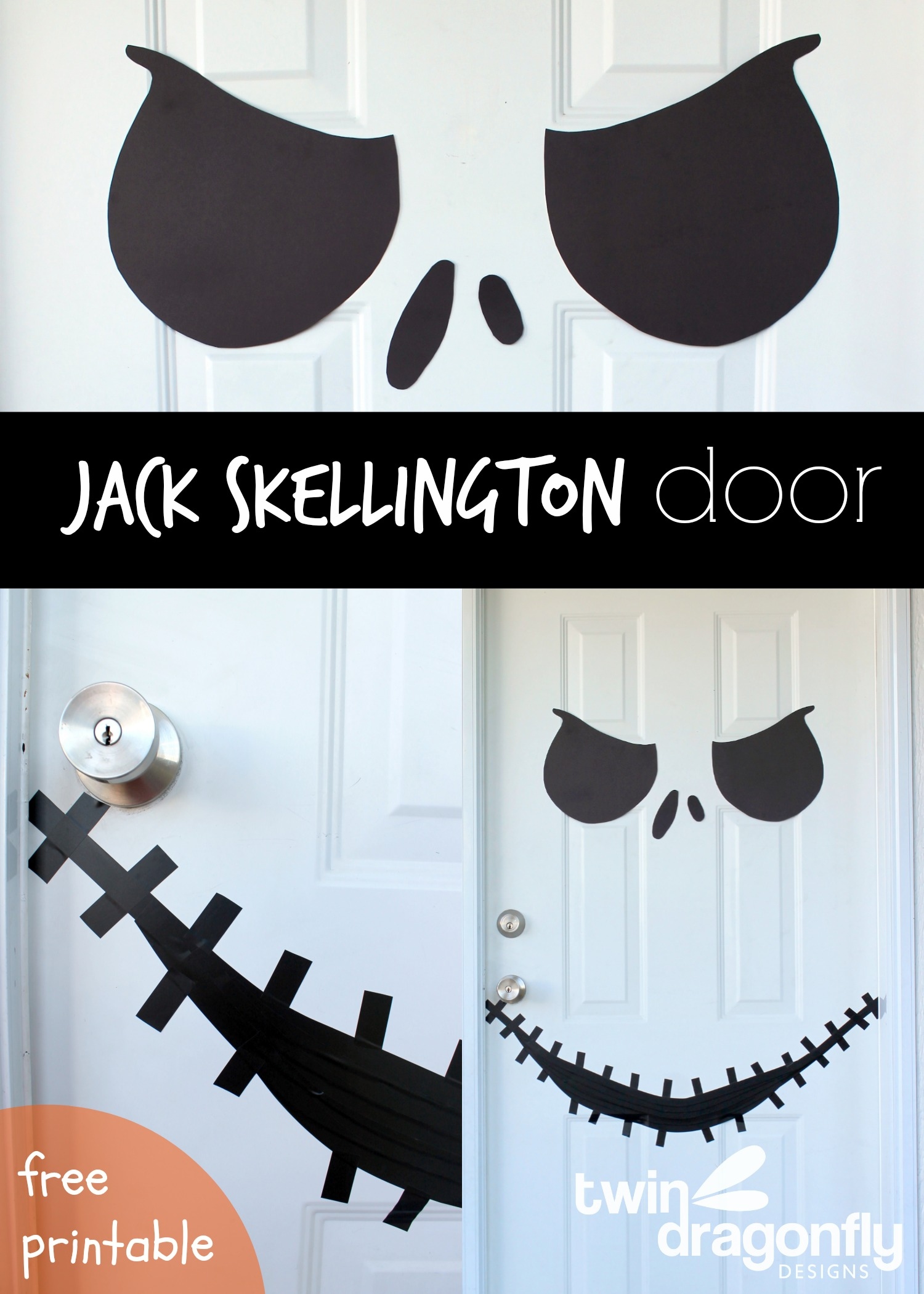
Jack Skellington Door

Make a statement on your front door, especially if it is white, with this Jack Skellington door. There’s even a free printable to guide you through it.

Jack Skellington Door
Source: twindragonflydesigns.com

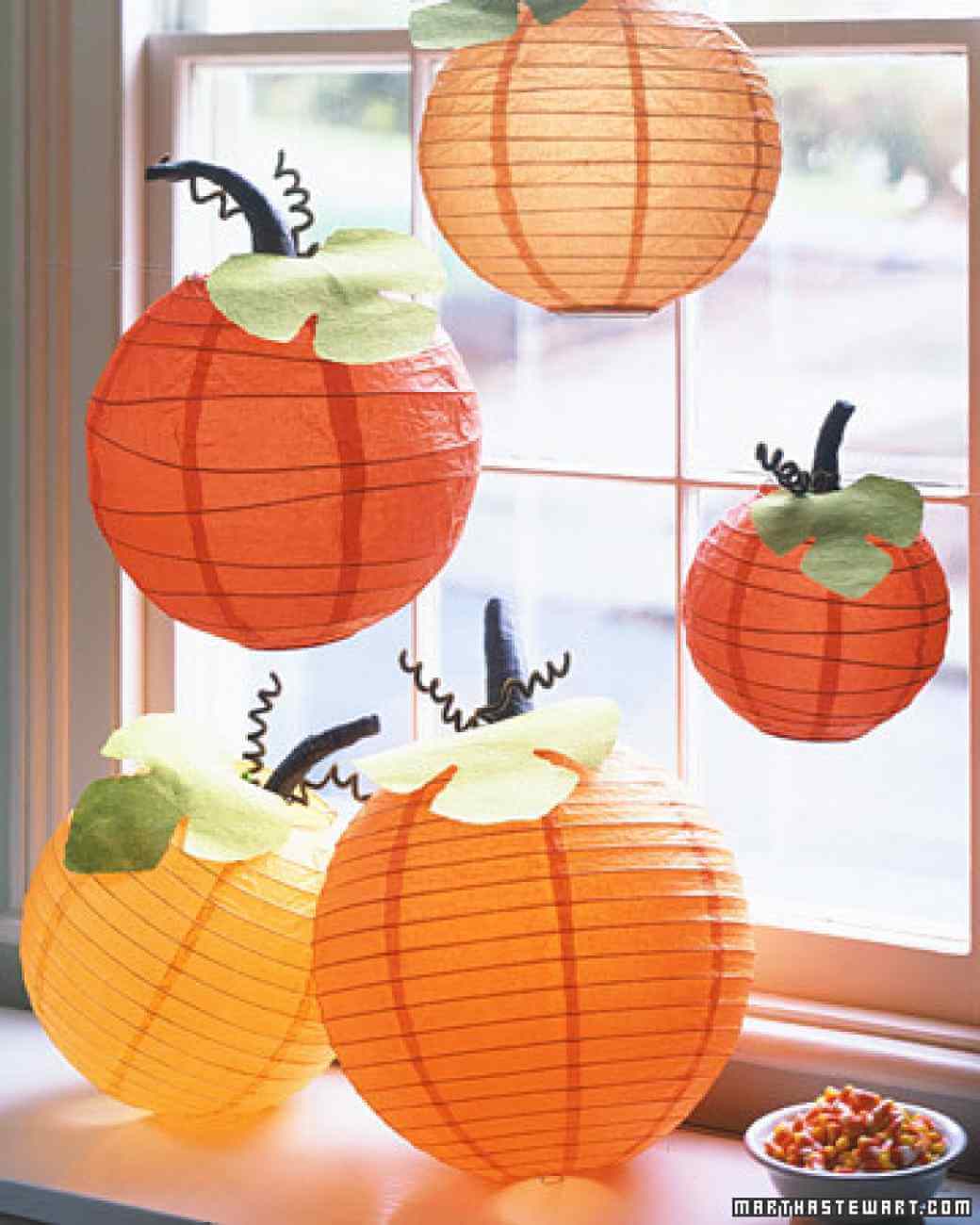
Floating Pumpkin Lanterns

Paper lanterns made the perfect base for floating pumpkins. These are also great for hanging in trees as outdoor lighting.

Floating Pumpkin Lanterns
Source: findinghomefarms.com

Mason Jar Jack-O-Lanterns

If you’ve got some mason jars lying around, why not turn them into decorative jack-o-lantern lighting for your mantle or window sill?

Mason Jar Jack O Lanterns
Source: about-interior-design.net

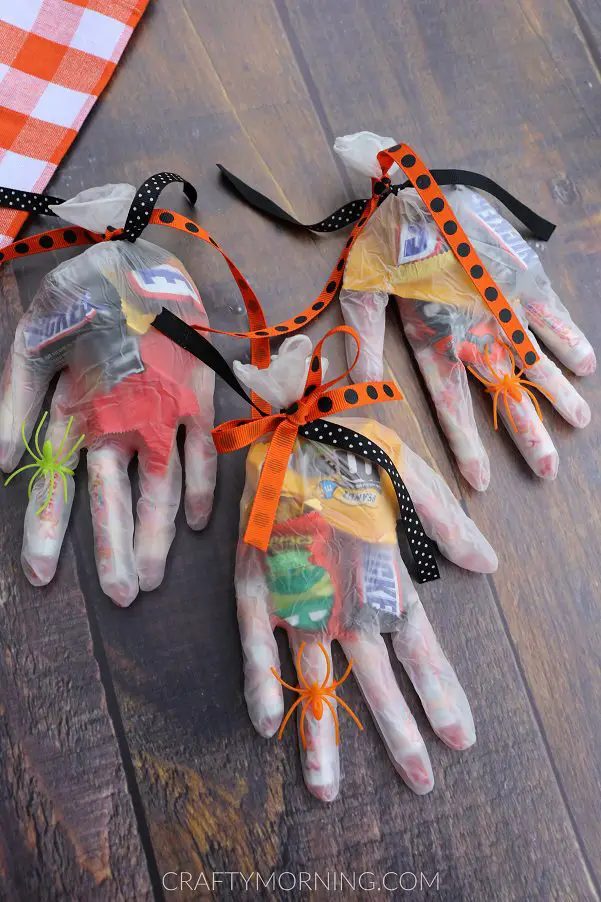
Candy Glove Treats

Pass out your treats in a creative way with these DIY halloween candy glove treats.

Halloween Candy Glove Treats
Source: craftymorning.com

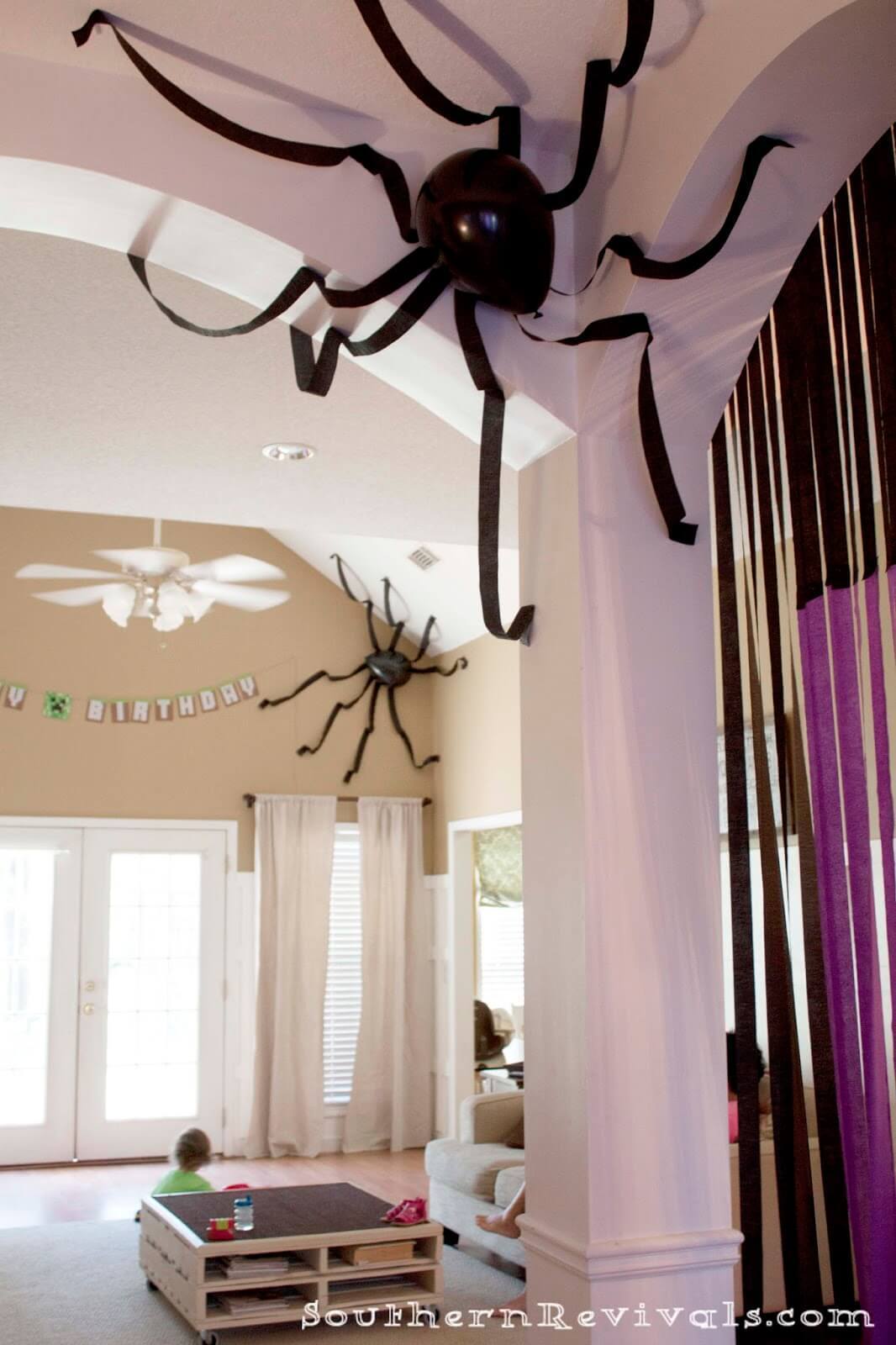
Corner Ceiling Spiders

These creepy additions to the corners of your home are a great hit with the kids, and they’ll have fun helping you make them.

Corner Ceiling Spiders
Source: southernrevivals.com

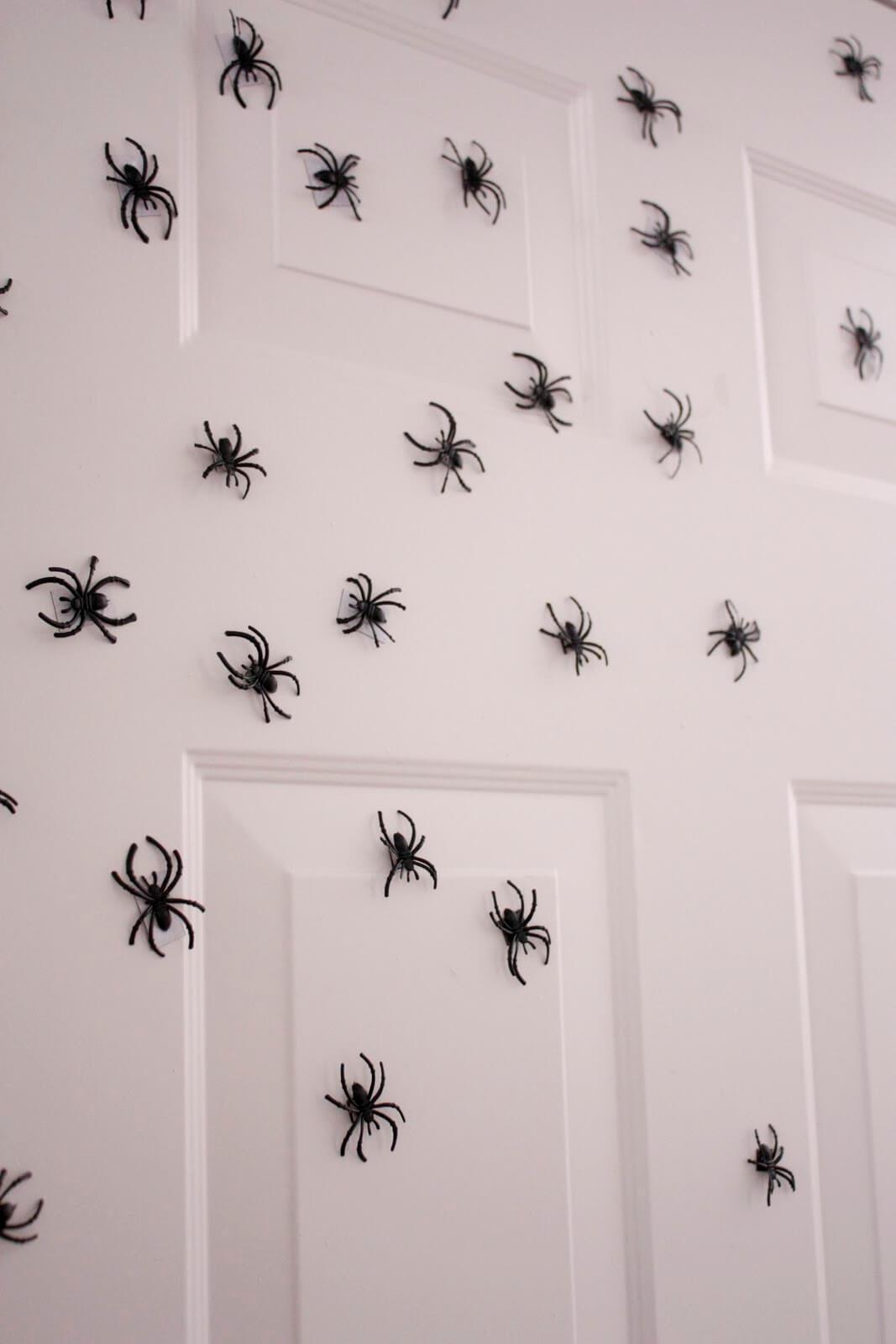
Magnetic Spiders

Perfect for a metal shed or garage door, these magnetic spiders are quick to make and super cheap to buy the materials for.

Magnetic spiders
Source: deliacreates.com

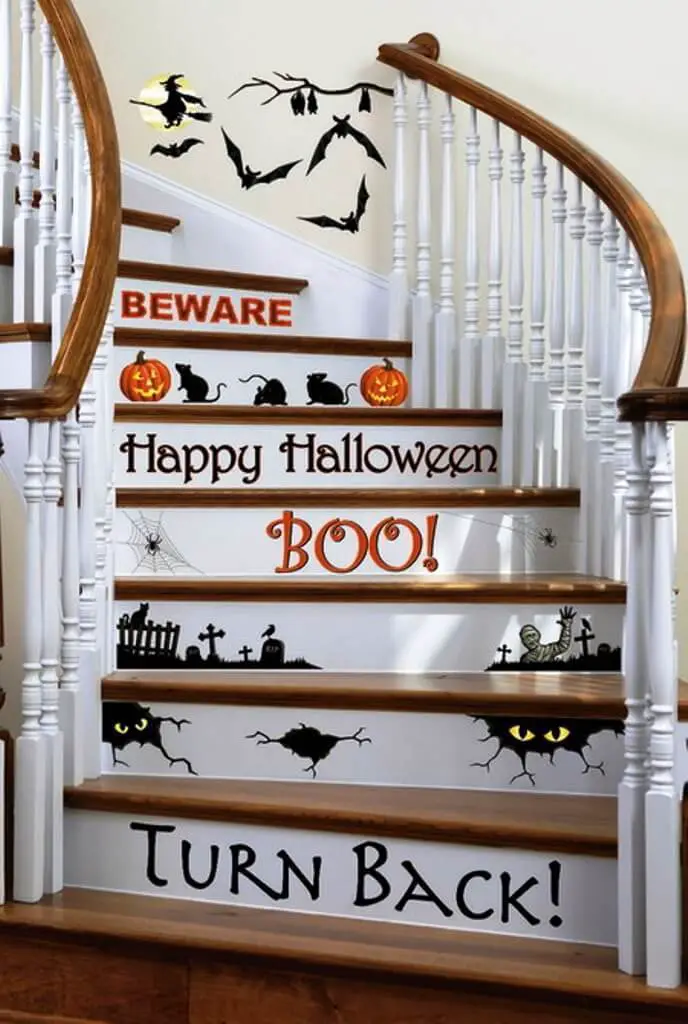
Grab Some Halloween Stickers

Stickers can be a really effective way to add some character to your home last minute, and they can usually be found at your local dollar store.

Halloween Stickers
Source: secondstreet.ru

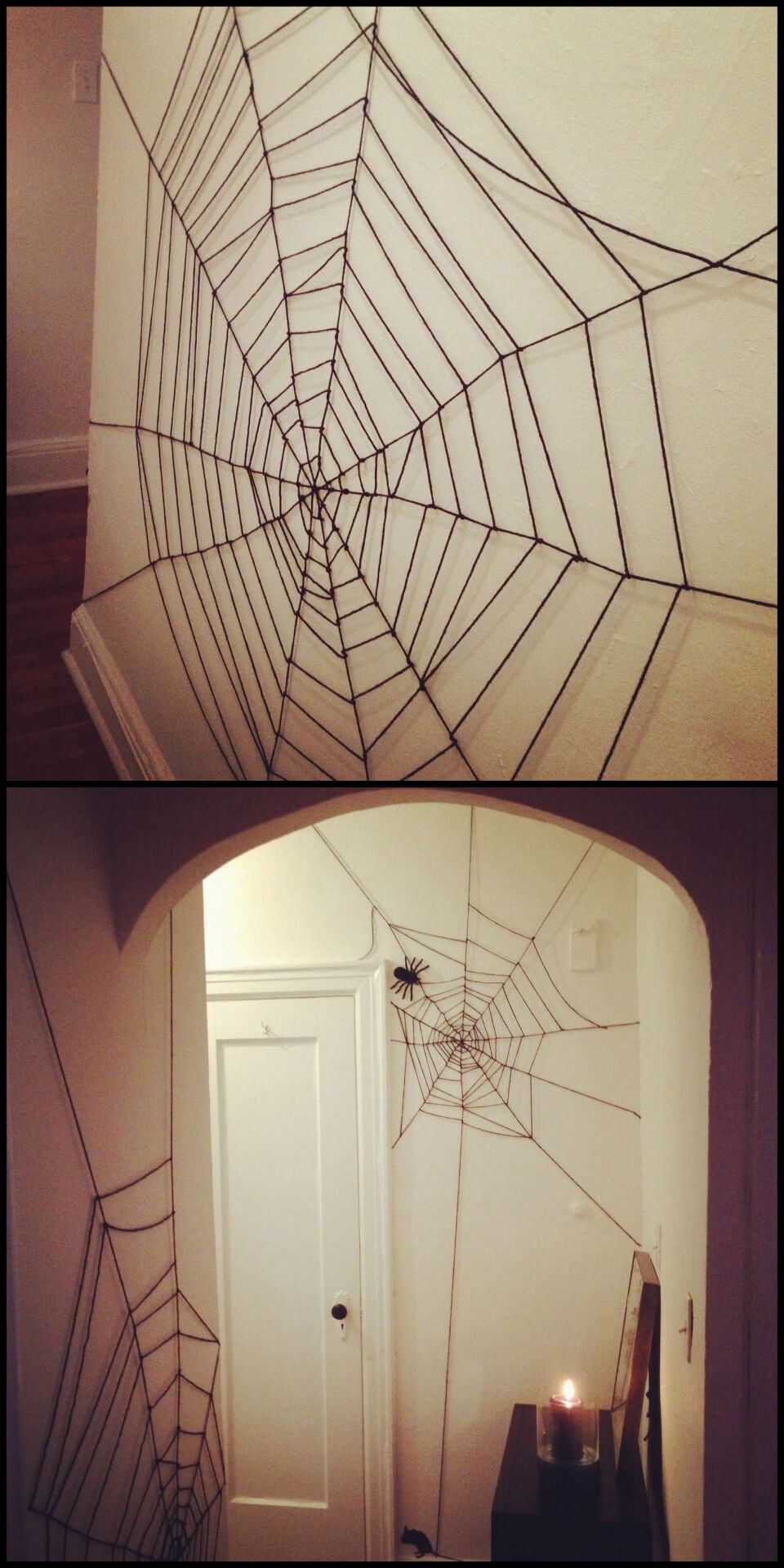
Easy Yarn Webs

If you’ve got a bit of patience to learn, these great yarn webs really fill up a wall well and they cost next to nothing to make. Complete them with a large spider from your local toy or dollar store.

Easy Yarn Webs
Source: truebluemeandyou.tumblr.com

If you’ve got a bit more time on your hands, you might want to try your hand at carving a pumpkin. Get it right the first time with this easy guide – How To Carve A Pumpkin And Get It Right The First Time.

pumpkin-at-night

Do you have any last minute DIY halloween decorations to share? Let us know in the comments section below, we’d love to hear from you!

Fall-Inspired Décor Tips for Creating a Cozy, Earthy Vibe in Your Home

While there are people who are in the “one and done” mindset when it comes to decorating their interiors – meaning that they don’t quite enjoy changing things around, there are certainly those who are looking to change their interior styles a bit following the current season. That’s why, in spring, some people like to fill their homes with fresh flowers and greenery, while in the summer, this décor is usually replaced with the seaside and coastal elements, so here are some fall-inspired décor tips to inspire you.

By the time fall rolls around, seashells and faux corals are slowly making way for all the beautiful fall-inspired décor. Since fall is the time of year when people used to harvest their crops and prepare for the winter that’s yet to come, it becomes quite obvious why fall décor features a lot of organic and earthy elements. That being said, here are some interesting ways you can incorporate this cozy décor into your living space.

Go with the theme and fill your space with fall-inspired décor colors

Go with the theme and fill your space with fall colors

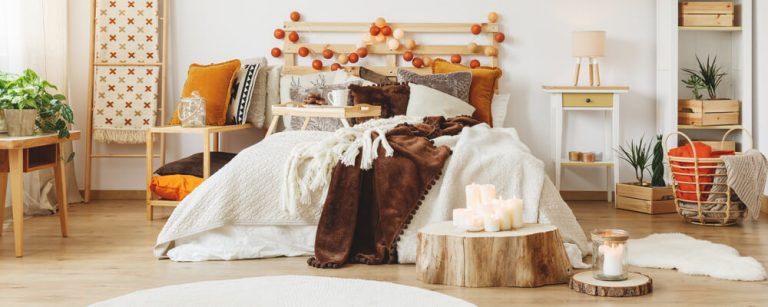
One of the staples of the fall season is its amazing color scheme. All around the world people tend to flock to certain places just to have the opportunity to watch the leaves go from deep and vibrant greens into all possible shades of yellow, orange and maroon. That’s why if you want to introduce some fall into your interior, consider implementing these colors into your design. Burnt orange, mustard yellow and deep, maroon red are some of this season’s staple hues. Of course, to amp up that earthy vibe, you can add some beige and brown into the mix as well. Balancing these hues and having them clash and contrast will only emphasize their individual beauty.

Make the ambience cozy and welcoming with the right accessories

Make the ambience cozy and welcoming with the right accessories

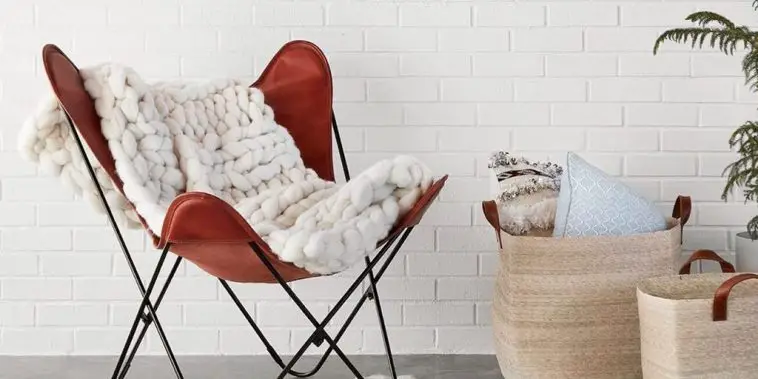
The best way to incorporate the mentioned colors is through the right accessories. Think: throw pillow covers – corduroy is such a fall fabric, chunky knit throw blankets and woven table runners. If you want to amp up the style even further, consider making a few décor arrangements for your fireplace mantel, coffee and dining table, as well as your front door.  A nice, big, chunky wreath made of dry leaves, corn knobs, baby pumpkins and chestnuts simply screams fall. If you want to have your arrangements last you more than one season, you can even consider going with faux alternatives of these fall staples.

Invite nature into your abode

Invite nature into your abode

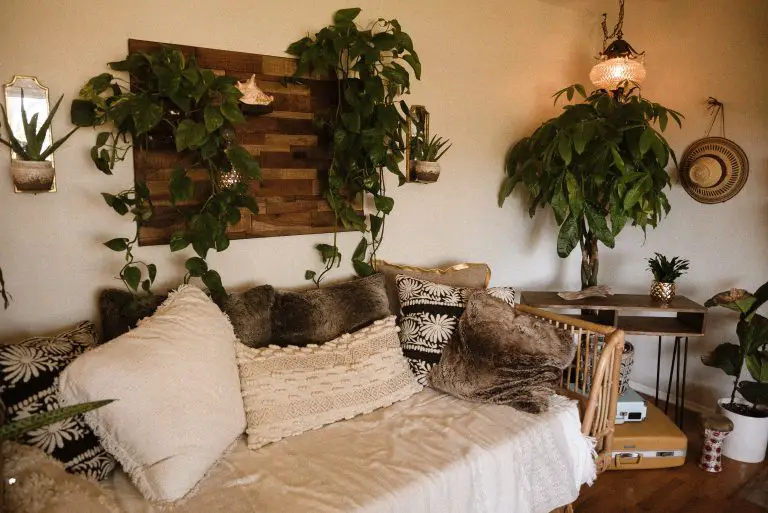
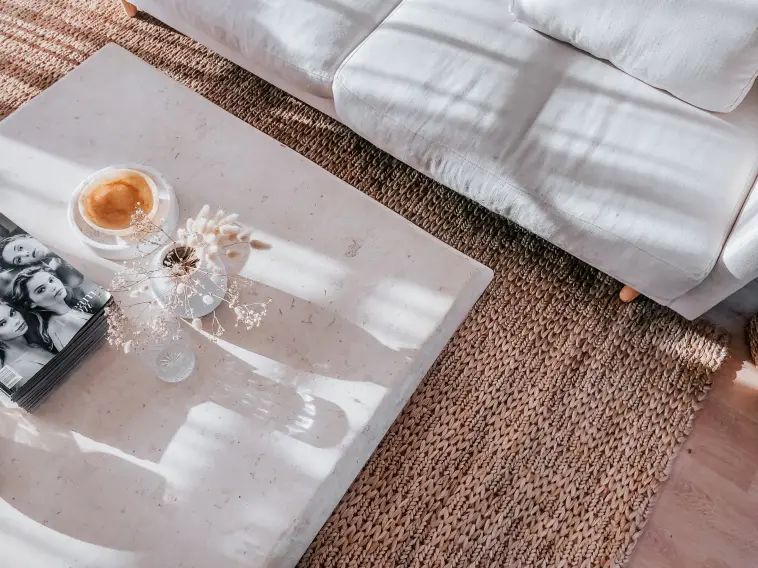
To boost the natural, cozy and earthy vibe of this décor, you should filly our space with nature as much as possible. Aside from going for a truly fall-inspired décor, you can also add some other elements made of natural materials to your space. For instance, replace your blanket bins with woven blanket baskets made of natural twine and invest in a stunning jute rug that will act as a base of your entire room design. A décor piece such as a jute rug will not only further enhance the coziness of your abode, but it will also provide you with a durable and comfortable underfoot solution that’s also sleek and stunning in design. The best part with such a décor piece is that its natural, raw beauty makes it easily blendable with virtually any style and design.

Let your spooky shine

Let your spooky shine

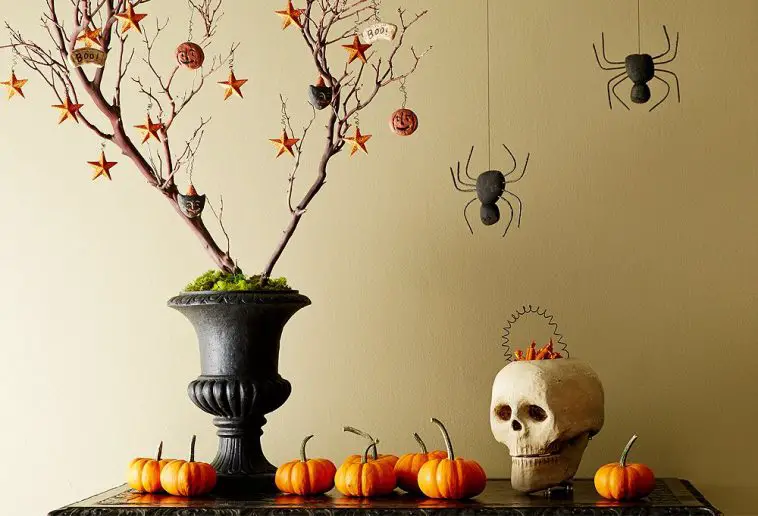
Since fall is also the season when one of the most fun holidays takes place – Halloween, you can use this opportunity to let your inner spooky shine. Adding a bit of spooky to your already-existing fall décor won’t be too difficult. Depending on the scope and size you want to go with, you can just make a couple of spooky elements – such as fabric ghosts and bats made of egg containers – and add them to your fall decorations. Alternatively, you can carve a couple of Jack-o’-lanterns and place them on your porch and use garbage bags to make lawn ghosts and spooky spider webs. The best part about adding Halloween decorations to your fall décor is that you absolutely don’t need to go spooky. There are so many cute Halloween décor alternatives perfect for anyone who doesn’t want to go dark and gloomy.

So, if you are looking to add a bit of fall to your interior space, definitely check some of these ideas out. Again, depending on your preferences, you can go as big or as small as you want. As long as you keep the fall color scheme in mind and you choose the right elements, you’ll be able to turn your abode into a true cozy oasis.

5 Ways To Keep Your Home Safe While You’re On Vacation

As December draws closer, many families are preparing to go on vacation. In the northern hemisphere you’ll be looking for a cosy winter Christmas break, and in the south a summer beach vacation. Leaving your home unattended can be stressful, but here are 5 great ways to keep your home safe while you’re away.

For most of us, being on vacation means more time spent relaxing with family and friends, but for criminals, this period brings about an opportunity to break into a vacant home. Fortunately there are a number of precautions you can take to make sure that your home isn’t an easy target and that your home and belongings are kept safe while you’re away.

Create the Illusion of Activity

Modern technology is a great tool to make it look like you’re home and keep an eye on your home when you’re not around. It’s a great idea to install timers on some of your lights in and around your home to make it look like someone is home when you’re not. 

You can even get smart light bulbs such as the Philips Hue range which connect to your home’s WiFi and feature timers and the ability to turn them on and off from your mobile phone where you are in the world! What’s even better is that you can give them a time range to come on and they’ll randomly switch on during this range so that they’re not switching on and off at exactly the same time every day.

You could even use a smart plug or timer to turn the television on and off at a set time in the evening. Have a look at these Top Devices To Turn Your Ordinary Home Into A Smart Home.

Nothing says we’re not at home like a dark house or lights left on during the day.

Consider Getting a House Sitter

The most effective tip on this list, but also perhaps the most expensive, is to get a house or pet sitter while you’re away. Having someone in your home who can take care of your pets, water your plants and keep an eye on things will give you the most peace of mind while you’re away, and you won’t need to find a home or kennel for your pets.

Put a Hold on Your Mail

If you don’t have a large mailbox or a mail slot in the door, ask your utilities or go to your local post office and put a hold on your mail while you’re away. You could also ask a neighbour or friend to come past and periodically pick it up and check on your home. After all, a huge pile of mail by the door is a clear sign that you’ve been away for a while.

Alert Your Alarm Company, Neighbourhood Watch or Neighbour

Make sure that somebody near your home, and whom you trust, knows that you’re going to be going on vacation and when they can expect you to return. Have you alarm system tested a week or two before you go and make sure that you alert your alarm or security company.

Do A Security Check To Keep Your Home Safe

Before you leave, make sure all of your windows and doors are properly secured. Check on any access routes you’ve left open for your pets and make sure that people can’t use these as easy access to your home as well. Have a quick look for any easy ways to get into your home, is there a bin near a high window, allowing it to be reached? Are there tools lying around your yard or an open shed?  This is great opportunity to think about a few ways you could improve your outdoor lighting for security.

What are some of the tips and tricks you use to keep your home secure while you’re away? Let us know in the comments section below.

DIY Home Improvement Ideas To Suite Your Budget

Home improvements are a great way to increase your home’s value, and keep yourself busy for a weekend or two. Here are some ideas for each room in your home to suite your available budget and get you started on your next home improvement project.

The Kitchen

The kitchen is probably one of the best areas in your home to focus your home improvement efforts on. Clever upgrades to your kitchen can give you the most bang for your buck, and you won’t need to completely remodel your kitchen either.

There are three main areas in your kitchen which are easy and affordable to tackle as a DIY project, let’s have a look at them.

Paint Your Cabinets

The cheapest, and possibly the most effective, is to start with your cabinet doors and shelving. Modern kitchen design trends include lighter greys, whites and pastel colours and you can give your kitchen a significant upgrade by simply painting your existing cabinets and shelves.

Solid wood cabinets will need to be sanded before painting, while melamine coated cabinets will require a coat of special primer first. The good news is that both can be painted and both will yield fantastic results. Use a modern foam roller and water based enamel paint for a long lasting, smooth finish.

Remember to put in the extra effort and remove all of the cabinet hardware such as hinges and handles before you paint them. While they’re off, it may be a good time to consider replacing them, you can often find cheap and effective handles at your local hardware store.

Replace Your Countertops

This may sound like an expensive exercise, but it really doesn’t have to be. There are a couple of options to replace your counter tops and some of them are really affordable.

The easiest and most affordable replacement for a DIY weekend project is to go with melamine coated timber counter tops. These are commonly available in lengths from hardware stores and home improvement sections of places like IKEA. They can be cut to size at home using a circular saw and are simply screwed into place. A good quality timber counter top is really affordable and will completely transform your kitchen! When choosing a timber counter top, avoid choosing the faux granite or marble tops but rather go for modern wood grains or minimalist textures.

The second option is to get a company in to install stone, granite or engineered counter tops. These are usually quite a lot more expensive than timber ones and they often need to be installed by professionals as they are very heavy and require special tools to cut. They do however last longer and allow you more freedom to splash water or leave a hot pot on.

When choosing a new countertop, remember to keep to the style of your home to make sure that your new countertop enhances its surroundings. A square edge profile is more modern than a traditional quarter round and adds a more contemporary flavour.

Upgrade An Appliance Or Two

This is one of the easiest of the kitchen upgrades but can also be one of the most expensive. Modern appliances in the kitchen make the whole area feel more modern.

A simple and affordable upgrade of your kettle and toaster to something in stainless steel can make your kitchen feel more sleek and modern.

If you’ve got some extra money, the refrigerator is going to be the most effective upgrade you can make. New French door refrigerators have a lot more storage space in them than traditional ones and a new refrigerator is more energy efficient, meaning you’ll be saving money on electricity every month.

While you’re looking at appliances, have a look at these 5 High Tech Investments To Include In Your Next Home Improvement.

The Bathrooms

Your home probably has more than one bathroom, and if you’re on a budget then you’ll need to decide which one to start with. If you do a lot of entertaining and value having guests over then you’ll likely want to start with your guest bathroom, or the one which your guests are most likely to use. If you spend more time alone or just together as a family, then you’ll probably want to start with the master en-suite.

Either way, you don’t need to completely re-vamp the entire bathroom in one go and there are a few easy weekend upgrades you can do to make a big difference.

Fresh Paint

A fresh coat of paint is always a good starting point for any home renovation. The paint on the ceilings or walls around a shower is constantly struggling with humidity and may eventually start flaking off. Give your ceiling a new coat of white and consider a colour for the walls to compliment your décor or theme. You can even paint the tiles in your bathroom, just make sure that you use the correct paint and primer first.

Replace Your Rails and Accessories

Modernise your bathroom with a new set of towel rails, hooks, soap dishes and accessories. They’re usually quite easy to replace, just requiring a screw or two to secure. Some even come with stick on options.

You could also consider replacing your bathroom cabinets or putting up a shelf or two to put towels and décor accessories on.

The Garage

The garage might not be an area that comes to mind when you think of upgrading your home but it has the power to add a lot of value to your home.

Paint Your Doors

When was the last time you painted or varnished your garage doors? Most homes have their garages as close to the street as possible, which means that your garage doors are often the first thing people see when they arrive at your home. Make sure that you create a good first impression by keeping them looking well maintained and new.

Your garage doors might just require a fresh coat of paint, or if they’ve been left a bit too long, they can be sanded down, re-primed and then painted.

This is also a good time to give all of the hinges and rollers an oil to keep the doors opening and closing with ease and without a squeak.

Upgrade Your Storage

Storage is important to prospective home owners, people are always looking for more areas to stash their stuff, and people have a lot of stuff! Your garage is the ideal place to add a row of shelves or some cupboards.

You can often buy readymade or flat packed cupboards from your local hardware store quite affordably. Packing all of your things which usually lie around the garage and your home into these cupboards will leave both looking neater, newer and more modern.

Outdoors

Last, but not least on our list is the outdoor area of your home. Modern home owners are looking for a functional area which is easy to maintain.

People are looking less at large lawns and flower beds which take a lot of time to upkeep and keep watered and are favouring functional entertainment areas with gravel or paved sections.

There are a number of DIY home improvement options for the outdoor area including laying down gravel or paving over a bare section of ground. You could also put your woodwork skills to the test by building a pergola or lay some bricks to build a barbeque. There are a huge number of online plans available for outdoor décor which can all be built from supplies available from your local hardware store.

If you’ve got a green thumb and enjoy maintaining a beautiful garden, make sure that you Avoid Planting These 10 Invasive Plants In Your Garden.

Have you tried out any of these small home improvement projects? Let us know how they went for you in the comments section below.

Five Rules of Setting Up a Home Office for Greater Productivity

Your home office environment plays a more critical role in your daily function than you might imagine, and your productivity is affected by them too.

All of them – from the placement of your workstation to your chair, environmental sounds, light, and temperature – affect how much work you can get done, and the quality of your work too!

Here are five ways to set up your home office for greater productivity.

1. Plan the Placement of Your Desk or Workspace Carefully

Where and how you place your desk or workspace may possibly be one of the most important keys to productivity, so it is important to get it right.

Productivity is achieved differently in various lines of work. An accountant, for instance, may be most productive when they minimize distractions so they can focus and concentrate on the work at hand.

People that work in creative spaces, however, such as writers, designers or even advertising execs may actually find themselves most inspired by looking at nature or other strong visual elements.

So what’s the best desk placement?

If looking out the window daydreaming actually helps get the creative juices flowing, then you want your workspace to face the window.

On the other hand, if the view out the window will just create a distraction for you (or if the window faces a fence or other unattractive feature) then you may want to sit facing away from the window.

Some people will find it easier to work when their desk floats in the middle of the room, anchored to nothing, while others actually work best when their desk is placed in a corner, creating the sense of a small nook.

Try out different settings and see which one works best for you.

2. Natural Light is Best

Did you know that light affects your productivity?

And it’s not just the presence or absence of light that matters.

The type of light you are exposed to will have a significant impact on not just your productivity, well-being and overall health.

Different types of light will have a different impact but natural light is, hands down, far preferable to any other type of light.

If you have a window in your office that looks out on something unsightly or possibly right into a neighbor’s house, consider using a decorative window film that will let in the light while keeping the sight out.

Curtains or blinds will block the view, but they will also block out the light.

If your office is in a basement or windowless room, make sure your space is at least well-lit but without a harsh glare.

3. Build in Good Organizational Systems at the Outset

Numerous studies have shown a clear link between clutter and depression, so it should come as no surprise that clutter can also have a direct negative impact on productivity as well.

While different people will always have different tolerance levels for clutter, there is no question that everyone has a limit.

There will always come a time when the clutter just gets to be too much and you can no longer function adequately.

It is incredibly easy to become clutter blind so the best way to avoid it is to set up systems of organizational efficiency from the get-go.

A home office has the drawback of being a space that can quickly become simply an extra storage area if you are not careful.

Even if you don’t struggle with trying to keep excess household items out of your space, make sure you don’t overwhelm it with excess office equipment.

If you still require paper files and large filing cabinets, don’t try to keep them all in the office. Just keep the most recent ones, and store the older ones somewhere else.

Find a good desktop organizer to keep all those little things that tend to be all over your desk in one place.

If you never start accumulating clutter in the first place, you don’t have to worry about it slowly creeping in and slowing you down over time.

4. Make It Comfortable – But Not Too Comfortable

A home office is, by nature, a part of your home. That can make it tempting to place form over function.

There is no doubt that most office chairs are bulky and somewhat clunky, so it can be tempting to use a different type of chair in your office.

This might be a mistake.

It’s fine to place aesthetics over functionality when you’re only going to be spending an hour or two at most sitting in a chair or at a table.

When you may spend upwards of eight hours a day sitting in a chair or at a desk, however, functionality makes a vast difference.

Conversely, it can also be hard to work when your overstuffed couch and downy-soft throw are constantly calling your name for a nap.

That being said, studies show that napping can actually increase productivity, so creating a place to sneak a quick nap may also not be a bad thing.

The important thing, however, is to make sure you design around your own habits and patterns.

If you are chronically not getting enough sleep at night, you may want to avoid putting a sofa in your office and take your naps in another room instead.

Ultimately, ergonomic design exists for a reason, so pay attention to it.

5. Use Biophilic Design

The same way that clutter has been shown to have a profound negative impact on mental health, nature has been shown to have a profound positive one.

Biophilic design uses natural elements to bring as many benefits of nature as possible into your workspace.

Just looking at photos of nature can have a powerful effect on brain chemistry by reducing stress levels, which can in turn help increase productivity.

Filling your office with plants can also help increase oxygen and filter out toxins.

Best of all, some of the best indoor plants for filtering air are also low maintenance, easy care and don’t even need a great deal of light.

Conclusion

Most modern office buildings are designed very carefully with an eye towards creating maximum productivity. While the conditions people do their best work in are just a little different for everyone, there are certainly some commonalities to us all.

The good news about setting up a home office is that you can optimize everything to your specific needs.

The caveat to that, however, is that you still need to design more with productivity in mind rather than aesthetics.

That doesn’t mean you can’t have a home office that is pleasant to work in – it should be – but it is the one room of your house that demands placing a higher priority on function over form.

Best Fall Simmer Pot Recipes For 2019

Fall is here, and with it comes the opportunity to fill your home with vibrant and rich spice filled scents. Your guests will be asking how your home smells so great! So here are some ideas to get you started on finding the perfect fall simmer pot recipe for your home.

For those of you who are unfamiliar with simmer pots, a simmer pot is essentially just a pot of simmering water on your stove which you throw some fragrance full ingredients, such as the ones below, into in order to mask any unpleasant smells lingering in your home and leave it smelling great! Make sure to check on the pot regularly and keep it topped up so that it never runs dry and causes the ingredients to catch.

Did you know that simmer pots can also be made into amazing homemade gifts? Just package one of the below recipes into a mason jar with a piece of ribbon around it and it’s gift-ready. You could even try making your own mini pallet coasters to package your jar with cellophane wrap on.

Apple & Pear Pot

Perhaps the most “fall-like” recipe in this list, this spicy apple, pear and cinnamon pot will leave your home smelling warm and cozy, like something sweet and delicious has just come out of the oven.

  • 4 Cups of Water
  • 1 Apple, Thinly Sliced (About 6-8 Slices)
  • 1 Pear, Thinly Sliced (About 6-8 Slices)
  • 5 – 8 Whole Cloves
  • 2 Sticks of Cinnamon

Orange & Ginger Citrus Simmer Pot

This simmer pot is a great light and fresh scent which will leave your home smelling like it’s just been spring cleaned.

  • 4 Cups of Water
  • 4 Oranges, Cut Into Chunks or Slices
  • 1 Small Ginger Root, Thinly Sliced

This simmer pot also keeps really well for two to three days, so it’s one of the best to use as a gift and it can be used over and over for around three days before you need to remake it.

The Outdoors Simmer Pot

The perfect pot to lead up to Christmas, with rich smells of the outdoors. This pot is best for late fall and a great addition to your home if you’re hosting Christmas.

  • 4 Cups of Water
  • 1 Orange, Cut Into Chunks or Slices
  • 12 Whole Cloves
  • 2-3 Sprigs of Christmas Tree Cuttings (Fir Tree Branches)

Cranberry Simmer Pot

A rich spice and fruity smell which is sure to get you loads of compliments when your guests come over.

  • 4 Cups of Water
  • 1 Cup of Fresh Cranberries
  • 1 Orange, Thinly Sliced (About 6-8 Slices)
  • 5 – 8 Whole Cloves
  • 3 Sticks of Cinnamon
  • 1 Tsp Dried Rosemary

This simmer pot makes the best looking mason jar gift as the red in the cranberries compliment the sliced orange, just make sure you (they) don’t keep it too long as the cranberries have a fairly short lifespan in a jar.

Cold & Flu Pot

If someone in your home is suffering from a cold or flu, this pot will ease congestion and relieve coughing with the added moisture in the air.

  • 4 Cups of Water
  • 1 Orange, Thinly Sliced (About 6-8 Slices)
  • 3 Drops of Eucalyptus Oil
  • 1 Tsp Dried Rosemary
  • 5 – 8 Whole Cloves
  • 2 Sticks of Cinnamon

Have you tried out any amazing simmer pot recipes? What are some of your favourite ingredients? Let us know in the comments section below, we would love to hear your tips and ideas.

10 Magic Eraser Hacks You Need To Try

Magic Erasers have been around for a while and you’ve probably used one around your home, but I bet you’ve never tried these 15 unique hacks. They’re great to keep in your cleaning cupboard and will save you loads of time and money on cleaning products.

If you’re wondering how Magic Erasers work, they’re essentially a block of melamine foam which acts as a very fine sand paper to gently lift dirt and stains from the surface and trap the residue into the foam.

If you still need to get one for your home, buy a Magic Eraser here.

Wrong Marker On A White Board

Lets face it, it’s pretty easy to get your markers mixed up. If you’ve ever got yours mixed up and doodled on your whiteboard in permanent marker, try a Magic Eraser on it.

Remove Laundry Stains

If you’ve spilled sauce on a white top or a jacket you’re not too keen on washing in case it shrinks, try a Magic Eraser on it. They work remarkably well at removing stains from fabric without any water or soap.

Spot Clean A Carpet

Similarly to the previous hack, use one on stains on your carpet. You can easily spot clean a patch of your carpet without having to wet it or use carpet shampoo. It even works on touch stains like red wine.

Remove Permanent Marker

If you’ve used a permanent marker to mark storage or food containers, you can use a Magic Eraser to remove the marker so that you can use the container for something else. This also works well on toys and other plastics which your children have marked while you had your back turned.

Revive Old Oven Dishes

If you’ve got old glass or ceramic oven dishes which have blackened grease marks on them which won’t come off, try scrubbing them with a Magic Eraser. For more stubborn stains, use a combination of a wet Eraser and then a dry Eraser. You’ll be amazing at how many dishes you can revive and leave looking new with this easy hack.

Remove Tea And Coffee Stains

If you’re a big tea or coffee drinker then you’ve probably got a few mugs which are brown on the inside. A wet Magic Eraser works perfectly to remove these stains and get them looking white again.

Whiten Your Refrigerator Door Handle

If you’ve got a white refrigerator with a plastic handle, its probably become a bit dull and brown. Give it a shine and whiten it up with a Magic Eraser.

Revive Old Storage Containers

If you’ve ever stored tomato soup or sauces in plastic containers, you may be left with a few which have red or orange stains in them. Buff the stains out with a Magic Eraser and they’ll look as good as new again.

Clean Your Silverware

Silverware tends to get tarnished if its not used and cleaned regularly. Get your silverware looking shiny and new again by scrubbing them with a Magic Eraser.

If you’re not keen on scrubbing the individual items, we’ve got an even better hack to get your silverware clean which just requires a soak and dry off.

Make Your Shoes Shine Again

No matter how often you clean them, eventually the soles of your shoes are going to start looking brown and stained. Give them a scrub with a Magic Eraser for an instant renew, they’ll be left looking brilliantly white and new again.

Have you got any interesting or different uses for a Magic Eraser? Let us know in the comments section below, we’d love to share your tips and tricks!

5 Decorating Ideas For Your Patio

If you have a home with a patio, you’re one of the lucky ones. In this day and age when people are constantly looking for more space in their homes and a way to be closer to the outside, you have the perfect opportunity for both. Spacious homes are often more luxurious and people like them more, while not being stuck inside for the whole day has numerous benefits for your health. Of course, to make the most out of your patio, you’ll need to decorate it really well.

1. Choose Comfortable Furniture

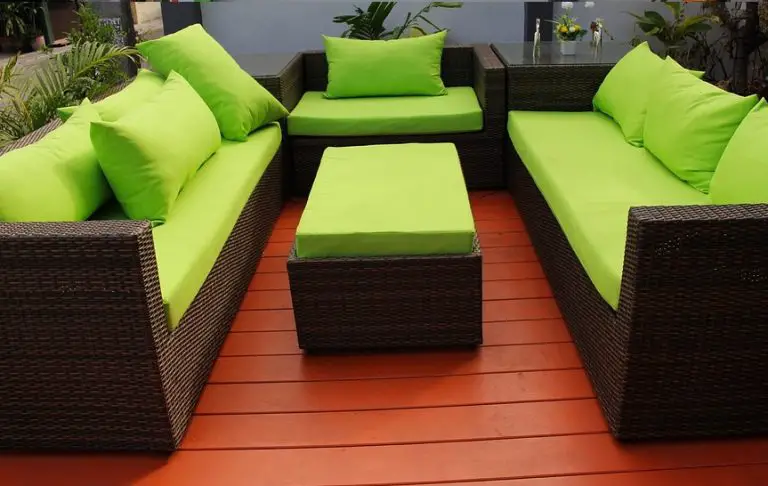
The basis of decorating your patio is choosing comfortable and stylish furniture. You’ll need to choose something that fits your patio perfectly but also looks really nice. As well as that, you should go for actual outdoor furniture. If you choose indoor furniture just because it may look nice and put it outside, you can be sure that it won’t last.

Outdoor furniture can handle weather conditions, be it the rain or the sun and will stay intact throughout it all. Spare no expense on your furniture, as it’s going to last you a lifetime.

2. Consider Adding a Surround Sound System

If you want to bring your patio to a whole other level, a surround sound system is always a good idea. This way you’ll be able to entertain guests much more easily and give them a party to remember.

As well as that, you’ll be able to enjoy relaxing music when you’re trying to unwind with the highest quality of sound.

3. Match the Colours

How you match the colours can greatly influence the final look of your patio. Most people tone it all to brown or add so many colours that you’re not really sure what’s what anymore. You should strive to find a balance between these two extremes. You can do this by opting for a base and an accentual colour. Your base colour should be something neutral that can easily be combined with a variety of other colours, like beige or white.

For your accentual colour, choose something bright yet tasteful like red, orange, or green. This is now the colour of the patterns on your furniture and of the little décor pieces you put on your patio. A combination like this is bound to be a win and bound to bring out the full beauty of your patio.

4. Add Some Shade

If your patio doesn’t come with some shade, it’s basically unusable. Nobody likes being in the sun all day and feeling like they’re constantly in the centre of attention because their patio is so open to the neighbourhood. There are a lot of shade options you can choose from such as patio umbrellas and shade sails, but retractable pergolas may just be the most practical option for patios.

This way, you’re in complete control over how much shade your patio is getting. At those parts of the day when you feel like sunbathing- you can simply retract your pergola and enjoy the sunrays. As soon as the sun starts being too much, you can extend the pergola and enjoy as much shade as you want and need. Of course, to make this possible, you should talk to professionals such as Aspect Shade to ensure the quality, functionality, and beauty of your retractable pergola.

5. Set the Mood with Lighting

When the day is over, it usually means you have to retreat indoors because it’s too dark to keep sitting outside. That also means that most parties and get-togethers have to end early because no one likes sitting in the dark. It gets kind of eerie and people like the comfort of their own homes more. To transform the atmosphere from creepy to quiet and warm, all you need is the right lights.

The size and shape, as well as your personal tastes, will decide what kind of lights you put on your patio. Of course, you can always go with the classics. Fairy lights go well with any patio and give you a rustic vibe you and your guests will love. If you want something more romantic, go for the traditional lamppost. Those who prefer something modern can always go for the lights that are installed directly into the ground or on the fence.

Conclusion

Decorating your patio is all about your preferences, but we can’t forget the classic and timeless décor tips that make any patio pop. As well as that, these features are often very practical and give a whole new dimension to your patio. Comfort and serenity are at your fingertips, it’s just up to you to reach out and grab them. Whatever you decide to put on your patio, it will surely be the best thing you’ve done for it and yourself in a while.

If you enjoyed this article, have a look at How To Use Design Principles To Decorate Your Home.