

Home Blog Page 22

DSO138 Digital Oscilloscope DIY Kit & Acrylic Case Assembly

I’ve been wanting to get an Oscilloscope for my work bench for some time now, but they’re generally quite expensive for the amount of use I’m actually going to be getting out of it. I was finding it difficult to justify the cost, and then I found the DSO138 Digital Oscilloscope  kit online, which was on sale for just under $20. It looked very basic, but it would do everything I wanted it to do. I also picked up the acrylic case. The case cost almost as much as the oscilloscope did, I paid around $16 for it. But I figured that since I’d be using it around electronics on my work bench, its probably better to protect the circuit board in some way.

If you’re not up for the challenge in soldering and assembling the oscilloscope yourself, they are also available pre-assembled and ready to use.

Buy Your Own DSO138 Digital Oscilloscope Kit

  • DSO138 Oscilloscope In DIY Kit Form – Buy Here
  • Acrylic Case – Buy Here
  • DSO138 Oscilloscope (Assembled) With Case – Buy Here

Assembling The Oscilloscope

Here’s the video of my unpacking, assembly and testing of the DSO138 oscilloscope and acrylic case. I’ve also put together a write up of the important parts and problems which I encountered during the assembly which follows the video.

As expected, two packs arrive in the delivery, one containing the DSO138 oscilloscope components, manual and PCB and the other containing the acrylic case – with no manual. I’ll start with the assembly of the oscilloscope and then move on to the acrylic case.

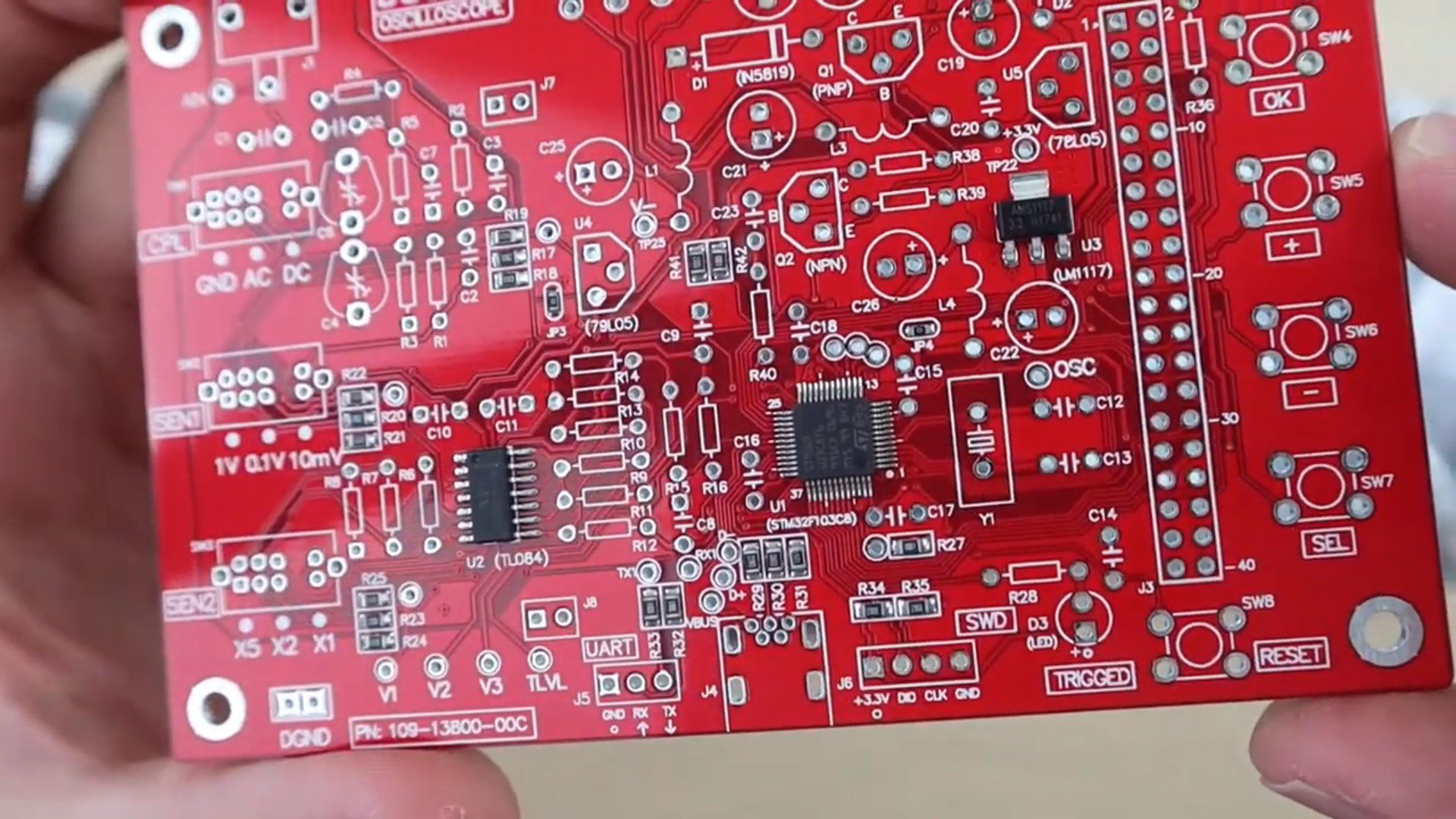
The PCB comes with the surface mounted components already soldered in place, but there is still a fair amount of work to be done to complete it.

Surface Mount Components Are Pre Soldered

The manual which comes with the DSO138 digital oscilloscope is quite good, its actually one of the better ones I’ve seen with these types of DIY electronics kits. It has a detailed schematic, components list and assembly procedure as well as a few checks to do before powering it up and a fault finding or trouble shooting guide. It leaves you feeling quite confident that you’ll be able to get the kit working.

DSO138 Digital Oscilloscope DIY Kit Manual

Download The Manual – DSO 138 Oscilloscope Instructions/Manual

I then started with the build. The most cumbersome part was measuring and sorting the resistors, which took quite a bit of time.

The actually build process went quite smoothly. The manual guides you through the sequence and gives you small notes on what to look out for. It also has a check box next to each component to mark them off as they are installed.

Soldering Components DS0138

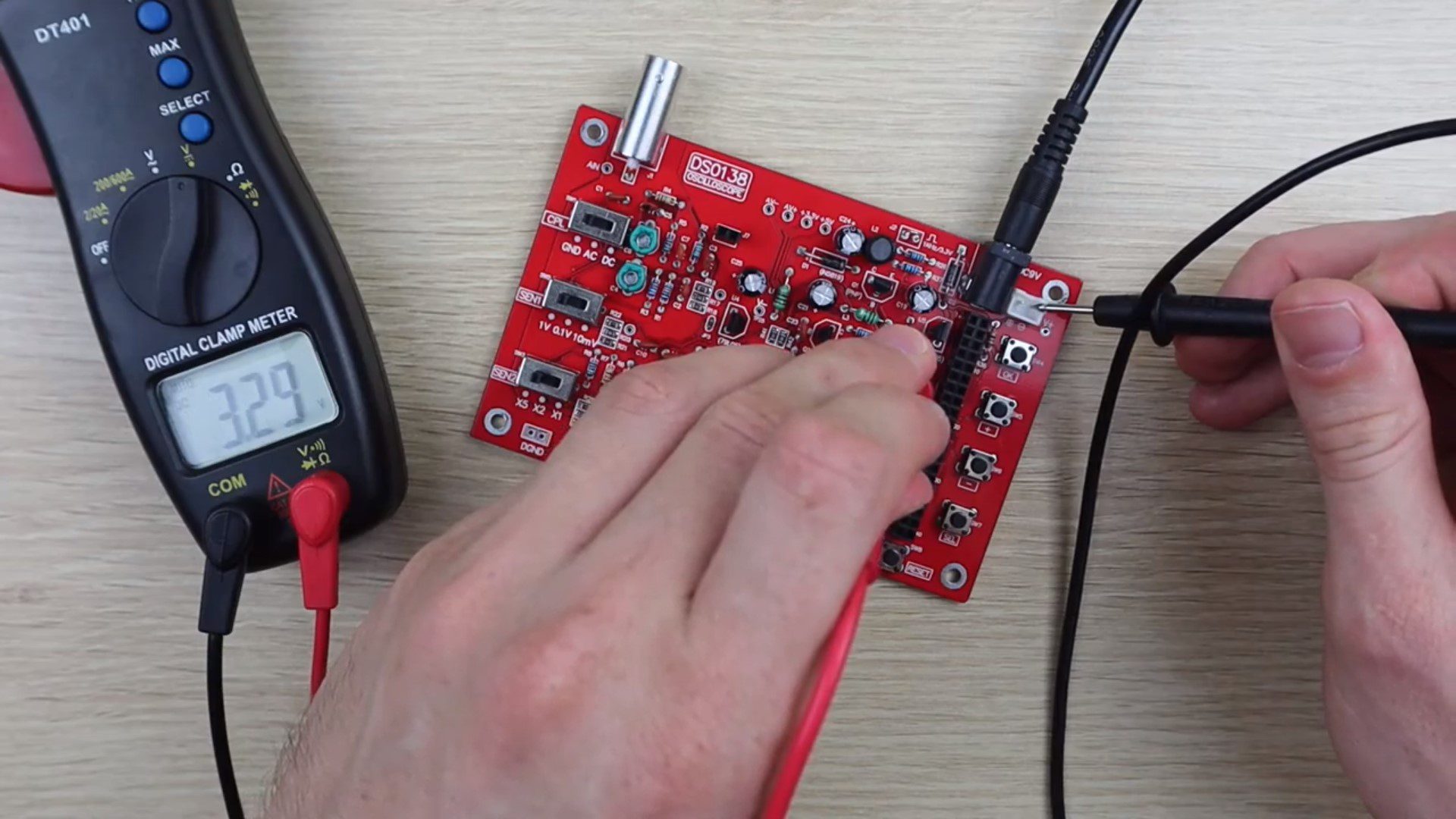
I then checked the PCB and components again before powering it up. The manual then guides you through testing a few voltages at various test points before plugging the display in. My test voltages were all correct but I still had a couple of issues to resolve before it started working properly.

Testing Voltages After Soldering

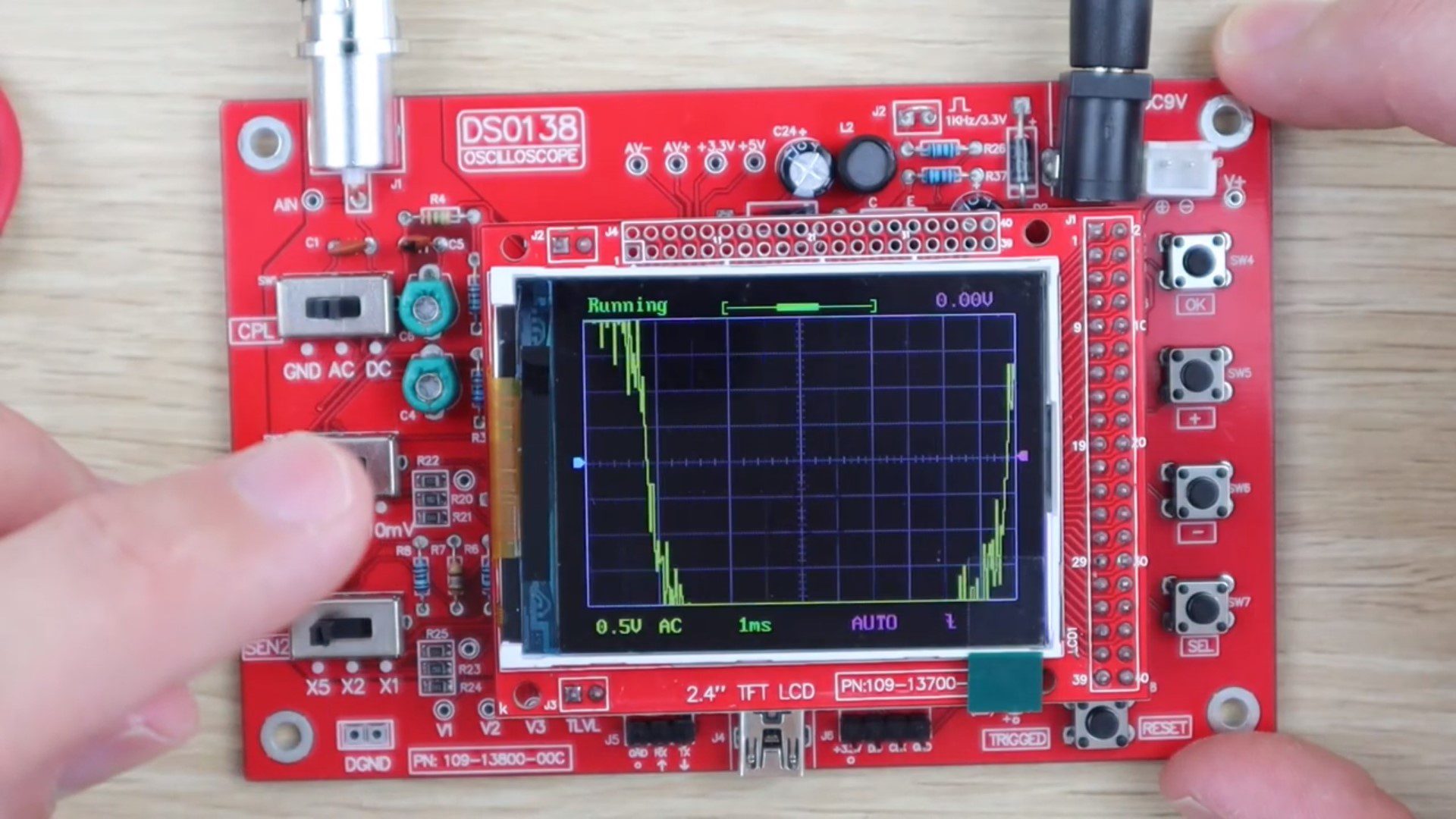
My DSO138 digital oscilloscope started up perfectly the first time, but there was no trace visible. I initially thought that this was because the trace was just off the screen and I tried flipping through the switches and connecting the test leads but this didn’t help. This also lead me to discover that the push buttons on the right side were not responding. I switched the scope off and put a multimeter across the push buttons and found that one was short circuit. I replaced the faulty push buttons and then cursor then moved around the display but there was still no trace visible.

Oscilloscope Booting Up

After a bit more investigating and testing various voltages, I found that one of the resistors was faulty. I replaced it and the trace then appeared.

Oscilloscope Trace When Touching Test Lead

I then got to work putting the oscilloscope into the acrylic case.

The acrylic case was a bit frustrating to assemble. As mentioned before, there were no instructions provided with the kit and although there are numerous video and pdf instructions available online, almost all of them have notes saying “this is wrong” or “don’t do this” somewhere in them. And they’re all a little different.

If found two main issues with assembling the case.

The first was the component clearances. The bottom inside plate is designed to fit around the PCB components, but the clearances are unnecessarily tight. If any components were skew, as was the case with my power socket, it won’t fit. I tried to trim a piece off and landed up cracking the top corner. This doesn’t really affect the build but it is noticeable through the other clear layers.

The second was the headroom above the components. There is not much headroom allowed for the PCB components beneath the inner acrylic layers. If your PCB components are not all completely flush with the PCB then you’ll probably have a difficult time trying to get the internal layers into place without bending or forcing them. This is particularly true for the ceramic capacitors.

DSO138 Oscilloscope in Acrylic Case

Overall, I think that the DSO138 digital oscilloscope is quite a useful and functional scope for it’s price. It’s great for home and hobby use and does everything you’d expect from a small and basic digital oscilloscope.

Testing Oscilloscope Input With Function Generator

I’m not sure that the success rate is for this kit, but there seems to be a large number of people complaining on forums that their scope is dead, display is dead or that there is no trace visible. This seems to suggest that it’s not the easiest kit to get working, but it also may just be that it’s quite popular and there are a large number of people who have tried putting one together.

Have you build this kit or any other oscilloscope kit? Let us know how it went for you in the comments section below.

Small Space Gardening – All You Need To Know To Grow Your Own Veggies & Plants

Modern homes are becoming smaller and smaller and many people are choosing apartments over free standing homes. This usually means sacrificing on space, particularly in your outdoor and garden areas. Fortunately, you don’t need a lot of space to grow your own veggies, herbs and plants. You don’t even really need a garden at all. Small space gardening is an increasing trend and there are a wide range of plants and veggies which have been specifically developed to be grown in confined spaces and containers.

Choosing Your Garden Type

The first step in starting with small space gardening is deciding what type of garden you’d like to create. There are typically three main types of small space garden:

  • A small garden bed.
    • A garden bed is the largest of the small space gardening options and is suited to those who have a small outdoor section to their home which includes some lawn, a paved section or an existing small garden bed. The area doesn’t need to be particularly big, a 2m x 1m (6′ x 3′) or even a 1m x 1m (3′ x 3′) section of garden bed is more than adequate to grow your own plants and veggies in.
  • A garden box or large planter.
    • For those who don’t have a garden or outdoor area as such, but still have some form of balcony or patio, you may want to consider getting a garden box or planter. This is essentially a wooden or plastic container designed to be filled with soil to create a free standing garden bed. You’ll want to give some thought to the type and positioning of the planter as they can be heavy to move around once filled and often require water runoff for their drainage holes.
  • Individual containers.
    • The final and most compact solution is best suited for those with a really small patio or balcony or those who need an indoor solution. This option involves setting up a shelf, desk or bench with a container or multiple containers in which to grow your plants and veggies. You can even get free standing trays or indoor grow houses which are specifically designed to hold potted herbs and veggies and manage water runoff/drainage.

Location Considerations

Location Considerations

The next consideration is where to place your small space garden. If you’re using individual containers or a garden box, then you’ll have some choice in where it can be placed. You may be a bit more limited if you have a fixed garden bed. Either way, you’ll need to either decide where to place your garden in order to grow certain types of plants or veggies or decide on which types of plants or veggies can be grown given a certain placement.

The following aspects will determine where or what can be grown:

  • Sunlight
    • Herbs and veggies typically require a lot of sunlight, often at least 6 hours a day. Some plant varieties require much less and can cope with being in low light indoor areas. Just because you don’t have a sunny spot, doesn’t mean you can’t grow veggies, some varieties of lettuce, broccoli and kale can survive in limited light conditions.
  • Water Access
    • Herbs and vegetables also require regular watering and smaller gardening areas are more sensitive to watering frequency as they have less capacity for water storage. Drip irrigation systems are a popular choice for small space gardening as they are quite clean and deliver water directly to the plants roots rather than spraying the leaves and top soil. It’s also easy to add nutrients to the water in drip irrigation systems.
  • Space
    • While you can grow veggies almost anywhere with the right equipment, you can’t grow any type of veggie anywhere. You’ll need to be realistic in your expectations with regards to the size and quantity of your herbs, veggies and plants. You won’t be able to grow a tomato vine, pumpkins or a row of corn in your apartment. You’ll need to select plants which are specifically cultured to grow in small spaces, especially if you’re using smaller grow containers indoors. Most packets of seeds or seedlings will give you some information on the size of the full grown plant as well as its water and sunlight requirements.
  • Soil Type
    • The final consideration, and one of the easiest to control, is the soil type. Once you’ve decided on what type of plants you’d like to grow, you’ll need to get the correct soil for them. Soil is an important part of growing herbs and vegetables as it contains important nutrients and can affect the taste of the final produce. This is one of the reasons why fruit tastes different in different regions (think of wines).

Succession Planting Is Key For Small Space Gardening

Succession planting is a great technique for small space gardening whereby new seeds or seedlings are planted every few weeks in limited quantities throughout the growing season. This way you stagger the ripening or fruit bearing stage so that you’ve always got just enough produce at just the right time for your family to consume.

There is no point in planting a bed of lettuce when you know that your family won’t be able to consume the 50 heads of lettuce which are finally produced in a two week period before they spoil. So rather stagger the planting phase such that your garden produces a head or two a week for three to four months and you’ll get much better value out of your garden.

Succession Planting

Don’t Discount The Windowsill

Growing veggies, and particularly herbs, indoors on a windowsill is a fantastically easy and low cost option for plants which are frequently harvested. It’s a really easy option for beginners and putting the herbs in a prominent place in your kitchen not only looks attractive but also means that they’re less likely to be forgotten and left unwatered. You can even build your own cheap windowsill greenhouse so you don’t have to worry too much about watering them at all.

So what are you waiting for? Get started with small space gardening today and you could have your own home grown produce in just a few weeks. Let us know your tips and tricks for your small space veggies or herbs in the comments section below.

Share This Post

Small Space Gardening - All You Need To Know To Grow Your Own Veggies & Plants

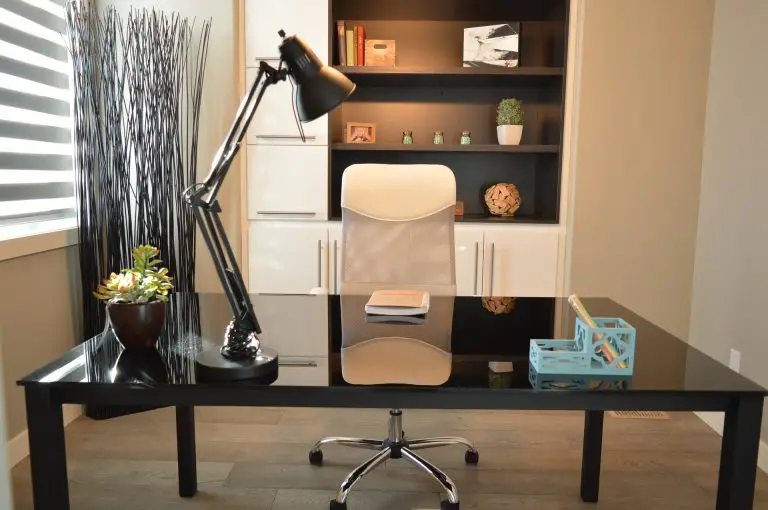
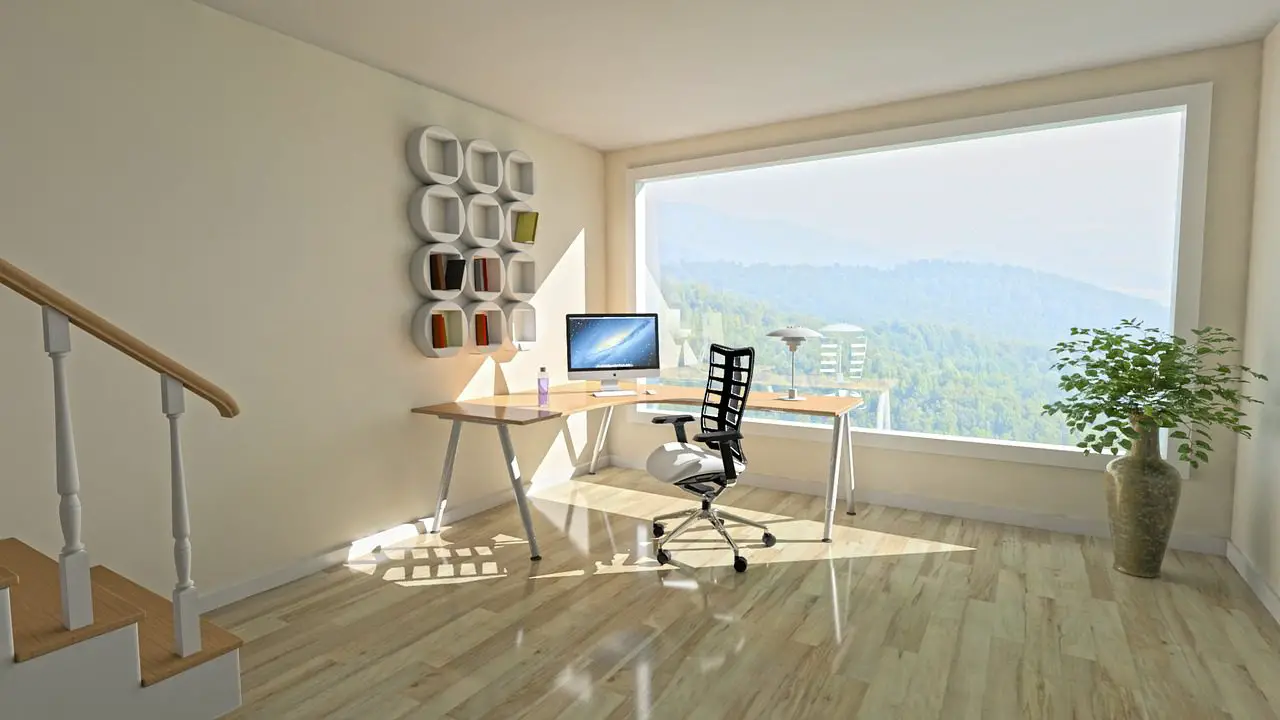
Pro Tips For A Home Office Makeover

Your home office is a great space for you to focus on your work without distractions. A functional and organised home office will make you feel more energetic and productive. So how about getting started with your own home office makeover? It doesn’t need to be complicated or expensive.

Here are some great tips and steps to follow to give your home office a fantastic makeover without breaking the bank.

Organise Your Existing Office

Before you start buying anything new, you’ll need to organise the old. Work through any old paperwork and equipment and decide whether you really need it and how or where it should be stored. Sort your paperwork into piles, one for trash and a few to be filed. If you don’t have any files or folders, add these to your makeover shopping list. The same goes for your equipment. Place any equipment you need into one area of the room and make piles for trash, donation or storage. I’m usually quite sceptical about storage, don’t just put things into storage because you’re afraid of throwing them out. Only keep equipment which you are genuinely going to use.

Find A Style Which Inspires Your Work

Next you’ll need to decide what type of work area you’d like to create. Have a look online for some ideas for furniture, storage and functional components which you’d like to include in your home office space. This will help you to create an end goal so that you have a clear idea of what you are working towards in your end product.

Keep in mind that you don’t need to buy everything new. You can probably reuse your old desk and chair, even if they just need a varnish or a fresh coat of paint. You can easily turn and old wooden desk into one which looks brand new by spending a day sanding and repainting it.

Decide How To Separate The Area Or Room

A home office or work space needs to be an area which is free from distractions. Ideally, it needs to be isolated from the rest of the house, such as a room with it’s own door. A lot of people don’t have a whole spare room which can be dedicated to an office, so think about how you could include a room divider, a book shelf or indoor plants to close the area off from the rest of the room.

Start With The Walls

Now comes the time to actually get to work on your makeover. You’ll want to do the larger items first, so the walls are a good place to start. Get these touched up or re-painted first, then work on any fixtures such as built in cupboards or shelves, then add the furniture and finally finish off with the decor.

Invest In More Compact Tech

Invest In More Compact Tech

If you tend to hold on to your tech related equipment quite long, you’ll probably have a lot of bulky and outdated things cluttering up your work space. An office makeover is the perfect opportunity to upgrade a few of these items to minimise their footprint. Get rid of out dated equipment like fax machines and replace desktop scanners and printers with all in one units. Ditch the old wired keyboard and mouse for wireless ones.  You’ll be surprised at how much space you can save by simply switching to newer technology, it doesn’t even need to be the latest.

Make Sure That You Have Good Lighting

Lighting is one of the most important parts of a functional work space, you don’t want to be straining your eyes to read or see your keyboard. If your work space is not near large windows or you do a lot of work at night, then you’ll want to install a couple of lights in and around your work space. The best lights for a work space are overhead LED strips or integrated tubes which can be mounted to the underside of overhanging shelves or cupboards. If you don’t have either of these, then consider installing LED down-lights in the ceiling above the desk.

Get An Office Plant

Get An Office Plant

Plants are a great way to decorate an office space. They’ll dampen sounds and purify the air around your work space. Find small, low maintenance, potted plants to put on your desk or a slightly larger one for the floor next to your desk. They also make great room dividers.

Keep Your Area Organised

Clutter doesn’t lend itself to a productive work environment. You’ll want to invest in a couple of home and office organisation products. These can include filing cabinets, storage boxes, monthly planners etc.. There are loads of ideas for home office organisation online, so start searching for some ideas.

Have you done your own home office makeover? What are some of the ways in which you made it into a more functional and organised space? Let us know in the comments section below.

12 Home Design Trends Making Their Mark On Home Improvement In 2020

2020 is the start of a new decade, one which promises rapidly changing home improvement and DIY trends to keep up with the swift advances in manufacturing capabilities and technology. If you’re thinking about a home renovation project or designing your new home, we’ve put together a list of 12 design trends which we’ve seen a sharp increase in over the last few seasons, paving the way into the new decade.

Multi-function Kitchen Islands

Kitchen islands are definitely a popular home design trend in the last decade and people are now expanding on their functionality. It is not out of place to see a modern kitchen island with a built in hob, preparation sink/bowl, chopping surfaces, hidden garbage bins, a variety of storage and even wine and beverage coolers.

Two or Three Tone Cabinets

Two Tone Cabinets

Instead of the traditional single tone cabinets and islands, modern home design incorporates some variation by having a different colour for the above and below counter cabinets or making the cabinets around your kitchen island a different colour to the ones around the walls. This is a great way to add some variety and depth to your kitchen.

Cabinet Door & Handle Face-lifts

With modern kitchen cabinet prices and the good quality of traditional cabinets, people are simply choosing to replace the cabinet doors and sometimes just the pullers/handles as a means of giving their kitchen an update. It’s an easy update to do and can be a really effective way to modernise your kitchen.

Paint Makes Things Look Good Again

People are always looking at ways in which they can save money, and paint is a popular and effective tool for home renovations. Paint is relatively inexpensive and can be a great way to revive an old item of furniture, add colour to a room or even to update your old outdoor patio set (even the cushions!).

Chandeliers and Large Lighting Features

Home Design Around Lighting

Modern lighting has seen a return to the use of chandeliers and large lighting features to make a statement or create a focal piece in a room. People are considering lighting choices during the early home design phase and are even designing rooms around the lighting. And for good reason. Effective lighting is one of the best ways to make your home look and feel more designer and luxurious.

Double Vanities

Double vanities used to be exclusive to high end hotels and luxury residences but their practicality has lead to them become a popular addition to modern bathroom design and remodelling. Another great addition is to install floating vanities so that you can easily access and clean the floor around and underneath the vanities, while creating an illusion of more room.

Shower Ledges

Shower ledges are not necessarily new but they’re becoming increasingly popular in modern shower designs. They require a lot less building effort than a traditional niche and they mean that you don’t need to hang unsightly caddies or put up baskets or racks which inevitably start to rust.

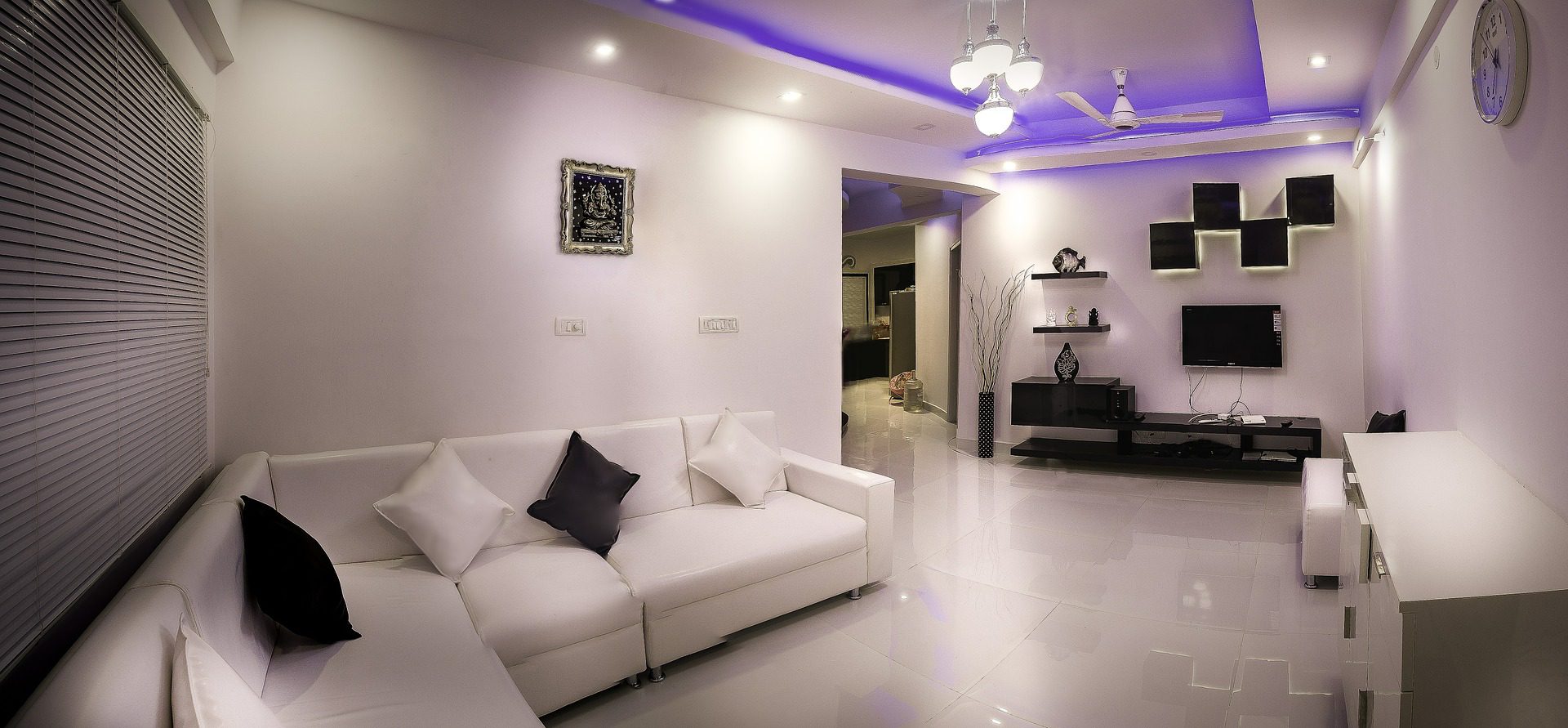
Minimalist Living Rooms

Minimalist Living Room Home Design

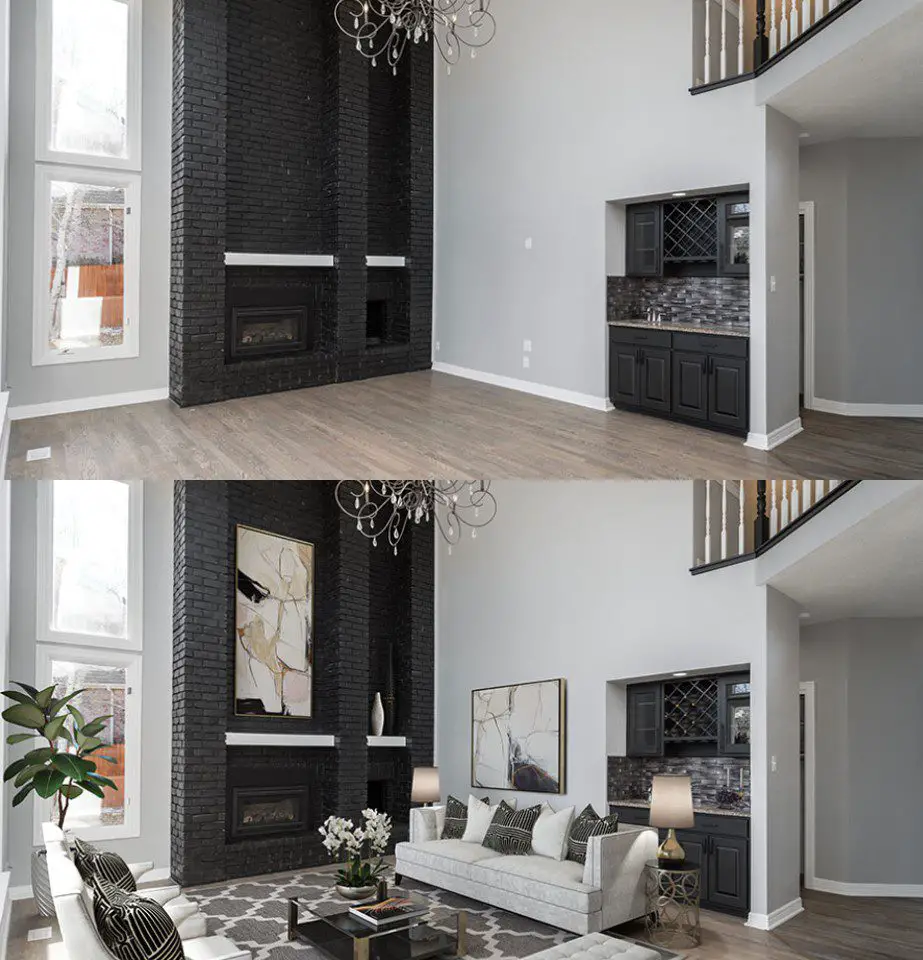
Living rooms used to feature a wall to wall array of cabinets housing your television, VCR and audio equipment as well as book shelves, drinks cabinets and storage for all of your vinyls, CDs, VCR tapes, DVDs etc. With the majority of these done away with in the last decade, living rooms have become far more basic. New decor trends centre around a good quality sofa and coffee table with a large, smart TV mounted on the wall over a simple and small TV unit.

Focus Around Energy Saving

Many home renovation decisions now involve looking at ways to save energy or save money in the day to day activities around the home. People are happy to spend more on a renovation project, such as by installing water tanks, grey water systems, solar panels or better insulation if it means that they will save money down the line and generally live a more environmentally friendly lifestyle.

Tech Is Becoming A Part Of Modern Homes

Tech around the home

Technology is rapidly finding a place in our homes. Smart lighting and home automation used to be reserved for tech enthusiasts and show homes and often provided more frustration than ease of use. This has since changed as companies have found affordable and easy ways to integrate modern technology into our homes with minimal disruption. Modern smart lighting doesn’t require your whole home to be rewired and smart vacuum cleaners are left to roam your home when you’re at work, while smart home hubs are becoming increasingly intelligent and are able to control everything from your lighting to locking your doors and ordering a pizza.

Create A Statement With Your Home’s Entrance

Your home’s entrance is often the first thing guests and passers by will see, so people are spending more money on making sure that this area looks good. Have a look at some of these great ways to upgrade your home’s entrance and improve your home’s curb appeal.

Competitive Markets Mean Luxury Is Becoming Commonplace

Competitive markets mean that there is always a gap for smaller companies to gain market share by capitalising on differentiation, usually by adding “luxury” features to existing products. Think of custom sized cabinets and soft closers on hinges and drawer slides, these were only found in high end custom renovation projects a few years ago but are now commonly available from a range of timber outlets and home or DIY stores.

What are some of the home design trends you’ve noticed or incorporated into your home? Let us know in the comments section below.
A Sliding Deck Pool Cover – A New & Stylish Way To Cover Your Pool

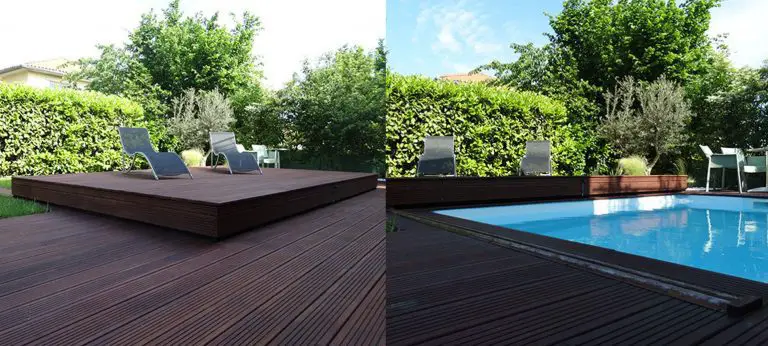
A quick search on the internet reveals a number of creative ways to keep your pool or built in hot tub covered, both for safety and for insulation and cleanliness. This new sliding deck pool cover, by a French company Octavia, is our favourite, it features an integrated raised deck to match your current deck and uses rails to easily allow the deck to be slid out of the way to open up the pool for use. The best part is that you can still use the deck for chairs and tanning while the pool is open.

Sliding Deck Pool Cover Closed Up

Sliding Deck Pool Cover Opened Up

Rails In Grass For Deck Pool Cover

Why Do You Need A Pool Cover

A pool cover has a number of benefits, besides being a safeguard for children and animals, here are some other reasons to consider installing one on your pool:

  • It helps to prevent leaves, dirt and debris from entering your pool. This allows you to run your filtration system for fewer hours, saving your money on electricity, and keeps the floor and surface cleaner for longer between sweeps and skims. Have a look at these tricks for maintaining your pool throughout the seasons.
  • A cover prevents heat loss. If you run a solar or electric water heating systems, you’ll want to keep the heat in as long as possible and a proper cover is key to this.
  • Reduce your chlorine and other chemical consumption. A cover prevents sunlight from entering the pool, reducing bacteria growth and preventing the UV light from degrading the chlorine.
  • Let’s not forget about safety. The WHO (World Health Organisation) states that drowning is the 3rd leading cause for unintentional injury deaths worldwide. A cover, especially a rigid one like this, goes a long way to prevent accidents, keeping the pool completely covered and potentially locked up.

Do you have a pool cover installed over your pool at home? What type of cover do you have and would you consider installing something like this?

Make Your Own Mechanical Watch Movement Cufflinks

In this project, I’ll be showing you how to make your own watch movement cufflinks using the mechanical watch movements from two old watches. There are loads of watch movement lookalike cufflinks available online, but these ones are made using real vintage watch movements taken out of an actual watch.

To start off, you’ll need to find two old mechanical movement, wind-up watches with identical mechanisms. A good place to start looking is to go down to your local watch repair shop or jeweller and ask them if they have any old movements or watches lying around. They don’t need to be working anymore, so they’ll likely be ones that the jeweller couldn’t repair and they will usually be happy to give you a few or sell them quite cheaply. You can also buy old damaged movements online from sites like e-bay.

Here’s a video of the assembly process, read on for detailed step by step instructions:

What You Need For This Project

  • 2 x Mechanical Watches, Movements or Inners
  • 2 x Cufflink Blanks – Buy Here
  • Gel Super Glue – Buy Here
  • Cufflink Gift Box (Optional) – Buy Here

How To Make Your Watch Movement Cufflinks

Watch Movements With Face

If the movements haven’t already been removed, you’ll need to take the movement, along with the face out of the watch. This is usually done through the back cover of the watch. Open up the cover and use a screw driver to pry the mechanism out. These old mechanisms are usually quite strong around the edges but be careful that you don’t scratch them.

Removing Hands From Watch

Hands Removed From Watch

Next use a flat tipped screwdriver or tweezers to remove the hour and minute hands from the face of the watch. These usually just pop off.

Back of Watch Face

Removing Movement From Watch Face

Now insert your screwdriver between the mechanism and face and gently pry the face away from the mechanism. It doesn’t really matter if you damage the face or part of the mechanism as you won’t be using the face, and this part of the mechanism is the back side of the cufflink.

Removing Hour Hand Cog

Once the mechanism is free, you’ll need to make the back face flat by removing the hour hand cog and the shaft which drove the minute hand. Pry the cog off with your screwdriver or tweezers and then use side cutters or clippers to cut the shaft off flush with the back face.

Removing Minute Hand Shaft

Feel the surface of the mechanism and make sure that it is completely flat so that the blank cufflink disc is able to be glued flat onto the mechanism.

Two Identical Watch Movements

Mechanical Watch Movement

Repeat this process for the second watch mechanism so that you have two identical mechanisms which are free of any protruding shafts, pegs or adjustment screws.

Blank Cufflinks

Next you’ll need to get some blank cufflinks. These are also widely available online. You’ll need a pair with at least a 6mm diameter blank plate although 10mm to 16mm ones work best to glue onto the mechanism. Try to find good quality ones and they’ll last a long time.

Gel Super Glue

Adding Glue To Blank Cufflink

Use superglue or epoxy to glue the blank cufflink onto the back of the mechanism. Apply a generous amount of glue and make sure that you choose an unobstructed flat surface on the back of the mechanism to glue it to in order to reduce the risk of it coming off. Glue both into the same area on each mechanism and make sure that they are the same orientation.

Gluing Movement onto Blank Cufflink

Allow the glue to dry or cure and your cufflinks are now ready to wear.

Holding In Place

Glued Onto Cufflink

They also make a great gift, which you can complete by putting into a small cufflink jewellery box. Small wooden boxes are great and are often able to be laser engraved to personalise them.

Completed Watch Movement Cufflinks

Mechanical Watch Movement Cufflinks on Shirt

Watch Movement Cufflinks Up Close


7 Ways Modern Technology Can Improve Various Industrial Sectors

Modern technology has brought forth numerous benefits for various leading industries. Things such as modern machinery, artificial intelligence, the IoT, blockchain, and extended reality make huge changes in the industries they manage to penetrate.

The technology itself experienced some significant innovations and will only continue to do so. That is why every business nowadays should look for ways to implement modern technologies in their offer. Otherwise, they risk becoming entirely obsolete. So, let’s see how modern technology can improve various industrial sectors of today.

The IoT

The IoT

The main idea behind the internet of things is to enable people to more easily connect to everything and everyone. As such, it is the perfect tool for businesses looking to improve their operations. For instance, the IoT can change the way products are being designed and created. Not only that but it can also greatly influence the way those products are being presented to the audience. When combined with machine learning, the IoT can help industries tailor their offers better which will increase the response and engagement those industries will receive.

Extended reality

Virtual, augmented and mixed realities are already being implemented in various industries. From the entertainment industry and education to healthcare and home improvement industry. For instance, staging showing and even pretend-decorating a home has been made significantly easier thanks to VR and AR. Nowadays, thanks to virtual reality, you can view a property from the comfort of your own home, without necessarily having to drive all the way to the property’s location. On a similar note, you can use AR to virtually equip the space with different types of furniture, which is greatly useful for interior designers and decorators around the world.

B2B online marketplaces

Since the majority of businesses from various industries have already shifted their ventures online, it comes as no surprise that B2B online marketplaces have experienced such growth in 2019. This year, we can only expect them to grow and develop further. Aside from brick and mortar commerce, industries such as the gas and oil industry will also notice huge benefits this online market will present them with. Not only will it be easier for these giants to obtain the necessary working tools, such as high-quality oilfield equipment, but they can now do so from sellers located all around the world. Online marketplaces have become seriously effective nowadays, and with the use of AI-powered shipping software and streamlined transportation tools like drones, most of the local deliveries could be performed within hours.

Recognition software

Recognition Software

Recognition software is another piece of modern technology that found its place in various industries. Businesses dealing with security, fashion, construction and even autonomous vehicle production can greatly benefit from implementing some type of image or face recognition in their endeavor. For instance, the fashion industry embraced this trend by creating an app that recognizes outfit pieces worn by photographed individuals. Once you take and upload a picture of – let’s say – a certain pair of shoes, you can learn all the information necessary about the shoes in question, such as the manufacturer, where to buy them and how much they cost.

Blockchain

Blockchain-based currencies have been steadily gaining in popularity. That is just one of the reasons that this piece of technology will continue to rise steadily. More and more businesses will start using blockchain not just to offer their audience an alternative method of payment, but also to improve the overall security. Since blockchain is virtually impossible to hack and tamper with, it becomes quite obvious why more industries should embrace it.

Cloud computing

Cloud computing has became an integral part of a modern-day business world. Moreover, cloud computing jobs are among the most in demand tech jobs in the world. The simple fact that the cloud doesn’t need to be maintained and updated on a regular basis – at least not by its users – says a lot about this piece of modern tech. Thanks to cloud computing, businesses can nowadays group together and unify all of their business information and documents that can be easily accessible by anybody with proper authority – anywhere in the world. This, of course, eliminates the need for some other type of file and information sharing solutions. It also makes the entire process significantly faster. And since in the business world time is money, it’s understandable why so many industries choose to stop wasting it.

Drones

Drones

Finally, when they first appeared on the market, drones were mostly used for military purposes. Soon after that, they’ve become widely available and everyone could get themselves a flying, remote-operated set of eyes. Nowadays, drones are being used in various industries more than ever. Amazon, the leading online shopping giant, is working on implementing drones in their delivery services. Moreover, drones are also being used as an additional home security system. They’re also being used in the healthcare industry to deliver things to different sections of hospitals; in various warehouses not only to monitor the employees but also to ensure that everyone’s safe.

As you can see, modern technology truly has the power to bring the entire industrial sector to a whole new level. Therefore, no matter the industry you’re operating in, check out some of these pieces of modern technology and see how you can use them to better your business efforts.

Mechanical 7 Segment Display Driven By An Arduino Mega

I’ve always been fascinated with mechanical flip displays, like the ones used in airports, and mechanical 7 segment displays like those used in old ball game score boards. I came across a project online in which the builder had started putting together a single digit seven segment display which used solenoids controlled by an Arduino to actuate it. I have seen micro servos used in all sorts of robots and bionic arms, so I thought it would be a nice idea to try and actuate a 7 segment display using servos. The Arduino Uno, which I usually use for Arduino projects, only has 6 PWM outputs, so I had to get the Arduino Mega. The Mega has 15 PWM outputs, so it was perfect to duplicate some parts of the code and make a two digit display which could count down from 99 (or up to 99).

Here is a full guide with the Arduino code and the 3D print files to build your own mechanical 7 segment display using an Arduino Mega and 14 micro servos.

This guide assumes that you’ve worked with an Arduino micro-controller before and know the basics of programming an Arduino. If you do not, follow the linked guide for more information on creating and uploading your first sketch.

Here is a summary of the build and a video of the display in action. Continue reading for full step by step instructions along with the code and print files.

What You’ll Need To Build A Mechanical 7 Segment Display

How To Build The Display

Assemble The Display Components

To start off, you’ll need to print the segments and mount them onto the servos. The segment is identical on all servos, so you’ll need to print out 14 of them.

I measured up the servo arms to design a segment which could be glued directly onto these arms without requiring any other hardware.

Measuring Up The Servo Arm And Servos

I then 3D printed the 14 segments using translucent green PLA at 185C with an infill of 15%. This did lead to the fill pattern being visible through the segments in operation. I don’t mind this look but if you want them to look more solid then either use a solid coloured PLA or print them with 100% infill.

You can download the 3D print file here – 7 Segment Display Piece

3D Printed Mechanical 7 Segment Display Pieces

I started off by printing a single segment to check that it fitted the servo and to have a look at how it operated (that it was light enough) once glued to the servo. The segment was glued onto the servo arm using hot melt glue, epoxy will also work.

Single Segment Installed Onto Servo

Try to align the segments so that they stand flat when the servo is square on its base. I connected the single segment and servo to the Arduino to check it’s operation.

Arduino Mega Servo Connection

During this test, I saw that the edges of the segments would be quite visible even when they’re turned through 90 degrees, so I’d need to colour of the side of the segment to blend in with the back board. I decided to spray the back and sides of all of the segments in black to match the back board.

Spraying The Back Of The Segments Black

There is now a significant difference between the top face and the sides of each segment.

Mechanical 7 Segment Display Segments

Once I was happy with the segments, I glued them all onto the servos and added a small spacer block to each servo so that they are able to stand upright.

Assembling The Servos and Segment Pieces

I then mapped out which segments would be connected to which pins on the Arduino Mega so that I could build the wiring harness.

There are 12 PWM inputs sequentially from 2 to 13 and I then had to use pins 44 and 45 as additional PWM pins for the last two segments.

Pin Numbers Map For Segments

The Arduino Mega cannot supply enough power to all fourteen servos, so I used a battery elimination circuit module made for RC aircraft to supply power to them and the Arduino to drive the IO pins. There is a closed look at the strip board and pins in the video but essentially the strip board supplies the GND and 5V pins from the BEC and then connects the GND and all of the PWM pins to the Arduino.

Servo Wiring Harness For Power & PWM Inputs

After I built the wiring harness, I decided to test build a single digit in order to test the code. I laid the servos out in the configuration in which they would be used and then got the code working.

Testing The Mechanical 7 Segment Display

During this step I had to add a few lines to the code to move the segments adjacent to the middle segment out of the way when it way moving up or down so that they wouldn’t bump into them.

Once I was happy with this digit, I duplicated the code for two digits and then mounted the servos onto a black back board.

Upload The Sketch

This is the final version of the code, the code makes use of the servo library and relies heavily on arrays to store the calibration values and movements of the servos. There is a link to download the code provided after the code.

//Michael Klements
//The DIY Life
//8 February 2020

#include <Servo.h>

Servo myservo[14];

int segmentOn[14] = {90,88,81,80,90,78,98,90,88,65,75,90,78,98};      //Servo on position values for each servo
int segmentOff[14] = {0,0,180,180,0,180,0,0,0,155,180,0,180,0};       //Servo off position values for each servo
int digits[10][7] = {{1,1,1,1,1,1,0},{0,1,1,0,0,0,0},{1,1,0,1,1,0,1},{1,1,1,1,0,0,1},{0,1,1,0,0,1,1},{1,0,1,1,0,1,1},{1,0,1,1,1,1,1},{1,1,1,0,0,1,0},{1,1,1,1,1,1,1},{1,1,1,1,0,1,1}}; //Position values for each digit

void setup()
{
  myservo[0].attach(2);   //Assign all of the output pins
  myservo[1].attach(3);
  myservo[2].attach(4);
  myservo[3].attach(5);
  myservo[4].attach(6);
  myservo[5].attach(7);
  myservo[6].attach(8);
  myservo[7].attach(9);
  myservo[8].attach(10);
  myservo[9].attach(11);
  myservo[10].attach(12);
  myservo[11].attach(13);
  myservo[12].attach(44);
  myservo[13].attach(45);
  for(int i=0 ; i<=13 ; i++)    //Set all of the servos to on or up (88 displayed)
  {
    myservo[i].write(segmentOn[i]);
  }
  delay(5000);
}

void loop() 
{
  for (int g=9 ; g>=0 ; g--)    //Large loop counter to count the tens
  {
    int mustDelay1 = 0;
    if(digits[g][6]!=digits[g+1][6])  //Logic to move segments next to middle segment out of the way
    {
      if(digits[g+1][1]==1)
      {
        myservo[8].write(segmentOn[8]-30);
        mustDelay1 = 1;
      }
      if(digits[g+1][5]==1)
      {
        myservo[12].write(segmentOn[12]+30);
        mustDelay1 = 1;
      }
    }
    if(g==9)
    {
      myservo[8].write(segmentOn[8]-30);
      myservo[12].write(segmentOn[12]+30);
    }
    if(mustDelay1==1)
      delay(200);
    for (int h=6 ; h>=0 ; h--)    //Small loop counter to move individual segments  to make up the tens digit
    {
      if(digits[g][h]==1)
        myservo[h+7].write(segmentOn[h+7]);
      else
        myservo[h+7].write(segmentOff[h+7]);
      if(h==6)
        delay(200);
    }
    for (int i=9 ; i>=0 ; i--)   //Large loop counter to count the units
    {
      int mustDelay2 = 0;
      if(digits[i][6]!=digits[i+1][6])  //Logic to move segments next to middle segment out of the way
      {
        if(digits[i+1][1]==1)
        {
          myservo[1].write(segmentOn[1]-30);
          mustDelay2 = 1;
        }
        if(digits[i+1][5]==1)
        {
          myservo[5].write(segmentOn[5]+30);
          mustDelay2 = 1;
        }
      }
      if(i==9)
      {
        myservo[1].write(segmentOn[1]-30);
        myservo[5].write(segmentOn[5]+30);
      }
      if(mustDelay2==1)
        delay(200);
      for (int j=6 ; j>=0 ; j--)  //Small loop counter to move individual segments  to make up the unit digit
      {
        if(digits[i][j]==1)
          myservo[j].write(segmentOn[j]);
        else
          myservo[j].write(segmentOff[j]);
        if(j==6)
          delay(200);
      }
      if(mustDelay2==1)   //Delay logic to reduce delay if the side segments moved (adding an additional 200ms delay)
        delay(600);
      else
        delay(800);     //Delay between digits. 200ms delay already experienced in the code
    }
  }
  delay (2000);   //Delay after countdown to 0 before resetting
}

Download the code – 7SegmentDisplay

This is a high level breakdown of what happens in the code:

I initialise an array of 14 servo objects called myServo, these numbers correspond to the numerical sequence in the pin number diagram.

I then initialise three arrays of numbers. The first, called segment On, stores the on or up positions for each of the 14 servos as a sort of calibration to ensure that they are all perfectly vertical. The second, called segment Off, is the same but for the 90 degree off position. Some of these are 0 and some 180 depending on which direction the servo needs to move. The last is a 2D digit array which stores the segment positions for each digit from 0 to 9, where 1 is on or visible and 0 is 90 degrees or invisible.

In the setup code, the 14 servos are assigned to the correct pins and then a loop sets them all to on, the number 88 will be displayed. The code then waits 5 seconds before starting the countdown.

The countdown is done with four loops. An outer loop controlling the tens and an inner loop controlling the units. In each of these loops, a smaller loop cycles through the seven segments and sets them to the correct position, on or off, by looking up the value in the digit array.

The other logic in this section is purely to move the two segments adjacent to the middle segment out of the way by 30 degrees when this segment moves so that it doesn’t bump into it. This includes all of the mustDelay variables, the 200ms delays and the if statements which aren’t in the smaller loops.

Running The Mechanical 7 Segment Display

Upload your code to your Arduino and your display will be ready to run. It will automatically reset to 88, wait 5 seconds and then start to count down from 99 to 00. When it reaches 00 it will wait 2 seconds and then reset and start counting again.

You can change the number it counts down from by setting the counter in the outer loop g. You will always need to counter from the number 9 in the units digit (i) else each pass it will miss the digits higher than the number it is set to with the code in the way it is currently written. You can’t, for example, set 47 as the starting point, it will need to be 49. If you change it to 47 then it will go down 41, 40, 37, 36 etc.

Here are some pictures of the display in operation. The video has some good footage of the display in operation.

Mechanical 7 Segment Display Two Digits

Mechanical 7 Segment Display

Have you tried to build your own mechanical 7 segment display? What did you use to actuate and control it and how did it work? Let us know in the comments section below.
10 Easy Weekend Home Improvement Projects

We realise that not everyone has the time or money to tackle a big home renovation project, but most people can free up a weekend for a smaller project or two to add value to their home. Here are 10 easy and manageable home improvement projects to plan for a free weekend to really get your home looking great again.

Deep Clean Your Driveway and Pathways

When was the last time you gave your brick or cobblestone pathways a clean? This is something not many people give any thought to and it can actually be quite effective in making your home look newer and cleaner. Sidewalks, driveways and pathways slowly become stained by wet leaves, moss, mildew, dirt and leaks from your vehicles. Either buy or rent a power washer and give your pathways a deep clean, it doesn’t take a long time to do and you’re sure to be impressed with the results.

Wash The Outside Of Your Home

Remember how good your home looked when you first painted it? If you used a good quality paint then chances are that the paint still looks good a few years later, it’s just covered with dust and dirt. Use the same pressure washer you used in the previous tip to give the outside of your home a proper clean. You shouldn’t even need a ladder, the powerful jet will have no problem washing the built up dust and dirt from your walls, leaving your home look freshly painted again.

Make sure that you test it out on a small patch first to ensure that the paint is still well adhered to the underlying surface and won’t flake off.

Revive An Old Room With A Coat Of Paint, One Of The Most Effective Ideas For Home Improvement

Revive An Old Room With A Coat Of Paint

As far as home improvement goes, few things can transform a room as effectively as a fresh coat of paint. Repainting a room with a bright and modern colour can really go a long way towards making it look like it has been completely transformed.

If you don’t have the time or money to paint the whole room, consider painting just a single accent wall. Choose a colour to compliment your room’s decor. Don’t choose a colour which is too dark as you’ll have to spend a lot of time and money if in future you decide to cover it up or go back to a lighter or more neutral colour.

Install A Modern Programmable Thermostat

If your home still has an old fashioned dial thermostat, then its definitely time for an upgrade. Installing a programmable thermostat may cost a bit initially but you’ll save a lot of money month to month. Modern thermostats are much more effective at regulating your homes temperature and have the potential to vary your homes temperature throughout the day and while you’re not at home in order to save energy. Here are some other ways in which to drastically reduce your home’s energy consumption and save on your electrical bill.

Deep Clean Your Carpets and Furniture

Get the family together for a day to help you move the furniture and rent a carpet shampooer to give your carpets, sofa and upholstery on your chairs a deep clean. Once you’ve moved the furniture, it shouldn’t take you more than 15 to 20 minutes to shampoo the carpets, so you could get through your whole home in a morning. You’ll be surprised by how much brighter your carpets look and how much dirt is sucked up in the water.

Upgrade Your Cabinet Hardware

Upgrade Your Cabinet Hardware

Replacing your cabinet hardware is a great way to update your kitchen and bathrooms without spending a fortune. It usually requires nothing more than a screwdriver if your choose new hardware with the same mounting holes. If you’re replacing simple knobs with proper handles then you’ll need to drill an extra hole each and it saves time building a template first to make sure that all of your new handles are straight and in the same position.

Replacing the hinges also makes a big difference. Old hinges tend to sag and don’t offer as many adjustment opportunities as modern hinges. You’ll get all of your cabinet doors straight, aligned and not bumping into each other in no time. Here are some tips on getting your cabinet hinges properly adjusted.

Change Your Kitchen Or Bathroom Faucets

Old faucets not only look unattractive with a buildup of years of grime and mildew but also often drip or leak. Swap out your old faucet for a stylish and modern new design with an aerator, you’ll not only add visual appeal to the room but also save money on your water bill in the long run.

Upgrade Your Light Switches & Outlets

Replace your boring old beige light switches and cover plates with something more modern and decorative. Modern switches and outlets come in a wide range of designs and colours and often include additional features such as built in USB chargers.

If replacing your outlets and switches seems too expensive, you could also just remove the cover plates and give them a fresh spray of paint.

Add Smart Lighting To Your Next Home Improvement Project

Add Smart Lighting To Your Home

Nothing says designer home quite like soft and warm lighting. Smart lighting systems used to cost a fortune and involved a big home improvement project, requiring your whole electrical system to be rewired, but simple modern smart bulbs have completely changed the way in which you are able to control the lighting in your home. Get yourself a smart lighting system, like the Philips Hue starter set and you’ll be amazed at how effective an adjustable lighting solution can be at making your home look more designer. You’ll also be able to impress your family and friends by having your lights turn on and off automatically, have them voice controlled by your Amazon Echo or control them with your mobile phone.

There is a wide rang of smart indoor and outdoor globes and light fixtures for you to completely transform your home’s lighting.

Beat The Squeaks

A house sounds old and un-maintained if the doors squeak when you open and close them or the floorboards squeak when you walk on them. Restore the peace and quite in your home by giving your door hinges an oil with a quick spray of WD-40 and stop the squeak in your floorboards by sprinkling talcum powder over the problem areas and sweeping it into the cracks.

Have you tried any of these home improvement projects? Let us know in the comments section below. We would love to hear your tips, tricks and ideas.
Building A $5 Mini Tesla Coil Kit From Wish

In browsing through Wish for some electrical components for upcoming projects, I stumbled upon this DIY Tesla Coil kit advertised for $5. I’ve seen them online before on EBay and Aliexpress etc. but never given them much thought. But for $5, I thought I’d try one out. This was my first kit-form electronics project I’ve bought and while it presented a few challenges, it was relatively easy to get working and the quality of the components wasn’t too bad.

Here’s a video of the build and testing, read on for the write up.

What Was Delivered

I ordered the Tesla coil kit early in January. It took and about two weeks to be delivered, which wasn’t too long a wait but is certainly a lot longer than local products from Amazon or EBay.

Here is the link to the kit from Wish and an equivalent from Amazon if you don’t want to wait for it:

The kit came pretty well packaged in bubble wrap and included the components as shown below.

Tesla Coil PCB Components In DIY Kit From Wish

The PCB is pretty good quality and has all of the component locations clearly identified and component references marked. I didn’t have any issues with getting the components assembled onto the board.

Tesla Coil PCB

The secondary coil came pre-wound. I know that this should be the case, but with products from Wish, you never know just how much DIY work may be involved in assembling them.

Prewound Secondary Tesla Coil

Lastly, they included a small light bulb to test the Tesla coil kit with.

Small Test LED

The kit included an instruction sheet. Again, coming from Wish, this is not always the case. The trouble with the instruction sheet is that it was all in Chinese. It’s not an overly complex build and the components are all identified on the PCB, but I had no idea what the supply voltage was, how to assemble the primary coil or if there was anything else to look out for during the assembly process.

I landed up using Google Translate on my phone to translate most of the sheet into English. It wasn’t the greatest translation and included a few questionable lines about fire and electric shocks, but I managed to figure out that the supply voltage should be in the range of 9V to 30V and that anything above 15V provides the best results. I also found a line which mentioned something about a common problem being that the primary coil is wound in the wrong direction but couldn’t find anything about what the correct direction is.

Chinese Instructions For Tesla Coil Kit

Assembling The Components

Once I was fairly happy with what to do, I began soldering the components onto the PCB. There isn’t really anything tricky involved (other than the primary coil). I soldered all of the components onto the board, then glued the secondary coil in place.

Soldering Components Onto PCB

Gluing The Secondary Coil Onto The PCB

I then had to wind the primary coil. I started off by winding the coil as shown below. I figured out after switching it on, and having nothing happen, that this was obviously the wrong direction which they mentioned in the instruction sheet. So I had to remove it and remake it in the other direction. Also, although I wound it tightly to make up the coil shape, I then loosened it as the coil should be loose when soldered in place and there should be a gap between the primary coil leads and the secondary coil otherwise it also won’t work.

Making The Primary Coil On Tesla Coil Kit

I then finished it off by adding the screw on legs and the heat sinks. I stuck the heat sinks on with my own thermal tape rather than the included screws.

Putting Legs Onto The PCB

This was the final, fully assembled Tesla coil kit.

Assembled Components And Legs On PCB

Assembled PCB

Testing The Mini Tesla Coil Kit

As I mentioned before, the first time I powered it on, the LED came on but nothing else happened and the light bulb wouldn’t light up near the coil. I figured that this may have something to do with the primary coil as they had mentioned that this was a common problem in the instructions. I switched the coil direction around and it then worked perfectly.

I only have a 15V power supply, but this was enough to generate a high voltage discharge on the end of the secondary coil.

High Voltage Discharge From Small DIY Tesla Coil

The included light bulb lights up really well around the Tesla coil, even from a few centimetres away.

Lighting Up An LED With A Tesla Coil

I then played around with creating an arc between the tip of a screwdriver and the end of the coil. I also had some fun with the arc, burning the remaining plastic coating (insulation) off of the secondary coil wire.

Tesla Coil Arc

Overall, I really enjoyed building this little kit and had some fun playing around with it. Its a great starter electronics kit with larger components which are easy to solder. I’m sure that there’s a pretty high success rate with these, there really isn’t too much which can go wrong – aside from with the primary coil. So if you’re keen to build your own Tesla coil, have a look at the kits in the links above.

Have you assembled an electronics kit which you’ve bought online? Let me know in the comments section below. Also let me know if you have any other suggested kits to try out.